The Second Continental Congress Convenes in Philadelphia
1775 · Philadelphia, United States
The Second Continental Congress convenes in Philadelphia, Pennsylvania.
October 20, 1774
The First Continental Congress created the Continental Association in Philadelphia, setting up a boycott of British goods.
Philadelphia, United States | First Continental Congress
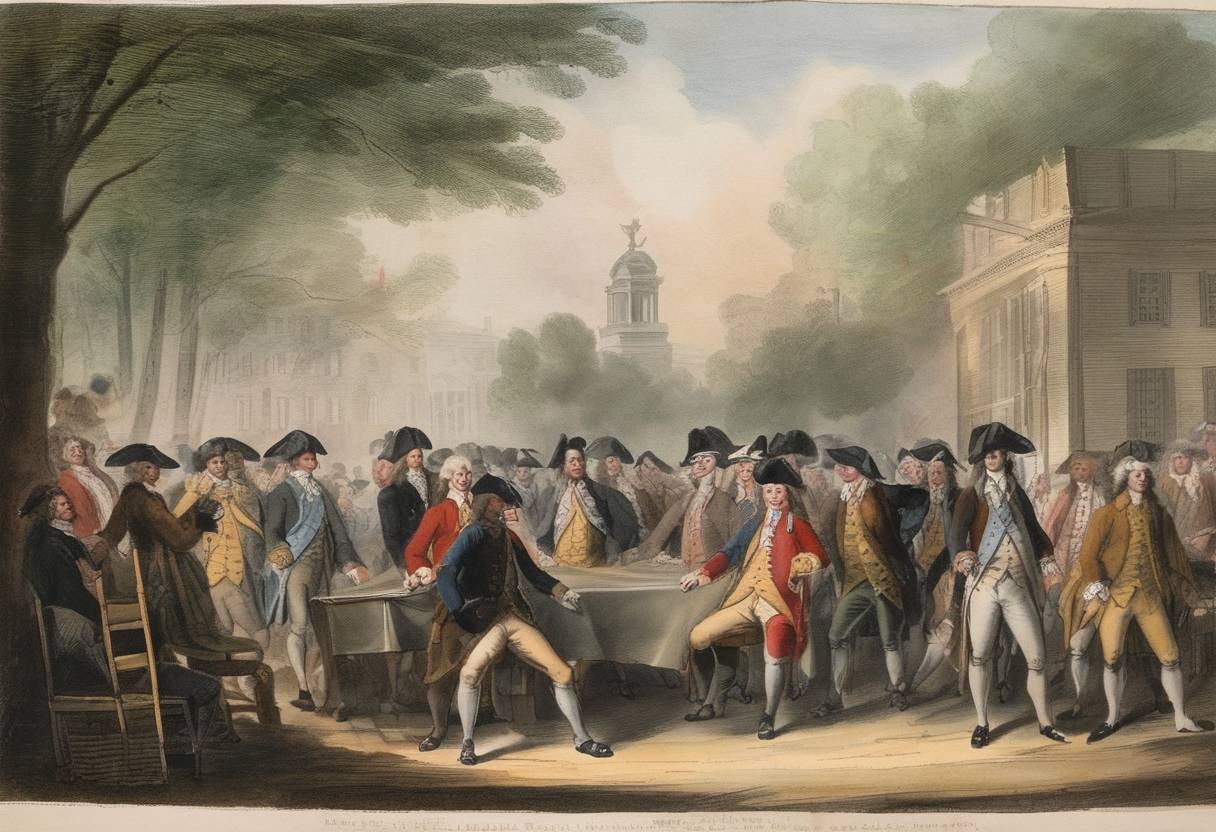
On October 20, 1774, the First Continental Congress, convening in Philadelphia, adopted the Continental Association, effectively inaugurating a system of economic sanctions against Great Britain. This pivotal step was a reaction to the punitive Intolerable Acts imposed by the British Parliament, which included closing the port of Boston and altering the Massachusetts government structure, among other measures.
The First Continental Congress met in response to escalating tensions between the colonies and the British government. Triggered particularly by the Coercive Acts, colonial representatives gathered to deliberate a unified reaction to British policies perceived as overreaching and oppressive.
The Continental Association was a crucial document detailing a collective plan to:
Furthermore, it established local committees of inspection to ensure compliance with the boycott and encouraged the colonies to promote frugality and home production of goods.
The adoption of the Continental Association marked a significant shift from petitions and protests to economic measures as colonial resistance. It certified unity among the colonies in opposing British policies and laid the groundwork for future collective actions, eventually leading towards the American Revolution.
The Association not only put economic pressure on Britain but also fostered a network of colonial cooperation that was critical for eventual continental unity. As each colony appointed enforcement committees, a semblance of self-governing began to take shape, quietly undermining British authority in the region.
By rallying the majority of colonies under a unified policy of non-importation and potential non-exportation, the Continental Association was a harbinger of the larger scale rebel activities that would follow, eventually culminating in the American Revolutionary War.