King Henry VIII Declares Himself Head of the Church of England
1535 · London, England
King Henry VIII declares himself head of the Church of England, beginning the English Reformation.
December 22, 1534
The Parliament of England passed the Act of Submission of the Clergy, part of King Henry VIII's efforts to assert control over the Church in England. This was a significant step in the English Reformation, curbing the powers of the clergy and increasing the authority of the monarchy over religious matters.
London, England | Parliament of England
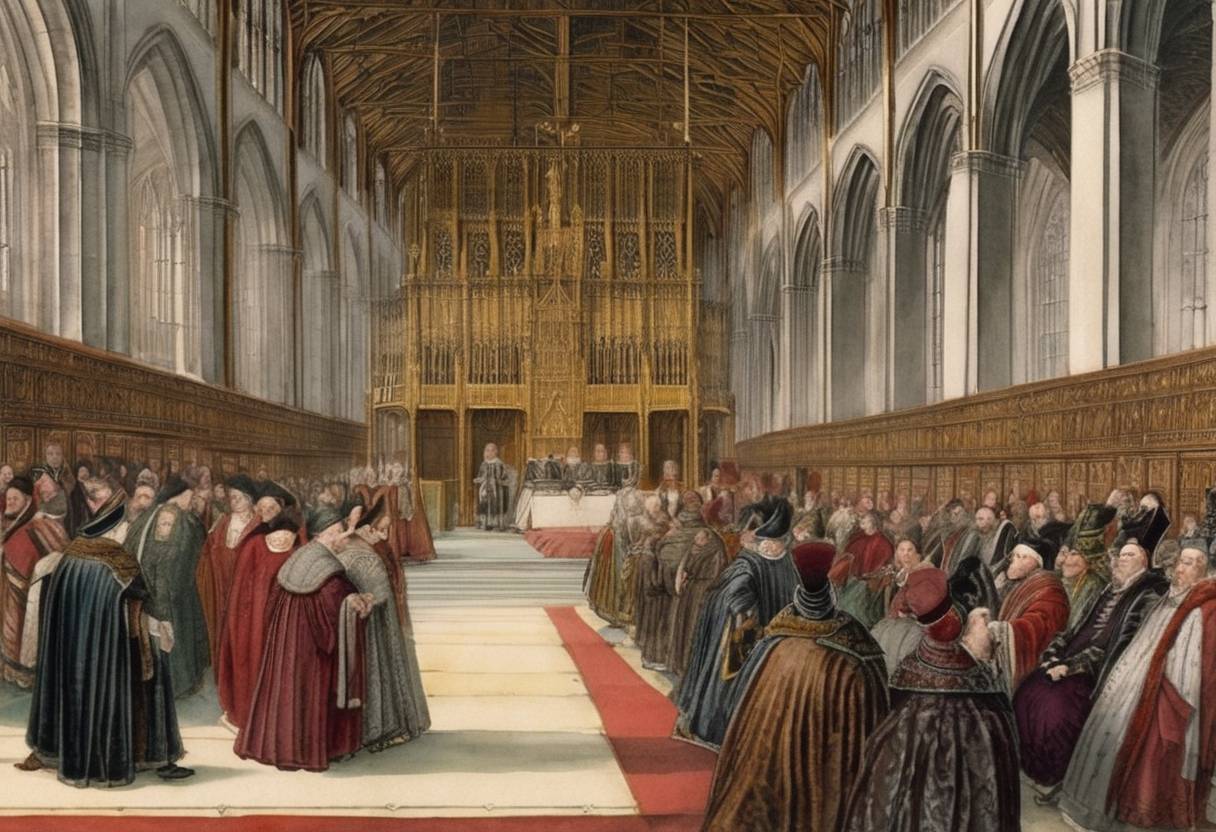
On December 22, 1534, the Parliament of England passed the Act of Submission of the Clergy, a pivotal statute in the English Reformation that significantly altered the balance of power between the English monarchy and the Church. This act was part of King Henry VIII’s broader efforts to extricate England from papal authority and assert royal supremacy over religious matters.
Henry VIII’s Quest for Annulment: The Act of Submission of the Clergy was one among several legislative measures influenced by King Henry VIII’s desire for an annulment from Catherine of Aragon, which the Pope had refused to grant. This personal vendetta sparked a profound political and religious transformation.
English Reformation: The broader context for this legislation was the English Reformation, where King Henry VIII sought to reduce the influence of the Pope and the Roman Catholic Church in England, effectively paving the way for the establishment of the Church of England with the monarch at its head.
Limitations on Church Power: The Act formally curtailed the independent legislative powers of the Church in England. It stipulated that no new canon laws could be enacted without the King’s consent, effectively placing ecclesiastical law under royal control.
End of Church’s Legal Autonomy: By requiring clerics to seek the King’s approval, it effectively ended the Church’s legal autonomy over its internal matters, and redefined the Church as a department of state government under the monarchy’s purview.
Royal Supremacy: The act reinforced royal supremacy by consolidating religious authority with the crown, laying the groundwork for the eventual creation of the Anglican Church.
Reformation Parliament: The Act of Submission was part of a series of legislative decisions made by the Reformation Parliament (1529-1536) that fundamentally changed the nature of religion and governance in England.
Break with Rome: This legislative shift was integral to England’s break with the Roman Catholic Church, heralding a new era of religious reform and conflict that would characterize the Tudor period.
Influence on Future Legislation: The Act set precedence for further legislation that expanded regal control over religious doctrine and appointments, including the Acts of Supremacy and the Dissolution of the Monasteries.
The passage of the Act of Submission of the Clergy marked a decisive move towards centralized royal authority in religious matters, forever altering the landscape of English ecclesiastical and political life.
Source: www.britannica.com