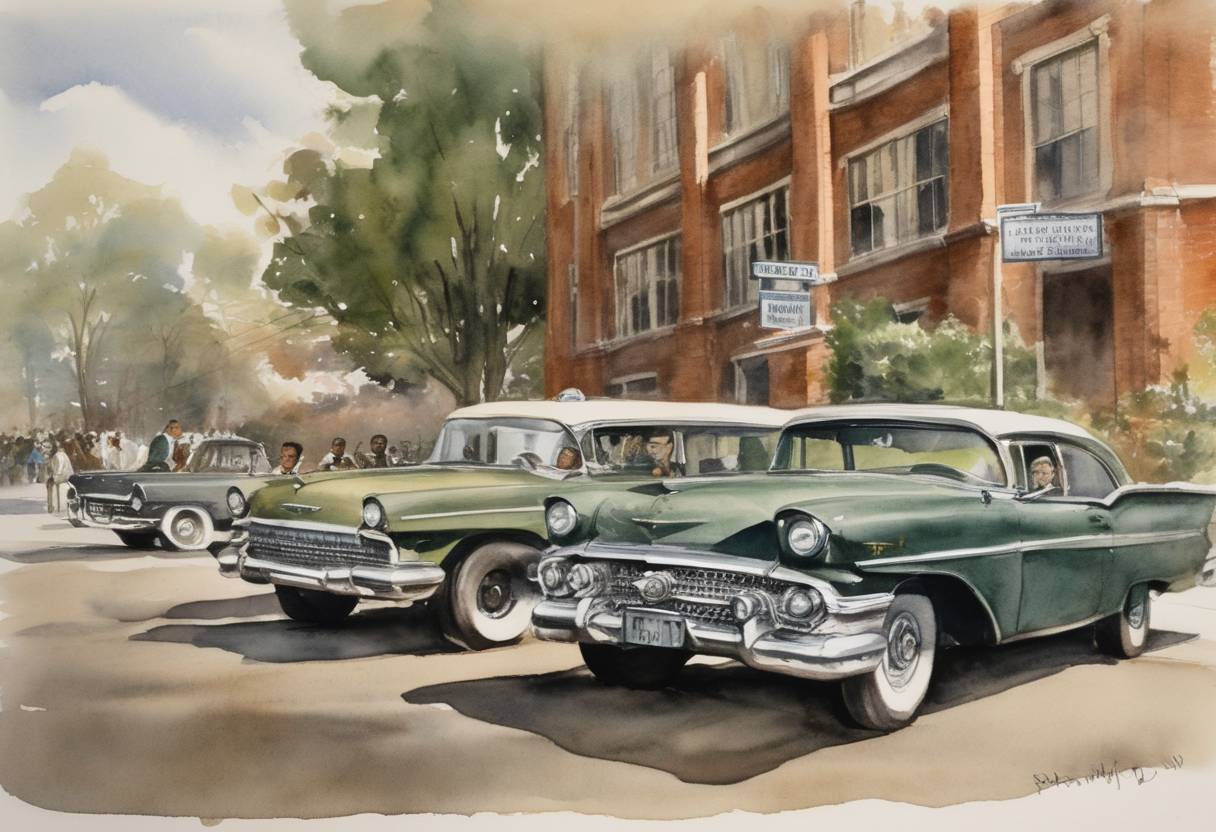
September 23, 1957: The Little Rock Nine and Federal Intervention
On September 23, 1957, President Dwight D. Eisenhower made the historic decision to order federal troops to escort the Little Rock Nine into Central High School in Little Rock, Arkansas. This action was a crucial moment in the American civil rights movement, highlighting federal enforcement of desegregation in education.
Background
The crisis in Little Rock began following the U.S. Supreme Court’s landmark decision in Brown v. Board of Education (1954), which declared segregation in public schools unconstitutional. The ruling faced intense resistance, particularly in Southern states. In Little Rock, despite plans to desegregate Central High School, opposition and violent protests ensued.
Governor Orval Faubus exacerbated tensions by deploying the Arkansas National Guard on September 4, 1957, purportedly to maintain order but effectively blocking the entry of nine African American students, known as the Little Rock Nine.
The Situation on September 23, 1957
By September 23, the Little Rock Nine attempted to enter the school with the help of police with no federal intervention yet in place. Facing a hostile mob, the Little Rock police led the students inside the building but later, fearing for the safety of the students amidst growing unrest, the students were evacuated.
Eisenhower’s Decision
The events at Central High School drew national and global attention, questioning America’s commitment to civil rights and equal education. In response to the deteriorating situation, President Eisenhower, upholding federal authority, made the unprecedented move of deploying federal troops. On September 24, he would send elements of the 101st Airborne Division to Little Rock and place the National Guard under federal command the following day.
Broader Historical Context
This event underscored the federal government’s obligation to uphold constitutional rights against state resistance. Eisenhower’s decision marked the first time since the Reconstruction era that federal troops were used in the South to support African American rights. It emphasized the federal commitment to enforcing civil rights laws, serving as a significant milestone in the broader civil rights movement.
Aftermath
The intervention helped ensure the eventual desegregation of Little Rock’s public schools and set a precedent for federal action in similar desegregation conflicts. The bravery of the Little Rock Nine and the federal enforcement actions contributed significantly to the momentum of the civil rights movement, leading to subsequent legislation such as the Civil Rights Act of 1964 and the Voting Rights Act of 1965.
This pivotal moment remains a profound symbol of the struggle for racial equality and the ongoing pursuit of justice and civil rights in the United States.