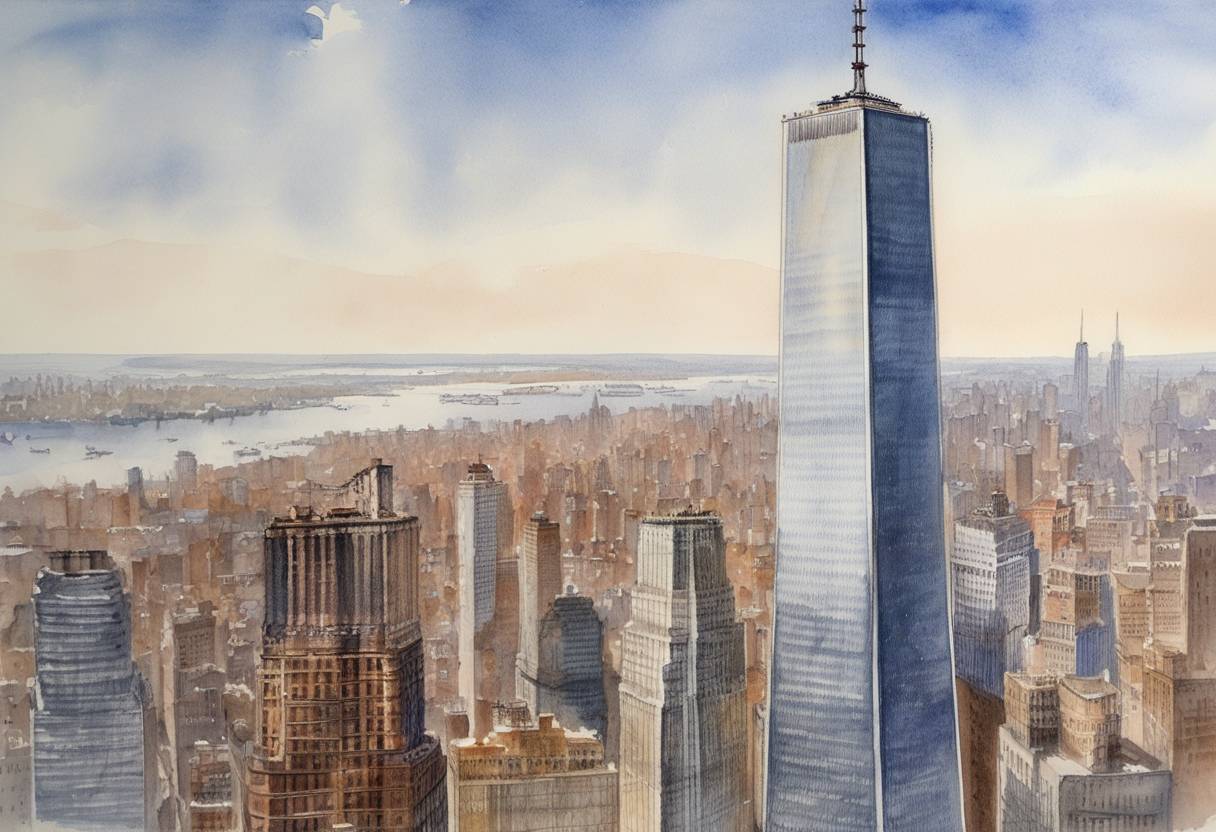
Topping Out of the North Tower of the World Trade Center
On December 23, 1970, the North Tower of the World Trade Center, located in Lower Manhattan, New York City, was topped out at a remarkable height of 1,368 feet (417 meters). This milestone marked the North Tower as the tallest building in the world, surpassing the Empire State Building, which had held the title since 1931.
Historical Context
Planning and Design: The World Trade Center complex was conceived in the early 1960s as part of an initiative to revitalize Lower Manhattan and accommodate the burgeoning global trade industry. The project was spearheaded by the Port Authority of New York and New Jersey.
Architectural Vision: The twin towers were designed by architect Minoru Yamasaki, who envisioned the World Trade Center as a symbol of world peace through trade and cooperation. The structural engineering firm Skilling, Helle, Christiansen, Robertson designed the innovative “tube-frame” structural system that allowed for the towers’ unprecedented height and open office spaces.
Key Details of the Event on December 23, 1970
Ceremonial Topping Out: The topping out ceremony occurred after four years of construction, involving thousands of workers and a complex logistical effort. The event signified the completion of the steel framework of the North Tower.
Significance: At its pinnacle height of 1,368 feet, the North Tower claimed the title of the tallest building in the world, a record it held until the completion of the Willis Tower (formerly Sears Tower) in Chicago in 1973.
Broader Impact
Economic Implications: The World Trade Center became a hub for global trade and businesses, contributing significantly to New York City’s economy and transforming the city’s skyline forever.
Architectural Legacy: The completion of the towers represented a technological and architectural achievement, influencing skyscraper design and construction worldwide. The use of lightweight steel and innovative building techniques became a model for future high-rise buildings.
Cultural Symbolism: Beyond its functional role, the World Trade Center, and particularly the iconic Twin Towers, became emblematic of modernity, ambition, and the economic prowess of New York City.
The topping out of the North Tower on December 23, 1970, was a landmark event in architectural history, marking the heyday of skyscraper construction in the 20th century and setting new standards for engineering and design. This moment laid the groundwork for the World Trade Center’s role as a central, enduring symbol of New York City until its tragic destruction in 2001.