The Treaty of Fort Jackson: Ending the Creek War
1814 · Fort Jackson, United States
The Treaty of Fort Jackson is signed, ending the Creek War.
September 3, 1814
The Treaty of Fort Jackson was signed, ending the Creek War.
Fort Jackson, United States
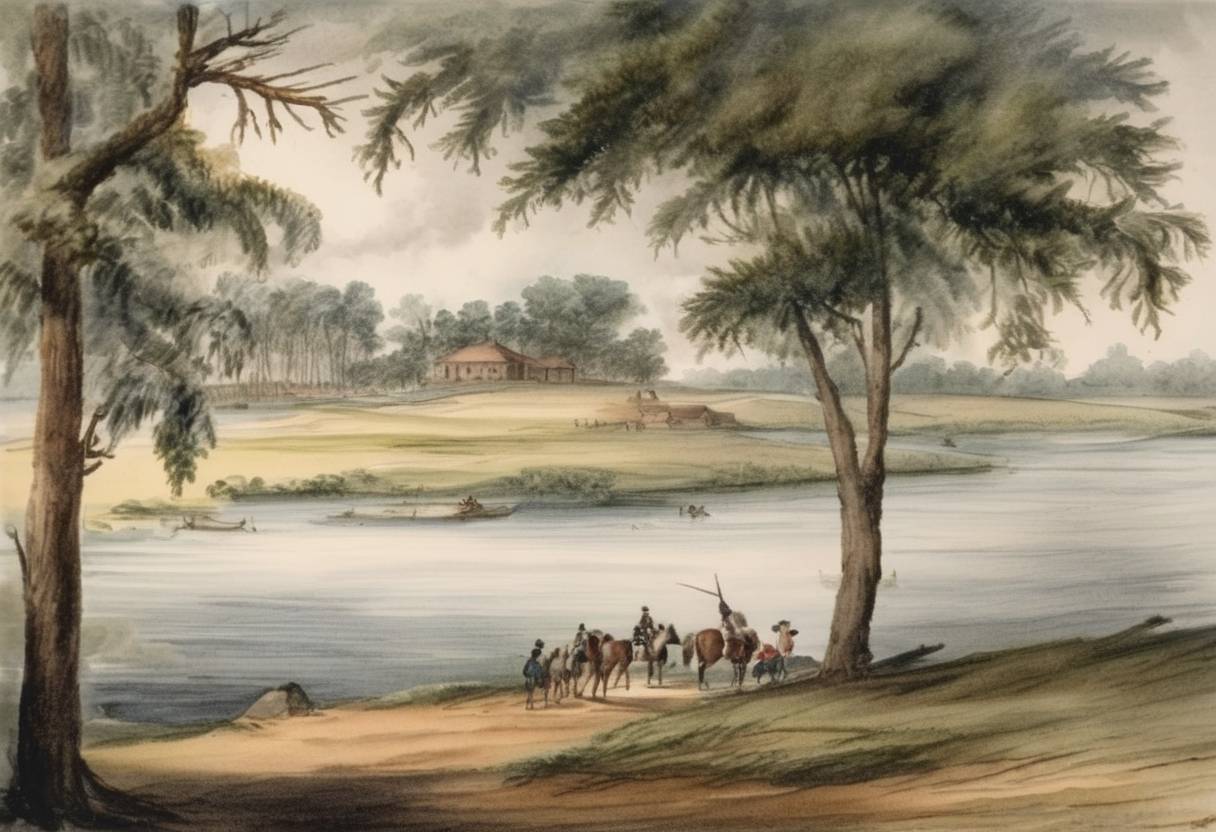
The Treaty of Fort Jackson was signed on August 9, 1814, marking the official end of the Creek War. This treaty was a significant event in the broader context of American expansion and indigenous resistance during the early 19th century in the United States.
The Creek War (1813-1814), a part of the larger conflict known as the War of 1812, mainly involved the Creek Nation (Muscogee) and American forces. Tensions had been brewing due to land encroachments by American settlers and disputes within the Creek Nation itself. The latter was divided between the Upper Creeks, known as the Red Sticks, who sought to resist American encroachment, and the Lower Creeks, who were more aligned with American settlers.
The war reached a pivotal moment with the Battle of Horseshoe Bend on March 27, 1814. Under the command of Major General Andrew Jackson, American forces decisively defeated the Red Stick Creeks. This battle significantly weakened the Creek resistance and paved the way for peace negotiations.
The Treaty of Fort Jackson was negotiated at a site in present-day Alabama. It was markedly unfavorable to the Creek Nation, resulting in the cession of over 21 million acres of land to the United States. This vast territory included substantial parts of modern-day Alabama and Georgia. Although the Lower Creeks, who had allied with Jackson, were among the treaty’s signatories, the agreement imposed heavy penalties on the entire Creek Nation.
Following the signing of the Treaty of Fort Jackson, the Creek Nation’s ability to resist further encroachment was largely neutralized. The loss of territory severely disrupted Creek society, leading to further displacement and weakening of their traditional ways of life. The land gained through the treaty was quickly opened up to American settlers, advancing the United States’ expansionist agenda in the Southeast.
The actions and results of the treaty also played a role in bolstering Andrew Jackson’s reputation, eventually aiding his rise to the U.S. presidency. However, it marked a stark example of the harsh treaties that Native American nations would face in the coming decades, as the U.S. government and settlers continued to expand westward.
The Treaty of Fort Jackson is a crucial example of early 19th-century Native American history and U.S. expansion policies. It highlights the intense pressures faced by indigenous nations during this period and the eventual overpowering influence of American expansion efforts in reshaping the nation’s political landscape.
Source: www.britannica.com