Ratification of the Peace of Paris: April 21, 1303
1303 · Paris, France
Peace of Paris is ratified between King Philip IV of France and Edward I of England, resolving a conflict over territories in France.
December 10, 1317
The Peace of Fexhe is signed, marking a significant event in the history of the Liège region as it attempted to resolve ongoing disputes between the Prince-Bishop and local nobility and burghers.
Fexhe-le-Haut-Clocher, Belgium | Prince-Bishopric of Liège
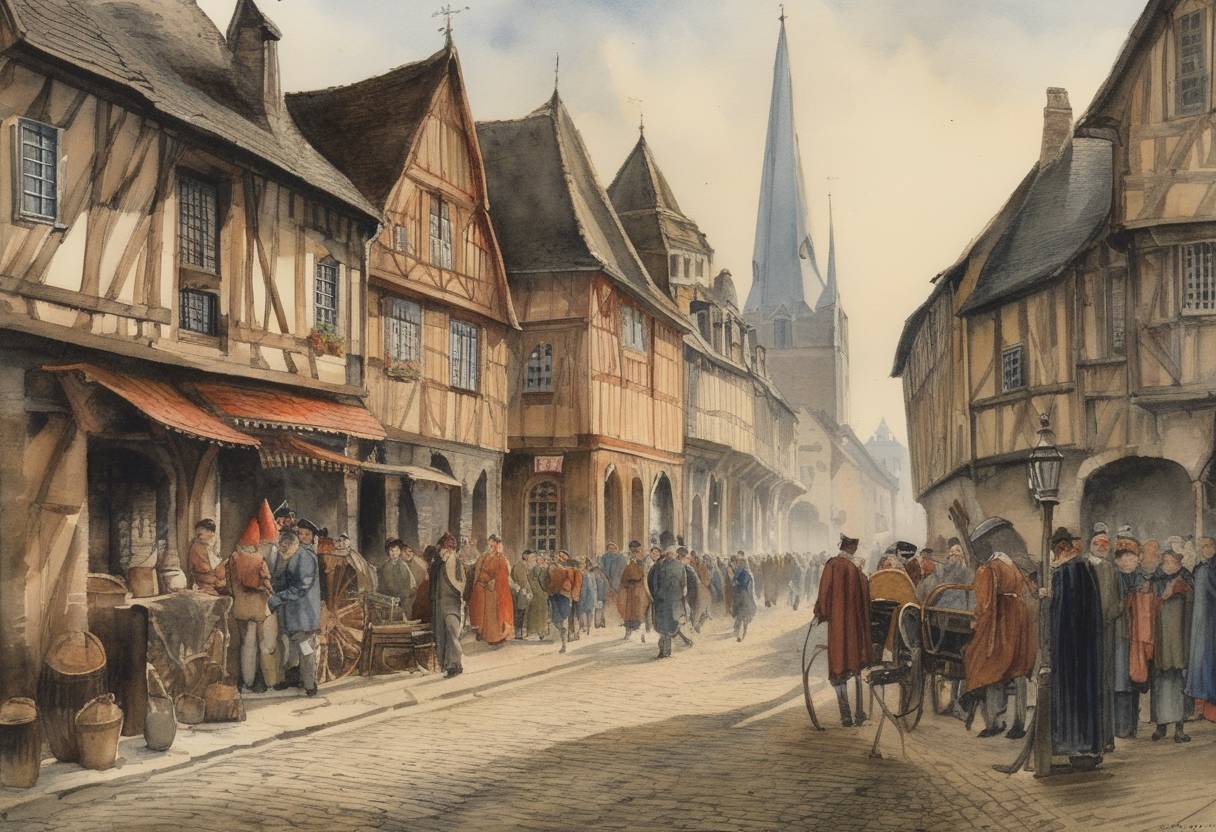
On October 12, 1317, the Peace of Fexhe was signed, representing a pivotal moment in the history of the Prince-Bishopric of Liège. This crucial document was a landmark agreement aimed at resolving persistent conflicts between the Prince-Bishop, local nobility, and the burgeoning class of burghers.
The Prince-Bishopric of Liège, located in the Low Countries, operated as an ecclesiastic principality within the Holy Roman Empire. Throughout the late medieval period, a series of social, economic, and political tensions had escalated in the region. The burghers, representing the emerging urban middle class, alongside the nobility, sought greater political influence against the ruling ecclesiastical authority of the Prince-Bishop.
Tensions rose as these groups demanded more involvement in the governance and administration of the Liège region. They sought to curtail the absolute power of the Prince-Bishop and establish a more balanced system of rule that included representation of different social classes. This unrest often manifested through various uprisings and conflicts, aiming for political reforms and more equitable power distribution.
The Peace of Fexhe was negotiated primarily to bring an end to these disputes. Under the terms of the agreement, several key provisions were established:
Administrative Reforms: The treaty laid out a legal framework aimed at limiting the autocratic power of the Prince-Bishop. It included measures to provide the nobility and burghers with greater influence over local government affairs.
A Shared Council: Establishment of a council, which comprised representatives from the three estates: the clergy, the nobility, and the burghers. This council played a critical role in the administration and justice system, serving as a check on the authority of the Prince-Bishop.
Judicial Guarantees: It guaranteed certain judicial rights to the subjects of Liège, promoting fairness in legal proceedings and reducing arbitrary judicial decrees.
The Peace of Fexhe was significant as it marked an early step towards a structured constitutional framework in Liège, laying the foundations for a proto-democratic governance system. It highlighted the growing power and influence of urban classes in medieval European politics and underlined a shift towards more participatory forms of local government.
While the Peace of Fexhe did not completely eradicate conflict in the region, it offered a functional compromise that moderated future disputes. This agreement contributed to the gradual transformation of political structures within Liège and influenced other emerging European city-states exploring more representative governance systems.
In summary, the Peace of Fexhe was a notable 14th-century agreement that attempted to balance power through legal and political reforms, serving as a catalyst for evolving governance in the European Middle Ages.
Source: en.wikipedia.org