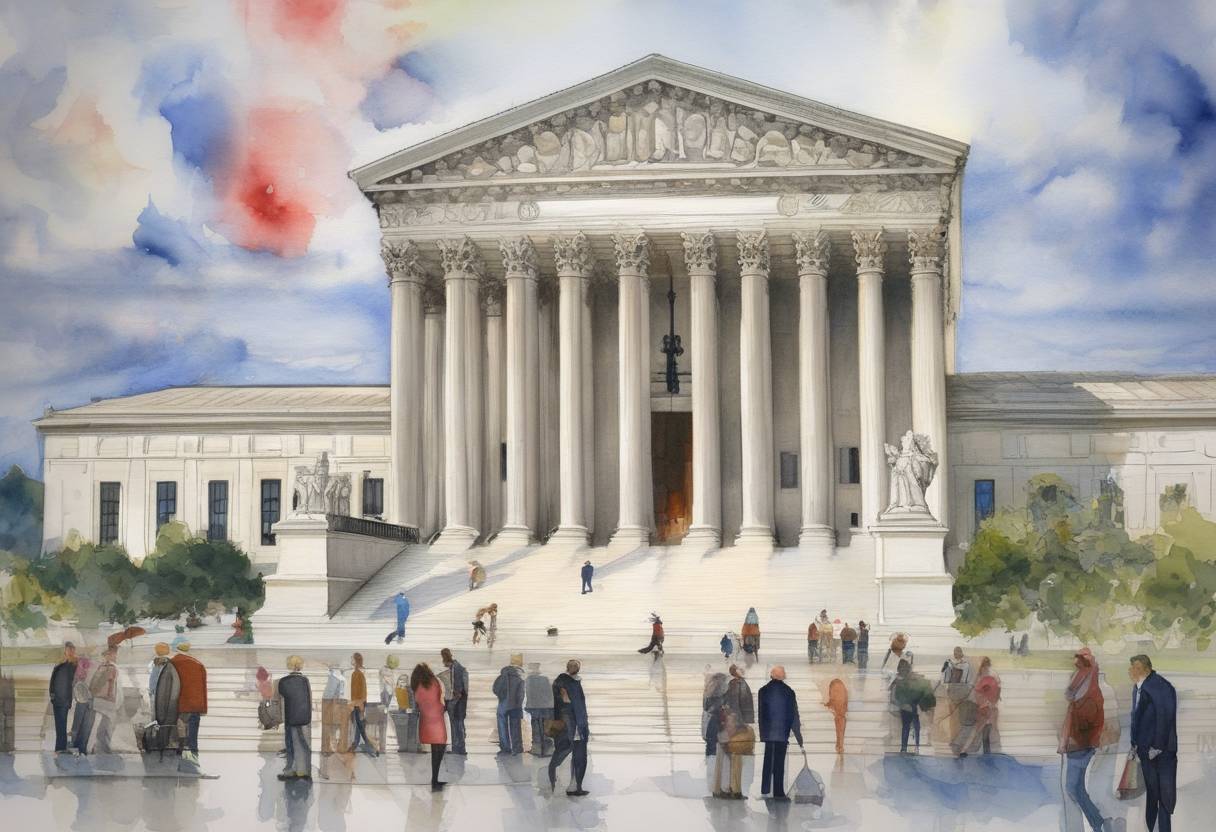
Citizens United v. Federal Election Commission: A Landmark Decision
On January 21, 2010, the United States Supreme Court delivered a pivotal decision in the case of Citizens United v. Federal Election Commission. This ruling fundamentally altered the landscape of political campaign financing in the United States by allowing corporations and unions to spend unlimited amounts of money on political campaigns.
Background
The case originated from a dispute over a documentary film titled “Hillary: The Movie,” produced by Citizens United, a conservative nonprofit organization. The film was critical of then-Senator Hillary Clinton, who was a candidate in the 2008 Democratic presidential primaries. Citizens United sought to air the film and advertise it during the 2008 election cycle, which led to a legal challenge based on the Bipartisan Campaign Reform Act of 2002 (BCRA), commonly known as the McCain-Feingold Act.
The BCRA prohibited corporations and unions from using their general treasury funds to make independent expenditures for “electioneering communications” within 30 days of a primary or 60 days of a general election. Citizens United argued that these restrictions violated the First Amendment’s free speech clause.
The Supreme Court’s Decision
In a 5-4 decision, the Supreme Court ruled in favor of Citizens United. The majority opinion, delivered by Justice Anthony Kennedy, held that the BCRA’s restrictions on independent expenditures by corporations and unions were unconstitutional. The Court reasoned that the First Amendment prohibits the government from restricting political speech based on the speaker’s corporate identity.
The decision effectively overturned previous precedents, notably the 1990 case Austin v. Michigan Chamber of Commerce and parts of the 2003 decision in McConnell v. Federal Election Commission, which had upheld restrictions on corporate political spending.
Key Points of the Ruling
- Free Speech: The Court emphasized that political speech is indispensable to a democracy, which is no less true because the speech comes from a corporation.
- Corporate Personhood: The ruling reinforced the concept of corporate personhood, granting corporations similar rights to individuals in terms of political speech.
- Independent Expenditures: The decision allowed corporations and unions to spend unlimited amounts on independent political expenditures, as long as these expenditures were not directly coordinated with a candidate or political party.
Aftermath and Significance
The Citizens United decision had profound implications for American politics:
- Super PACs: The ruling led to the creation of Super Political Action Committees (Super PACs), which can raise and spend unlimited sums of money to advocate for or against political candidates.
- Increased Spending: There was a significant increase in political spending by corporations, unions, and other entities, raising concerns about the influence of money in politics.
- Ongoing Debate: The decision sparked a heated debate over the role of money in elections, campaign finance reform, and the balance between free speech and electoral integrity.
The Citizens United case remains a contentious topic in American political discourse, with ongoing discussions about its impact on democracy and calls for legislative or constitutional changes to address the issues it raised.