The First Commercial Flight from the U.S. to Cuba in Over 50 Years
2016 · Havana, Cuba
The first commercial flight from the United States to Cuba in over 50 years lands in Havana, marking a significant step in the thawing of U.S.-Cuba relations.
March 20, 2016
President Barack Obama becomes the first sitting U.S. president to visit Cuba in 88 years, marking a significant step in the thawing of relations between the two countries.
Havana, Cuba | United States Government
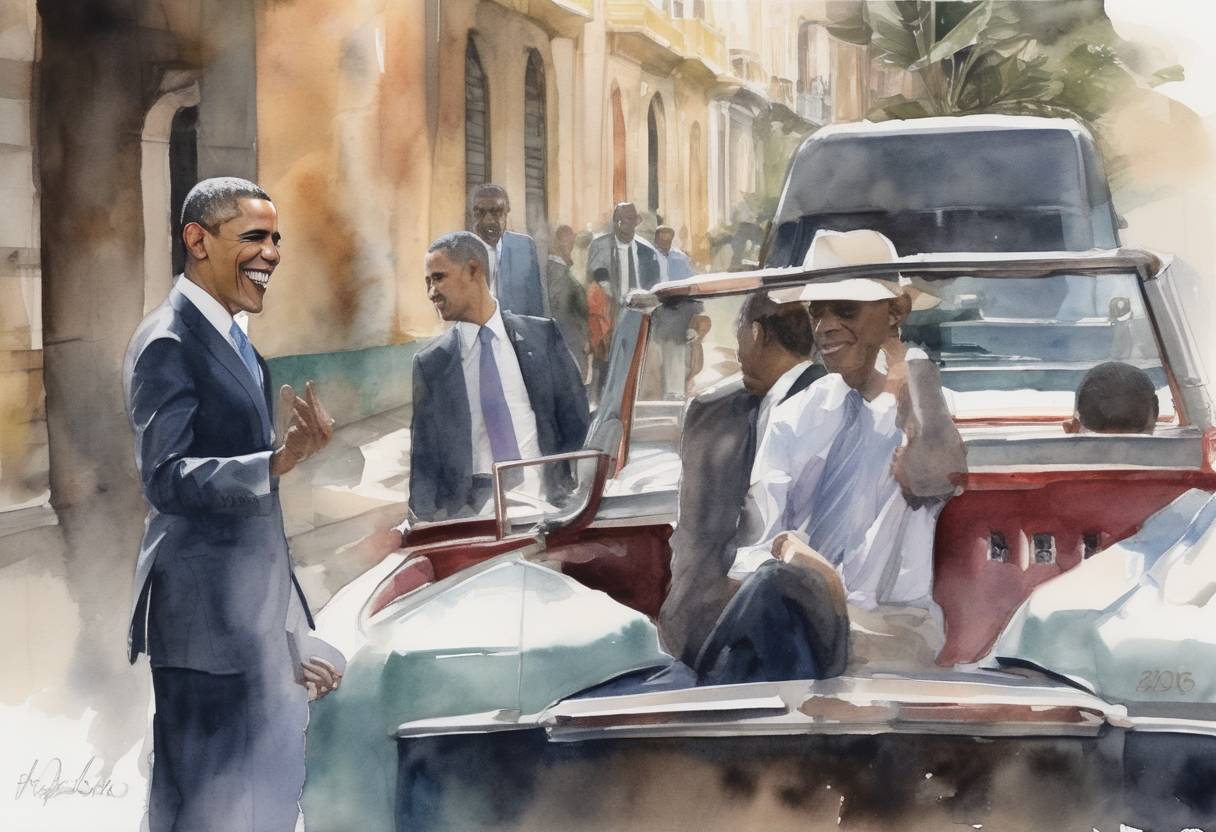
On March 20, 2016, President Barack Obama made a historic visit to Cuba, becoming the first sitting U.S. president to set foot on the island nation in 88 years. This visit marked a significant milestone in the thawing of relations between the United States and Cuba, a process that had begun in earnest in December 2014.
The relationship between the United States and Cuba had been fraught with tension since the Cuban Revolution in 1959, which brought Fidel Castro to power. The U.S. imposed a trade embargo on Cuba in 1960, and diplomatic relations were severed in 1961. For decades, the two countries remained at odds, with the Cold War further exacerbating hostilities.
In December 2014, President Obama and Cuban President Raúl Castro announced a historic agreement to restore diplomatic relations. This was part of a broader effort to normalize ties, which included the easing of travel restrictions, the reopening of embassies, and increased economic engagement.
Arrival in Havana: President Obama arrived in Havana on March 20, 2016, accompanied by First Lady Michelle Obama and their daughters. The visit was symbolic of a new chapter in U.S.-Cuba relations.
Meeting with Raúl Castro: Obama met with Cuban President Raúl Castro to discuss various issues, including trade, human rights, and the ongoing embargo. While significant differences remained, the meeting underscored a mutual commitment to dialogue.
Address to the Cuban People: Obama delivered a speech at the Gran Teatro de La Habana, where he addressed the Cuban people directly. He spoke about the potential for cooperation and the importance of human rights and democracy.
Cultural Engagements: The visit included cultural exchanges, such as attending a baseball game between the Tampa Bay Rays and the Cuban national team, highlighting the shared cultural ties between the two nations.
Obama’s visit was a pivotal moment in U.S.-Cuba relations, symbolizing a shift from decades of isolation to engagement. It paved the way for increased cultural and economic exchanges, although the U.S. trade embargo remained in place.
The visit also sparked discussions about human rights and political freedoms in Cuba, with Obama emphasizing the importance of these issues in his public addresses.
Obama’s visit to Cuba was part of a broader strategy to reshape U.S. foreign policy in Latin America. It demonstrated a willingness to engage with former adversaries and highlighted the potential benefits of diplomacy over isolation.
While the subsequent U.S. administration took a different approach to Cuba, the visit remains a landmark event in the history of U.S.-Cuba relations, illustrating the complexities and possibilities of international diplomacy.
Source: en.wikipedia.org