The Treaty of Meerssen: June 21, 870
870 · Meerssen, Carolingian Empire
The Treaty of Meerssen is signed, dividing the Carolingian Empire between the sons of Louis the German and Charles the Bald.
August 8, 0870
The Treaty of Meerssen was signed, dividing the Carolingian Empire among the three surviving sons of Louis the German and Charles the Bald, marking a significant moment in the fragmentation of the empire.
Meerssen, Frankish Empire | Carolingian Empire
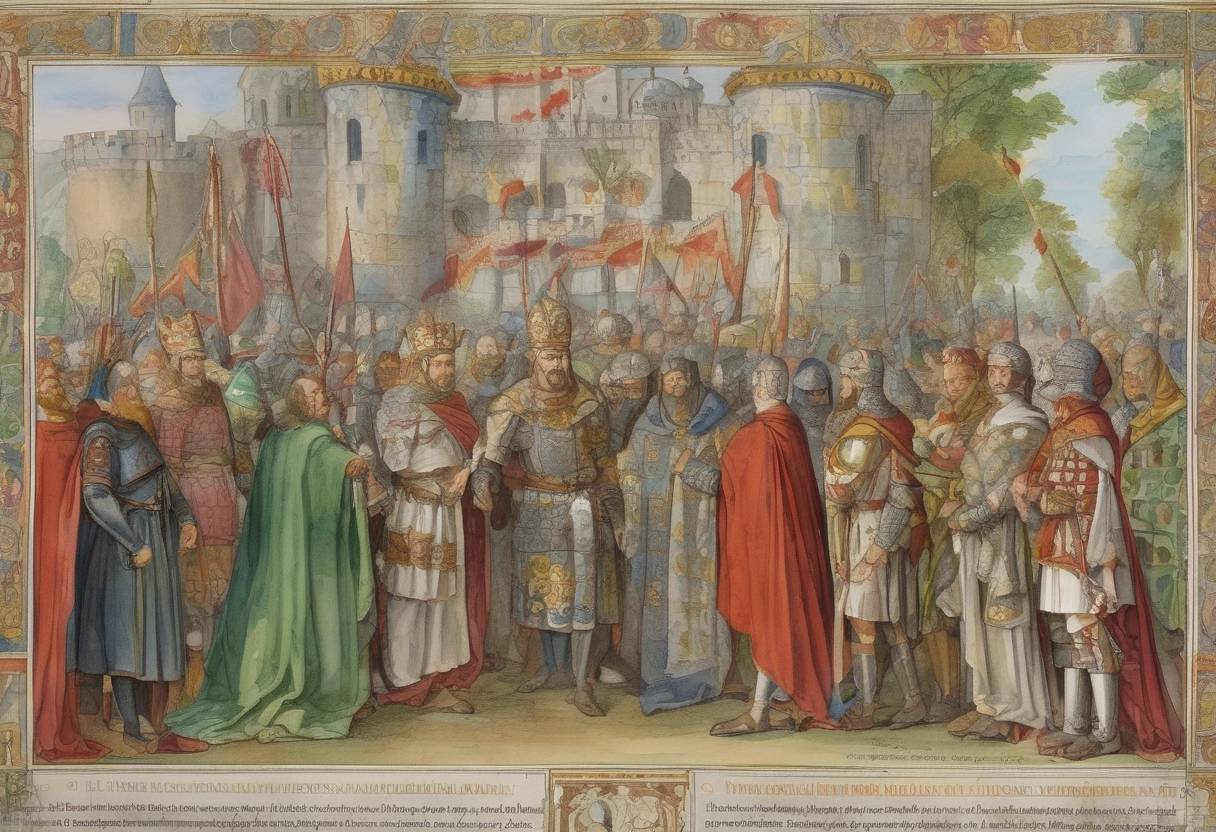
The Treaty of Meerssen, signed on August 8, 870, was a pivotal moment in the history of the Carolingian Empire, marking a significant step in its fragmentation. This treaty was an agreement between the surviving sons of Louis the German and Charles the Bald, two grandsons of Charlemagne, the founder of the Carolingian Empire.
Charlemagne’s Legacy: Charlemagne, who reigned from 768 to 814, had expanded the Frankish Empire to its greatest extent, covering much of Western and Central Europe. Upon his death, his empire was inherited by his son, Louis the Pious.
Division of the Empire: Louis the Pious’s reign saw the empire divided among his sons, leading to internal strife. The Treaty of Verdun in 843 was the first major division, splitting the empire into three parts among his sons: Lothair I, Louis the German, and Charles the Bald.
Continued Fragmentation: After Lothair I’s death, his kingdom was further divided among his sons. The Treaty of Prüm in 855 and subsequent conflicts continued to fragment the empire.
Parties Involved: The treaty was signed by Louis the German’s sons, Louis the Younger, Carloman, and Charles the Bald, who was the king of West Francia.
Terms of the Treaty: The Treaty of Meerssen was essentially a redivision of the Middle Frankish Kingdom, which had been ruled by Lothair II, who died without legitimate heirs in 869. The treaty divided Lotharingia between Louis the German’s heirs and Charles the Bald.
Division of Territories: The treaty allocated the northern part of Lotharingia to Louis the Younger and the southern part to Charles the Bald. This division was meant to stabilize the region and prevent further conflict between the Carolingian rulers.
Fragmentation of the Empire: The Treaty of Meerssen is a key example of the ongoing fragmentation of the Carolingian Empire, which would eventually lead to the formation of distinct European kingdoms.
Impact on European Borders: The divisions established by the treaty contributed to the shaping of future European borders, influencing the development of regions that would become modern-day France, Germany, and the Benelux countries.
Prelude to Further Divisions: The treaty did not end the disputes among the Carolingian rulers. Further divisions and treaties would follow, leading to the eventual decline of Carolingian power and the rise of feudalism in Europe.
In summary, the Treaty of Meerssen was a significant event in the disintegration of the Carolingian Empire, reflecting the challenges of maintaining a vast empire and the shifting dynamics of power among its rulers. This treaty not only altered the political landscape of the time but also set the stage for the future development of European nation-states.
Source: en.wikipedia.org