Galileo Galilei and the 1616 Church Ban on Heliocentrism
1616 · Rome, Italy
Galileo Galilei was formally banned by the Roman Catholic Church from teaching or defending the heliocentric ideas of Copernicus.
February 17, 1600
Philosopher Giordano Bruno was executed for heresy in Rome.
Rome, Italy | Roman Catholic Church
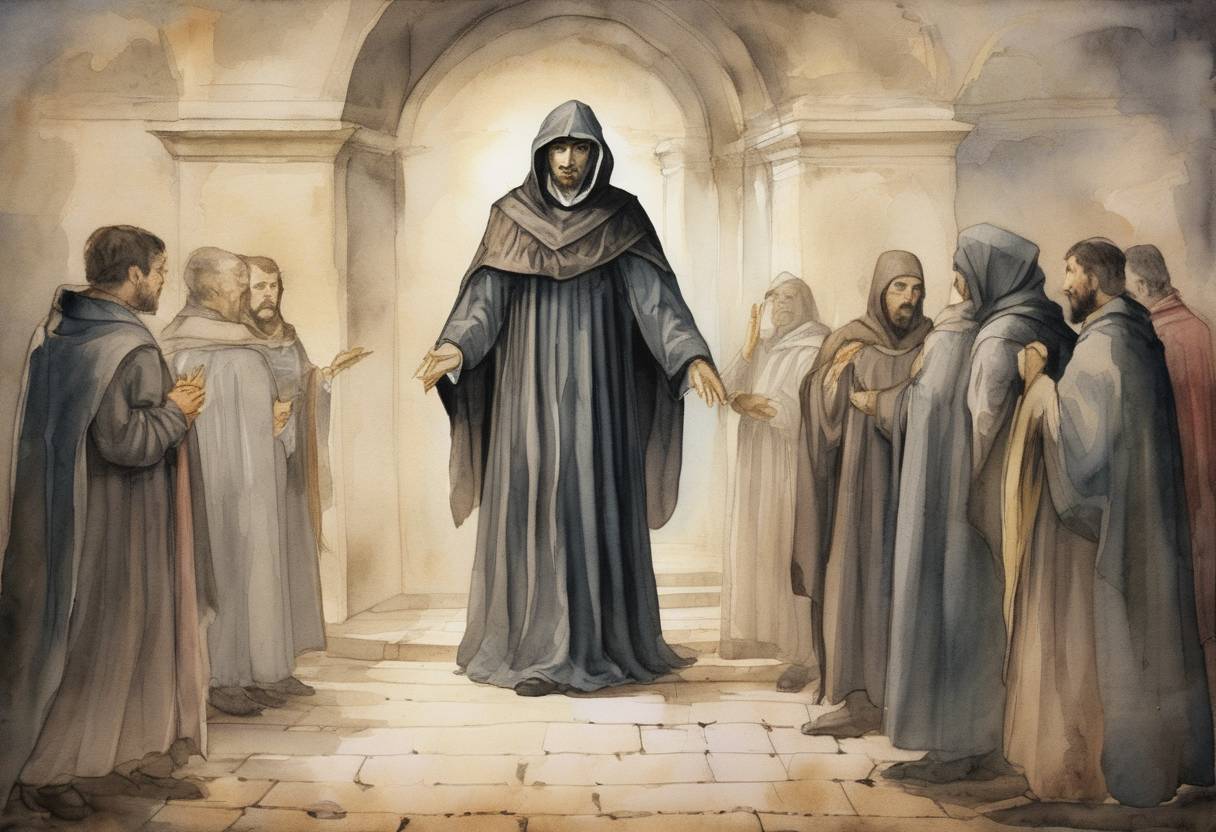
Giordano Bruno, an Italian philosopher, mathematician, and cosmological theorist, was executed for heresy on February 17, 1600, in Rome. His death marked a significant moment in the history of science and philosophy, illustrating the intense conflict between emerging scientific ideas and established religious doctrines during the Renaissance.
Early Life and Education: Born in Nola, near Naples, in 1548, Bruno entered the Dominican Order as a young man. He was ordained as a priest but soon became known for his unorthodox views, which led to his departure from the order.
Philosophical Views: Bruno was a proponent of the Copernican model, which posited that the Earth revolved around the Sun. He expanded on this by suggesting the existence of an infinite universe with numerous worlds, challenging the geocentric model endorsed by the Catholic Church.
Conflict with the Church: Bruno’s ideas extended beyond astronomy; he questioned core Catholic doctrines, including the nature of the Trinity and the divinity of Christ. His pantheistic views and belief in the transmigration of souls further alienated him from the Church.
Arrest: After years of wandering through Europe, teaching and writing, Bruno was arrested in Venice in 1592. He was extradited to Rome, where he faced the Roman Inquisition.
Trial: Bruno’s trial lasted for seven years. He was charged with heresy, blasphemy, and immoral conduct. Despite opportunities to recant, Bruno remained steadfast in his beliefs.
Sentence: On February 8, 1600, Bruno was declared a heretic and sentenced to death. He was handed over to secular authorities for execution, as was customary for those condemned by the Inquisition.
Execution: On February 17, 1600, Bruno was burned at the stake in the Campo de’ Fiori, a public square in Rome. According to accounts, he faced his death with courage, reportedly stating, “Perhaps you pronounce this sentence against me with greater fear than I receive it.”
Impact on Science and Philosophy: Bruno’s execution is often cited as a symbol of the conflict between free thought and religious orthodoxy. His ideas, particularly about the cosmos, influenced later thinkers and contributed to the scientific revolution.
Modern Recognition: Today, Giordano Bruno is remembered as a martyr for science and free thought. Monuments and memorials, including a statue at the site of his execution, commemorate his contributions to philosophy and his enduring legacy in the fight for intellectual freedom.
Bruno’s life and death underscore the challenges faced by those who dared to challenge established beliefs and highlight the complex interplay between science, philosophy, and religion during a pivotal era in history.
Source: en.wikipedia.org