Galileo Galilei and the 1616 Church Ban on Heliocentrism
1616 · Rome, Italy
Galileo Galilei was formally banned by the Roman Catholic Church from teaching or defending the heliocentric ideas of Copernicus.
June 22, 1633
Galileo Galilei was forced by the Roman Catholic Church to recant his heliocentric view of the universe, which stated that the Earth revolves around the Sun.
Rome, Italy | Roman Catholic Church
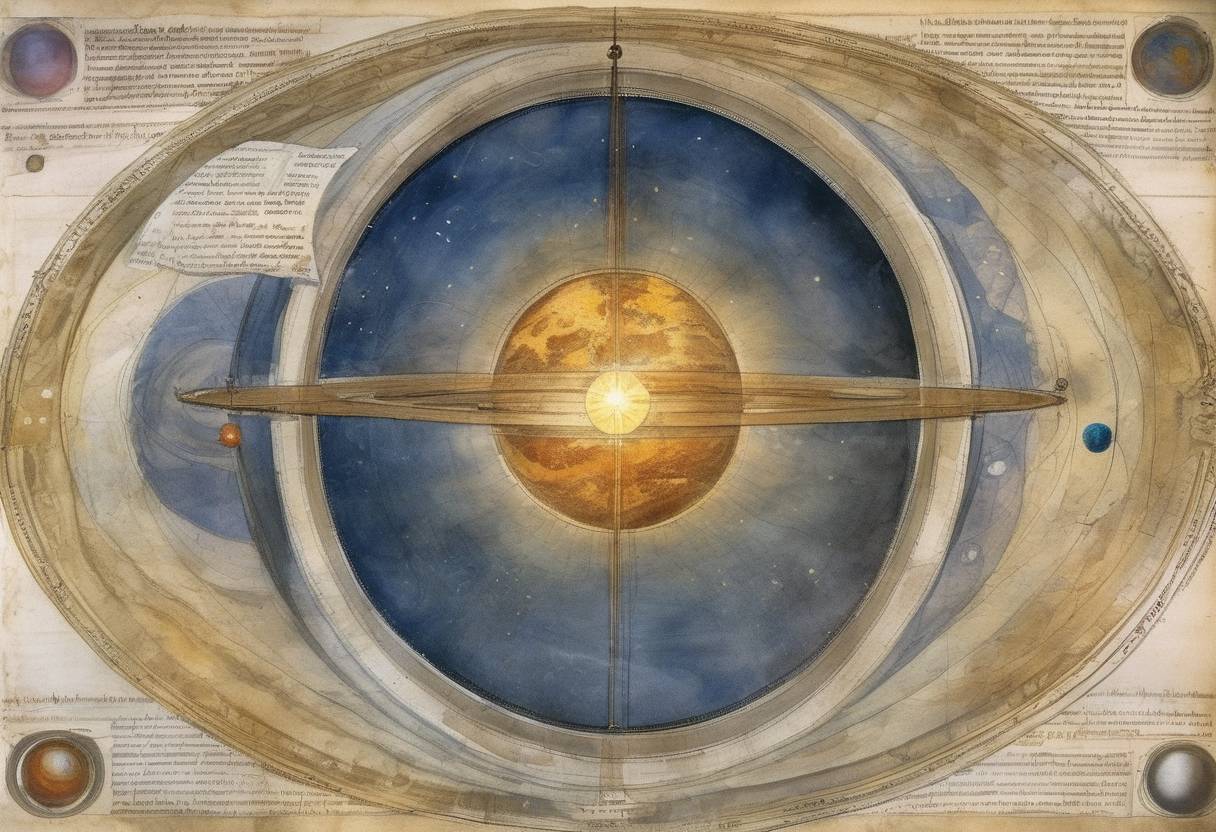
On June 22, 1633, the renowned Italian astronomer and physicist Galileo Galilei was compelled by the Roman Catholic Church to recant his support for the heliocentric model of the universe. This model, which posited that the Earth and other planets revolve around the Sun, was initially proposed by Nicolaus Copernicus in the 16th century. Galileo’s advocacy for this view brought him into direct conflict with the Church, which upheld the geocentric model, where the Earth was considered the center of the universe.
Copernican Theory: The heliocentric theory was first introduced by Copernicus in his work “De revolutionibus orbium coelestium” in 1543. This theory challenged the long-standing Ptolemaic system, which was endorsed by the Church and placed Earth at the center of the universe.
Galileo’s Observations: Using a telescope, Galileo made several astronomical observations that supported the heliocentric model. These included the phases of Venus, the moons of Jupiter, and the observation of sunspots, all of which contradicted the geocentric view.
Initial Conflict with the Church: In 1616, the Catholic Church declared the heliocentric theory heretical. Galileo was warned by the Church to abandon his support for the theory. Despite this, he continued his research and published “Dialogue Concerning the Two Chief World Systems” in 1632, which defended the heliocentric model.
Inquisition Trial: Galileo was summoned to Rome in 1633 to stand trial before the Roman Inquisition. He was charged with heresy for advocating the heliocentric model.
Recantation: Under threat of torture and severe punishment, Galileo was forced to publicly recant his support for the heliocentric theory. On June 22, 1633, he formally abjured, cursed, and detested his past errors and heresies.
House Arrest: Following his recantation, Galileo was sentenced to house arrest for the remainder of his life. He spent his final years in his villa in Arcetri, near Florence, continuing his scientific work in a more subdued manner.
Galileo’s Legacy: Despite his recantation, Galileo’s work laid the groundwork for modern astronomy and physics. His support for the heliocentric model eventually gained widespread acceptance, particularly after the work of later scientists like Johannes Kepler and Isaac Newton.
Church’s Reassessment: The Catholic Church’s condemnation of Galileo was a significant moment in the history of science and religion. It wasn’t until 1992 that Pope John Paul II formally acknowledged the Church’s error in condemning Galileo.
Impact on Science: Galileo’s trial is often cited as a pivotal moment in the history of science, symbolizing the conflict between scientific inquiry and religious doctrine. It underscored the importance of evidence-based science and the eventual separation of science from religious oversight.
Galileo’s recantation remains a powerful reminder of the challenges faced by those who seek to advance human understanding in the face of established beliefs. His courage and contributions continue to inspire scientists and thinkers around the world.
Source: en.wikipedia.org