South African Political Reforms: February 2, 1990
1991 · Cape Town, South Africa
South African President F.W. de Klerk announces the unbanning of the African National Congress (ANC) and promises to release Nelson Mandela.
February 11, 1990
Nelson Mandela is released from Victor Verster Prison after 27 years of imprisonment, marking a pivotal moment in the dismantling of apartheid in South Africa.
Paarl, South Africa | African National Congress
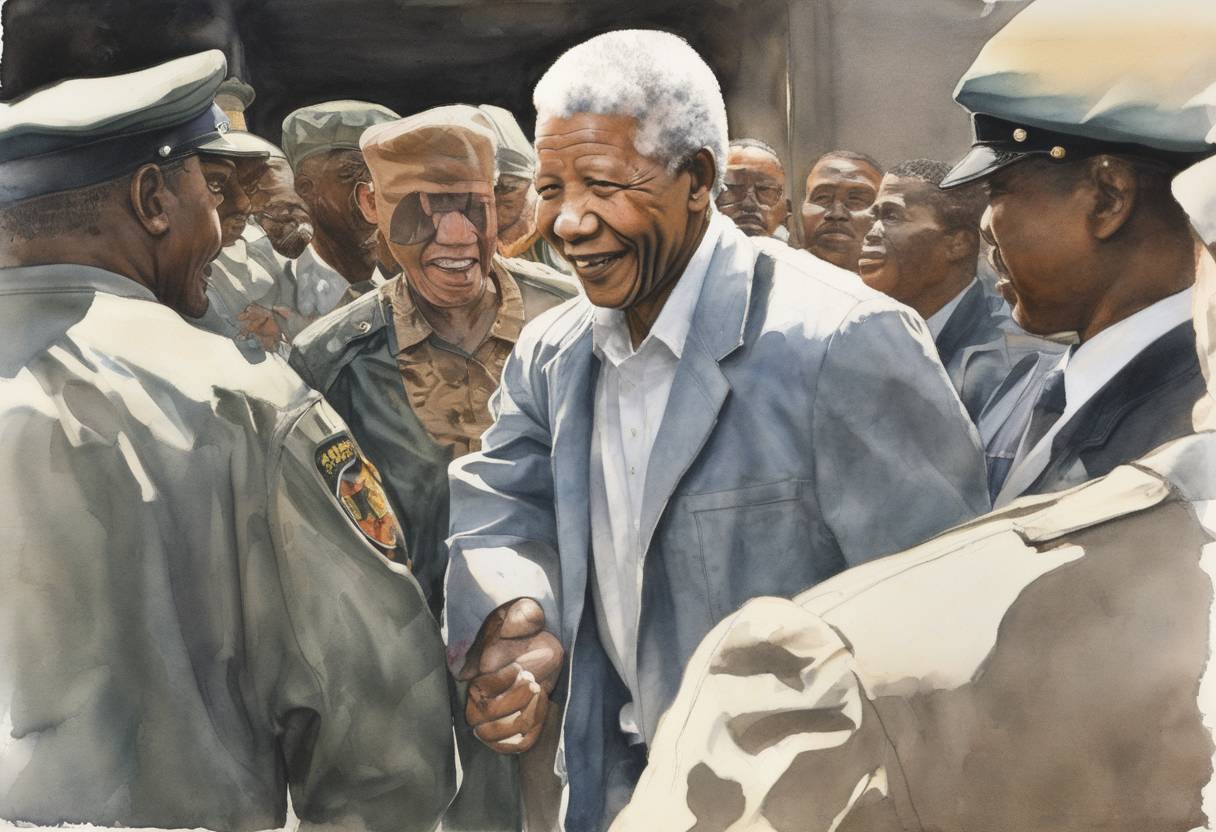
On February 11, 1990, Nelson Mandela was released from Victor Verster Prison, marking a pivotal moment in the dismantling of apartheid in South Africa. This event was not only a significant milestone in South African history but also a symbol of hope and change for oppressed people worldwide.
Nelson Mandela, a key figure in the African National Congress (ANC), was arrested in 1962 and subsequently sentenced to life imprisonment in 1964 for his involvement in anti-apartheid activities, including sabotage against the government. Mandela’s imprisonment became a focal point for the global anti-apartheid movement, symbolizing the struggle against racial segregation and discrimination enforced by the South African government.
International Pressure: Throughout the 1980s, international pressure on the South African government intensified. Economic sanctions and cultural boycotts were imposed by various countries, demanding an end to apartheid and the release of political prisoners, including Mandela.
Internal Unrest: Within South Africa, resistance against apartheid grew stronger, with widespread protests, strikes, and civil disobedience campaigns led by various anti-apartheid groups.
Political Changes: In 1989, F.W. de Klerk became the President of South Africa. Recognizing the unsustainable nature of apartheid, de Klerk initiated reforms, including the unbanning of the ANC and other political organizations.
Negotiations: Secret negotiations between the South African government and Mandela had been ongoing since the mid-1980s. These discussions laid the groundwork for Mandela’s eventual release and the broader transition towards a democratic South Africa.
On February 11, 1990, Nelson Mandela walked out of Victor Verster Prison, hand in hand with his then-wife, Winnie Mandela. The event was broadcast live across the world, capturing the attention of millions. Mandela’s release was greeted with jubilation by supporters both in South Africa and internationally.
Transition to Democracy: Mandela’s release was a crucial step towards the negotiation process that eventually led to the dismantling of apartheid. It paved the way for the first multiracial elections in 1994, in which Mandela was elected as South Africa’s first black president.
Symbol of Reconciliation: Mandela’s emphasis on reconciliation and nation-building helped to ease tensions in a deeply divided society. His leadership was instrumental in guiding South Africa through a peaceful transition.
Global Impact: Mandela’s release reinforced the global fight against racial injustice and inspired movements for equality and human rights worldwide.
Nelson Mandela’s release from prison remains a defining moment in history, symbolizing the triumph of resilience and justice over oppression and inequality.
Source: en.wikipedia.org