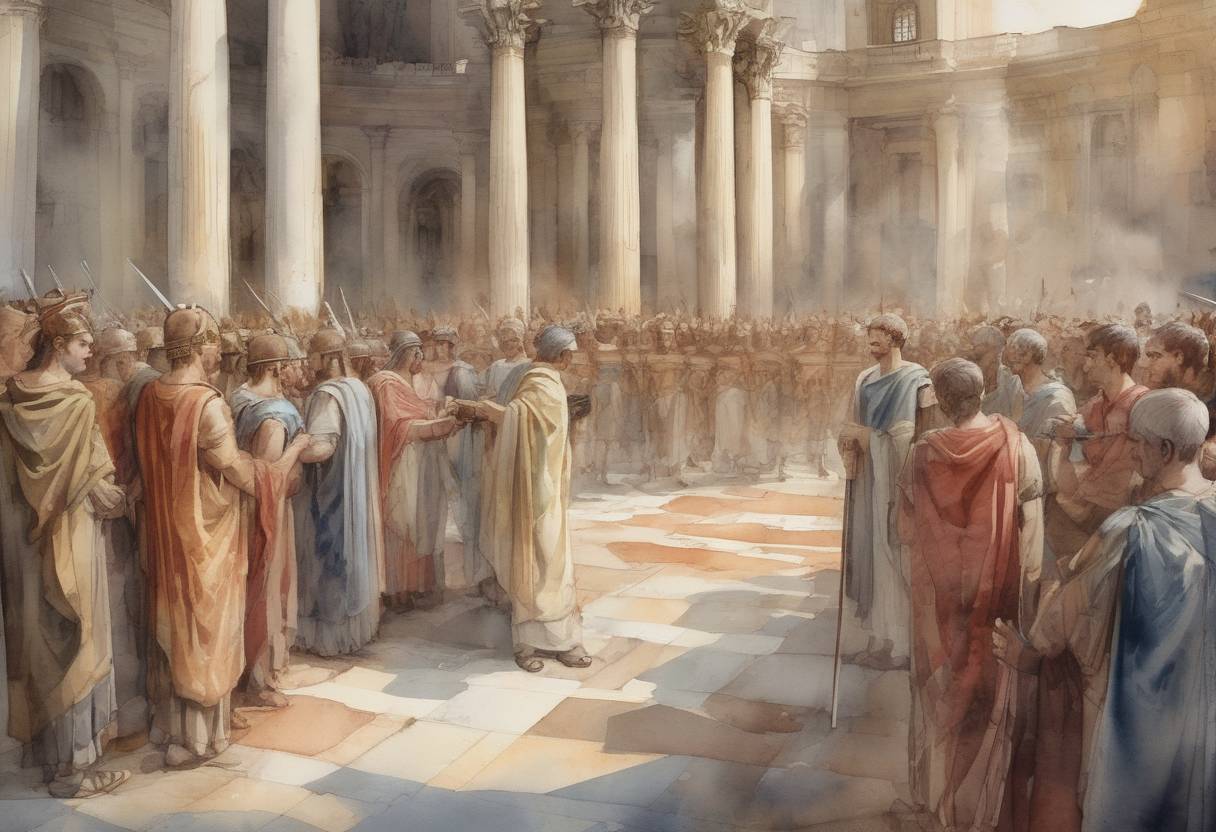
The Edict of Milan: A Turning Point for Religious Tolerance
On April 30, 313, a pivotal moment in the history of the Roman Empire and Christianity occurred with the issuance of the Edict of Milan. This decree, proclaimed by Roman Emperors Constantine I and Licinius, marked a significant shift in the empire’s approach to religious practices, particularly concerning Christianity.
Historical Context
Prior to the Edict of Milan, Christians in the Roman Empire faced periods of intense persecution. The most severe of these occurred during the reign of Emperor Diocletian, who initiated the Great Persecution in 303 AD. Christians were subjected to confiscation of property, destruction of churches, imprisonment, and even execution.
The rise of Constantine I, who became emperor in 306 AD, began to change the landscape. Constantine’s conversion to Christianity, influenced by his vision before the Battle of the Milvian Bridge in 312 AD, played a crucial role in his favorable stance towards Christians.
Key Provisions of the Edict
The Edict of Milan was not merely a declaration of religious tolerance for Christians but extended to all religions within the empire. Its main provisions included:
Freedom of Worship: It granted all individuals the freedom to worship any deity of their choice, effectively ending the state-sponsored persecution of Christians.
Restoration of Property: The edict ordered the return of confiscated Christian property, including places of worship, without demanding compensation from the state.
Legal Rights: Christians were granted the same legal rights as other citizens, allowing them to practice their faith openly and without fear of retribution.
Broader Historical Significance
The Edict of Milan is often seen as a foundational moment for the establishment of Christianity as a major religion within the Roman Empire. It set a precedent for religious tolerance and laid the groundwork for the eventual adoption of Christianity as the state religion under Emperor Theodosius I in 380 AD.
Furthermore, the edict demonstrated a shift in imperial policy towards a more inclusive approach to governance, recognizing the diverse religious landscape of the empire. It also highlighted the growing influence of Christianity, which would continue to shape the cultural and political fabric of Europe for centuries to come.
Aftermath and Consequences
The issuance of the Edict of Milan had profound and lasting effects:
Growth of Christianity: With newfound freedom, Christianity spread rapidly throughout the empire, leading to the construction of churches and the establishment of Christian communities.
Political Alliances: The alliance between Constantine and Licinius, solidified by the edict, was short-lived. Tensions eventually led to conflict, culminating in Constantine’s victory over Licinius in 324 AD, making him the sole ruler of the Roman Empire.
Cultural Transformation: The edict contributed to the transformation of Roman society, influencing art, literature, and philosophy, as Christian themes began to permeate cultural expressions.
In conclusion, the Edict of Milan was a landmark decree that not only ended the persecution of Christians but also set the stage for the religious and cultural evolution of the Roman Empire. Its legacy is evident in the enduring presence of Christianity as a major world religion.