Bastille Day Celebrations on July 8, 1951
1951 · Paris, France
Paris celebrated Bastille Day two days early by holding elaborate parades and military reviews.
July 14, 1790
Fête de la Fédération was celebrated in France to commemorate the first anniversary of the Storming of the Bastille and the unity of the French nation.
Paris, France | French Government
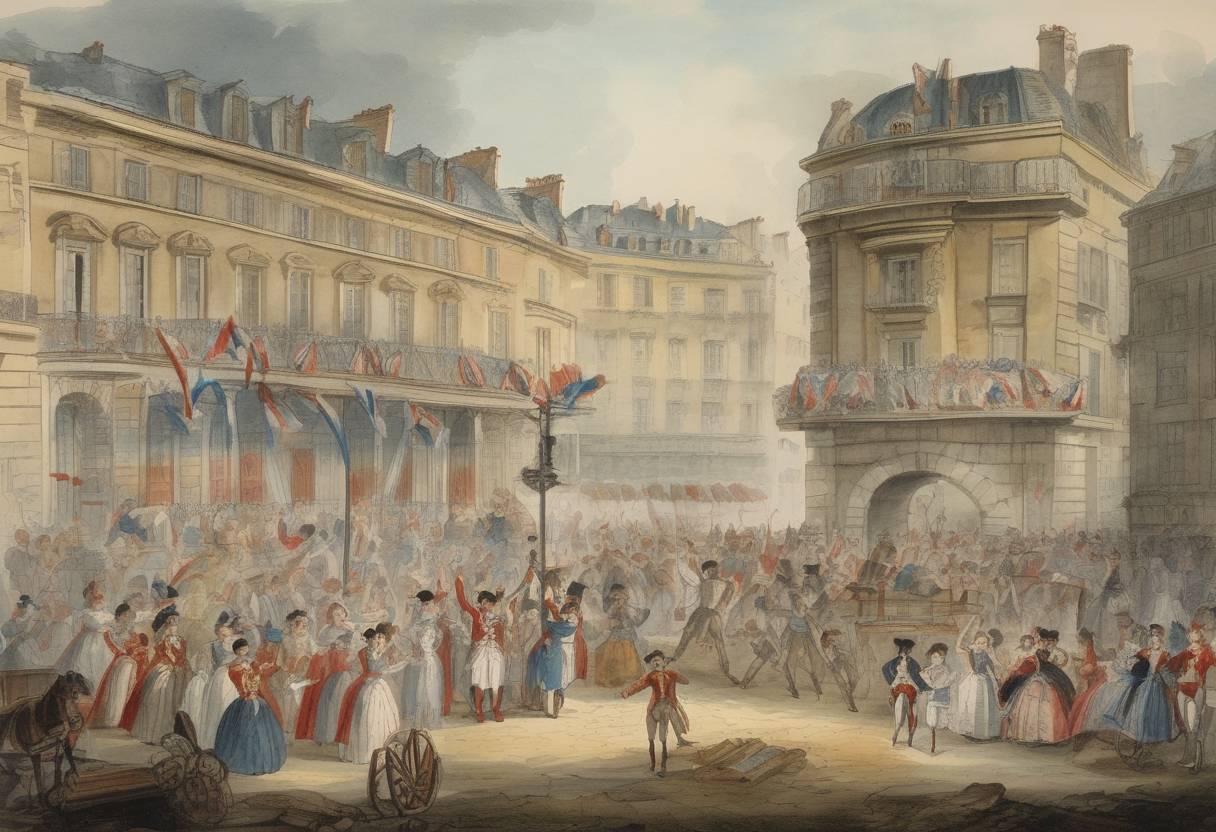
The Fête de la Fédération, celebrated on July 14, 1790, was a significant event in the early stages of the French Revolution. It marked the first anniversary of the Storming of the Bastille, a pivotal moment that symbolized the end of royal tyranny and the birth of a new era in France. This celebration was not only a commemoration of the Bastille’s fall but also a demonstration of national unity and the revolutionary ideals of liberty, equality, and fraternity.
The Storming of the Bastille (July 14, 1789): The Bastille, a fortress-prison in Paris, was stormed by revolutionaries, an act that became a symbol of the uprising against the monarchy and the oppressive Ancien Régime. This event is often regarded as the beginning of the French Revolution.
The Revolution’s Progress: By 1790, the revolution had led to significant changes, including the establishment of the National Assembly and the drafting of the Declaration of the Rights of Man and of the Citizen. However, France was still grappling with internal divisions and the challenge of unifying a nation in turmoil.
Location: The Fête de la Fédération was held on the Champ de Mars in Paris, a large public greenspace that could accommodate the massive crowds expected for the event.
Participants: The celebration brought together representatives from all regions of France, including members of the National Guard, delegates from the provinces, and citizens from various social classes. King Louis XVI and Queen Marie Antoinette also attended, signaling a temporary reconciliation between the monarchy and the revolutionary forces.
Ceremonial Events: The day featured a grand military parade, speeches, and the swearing of an oath of allegiance to the nation and the law. The Marquis de Lafayette, a key figure in the revolution, played a prominent role, leading the National Guard in the oath-taking ceremony.
Symbolism: The event was designed to promote unity and peace, with the aim of healing the divisions that had emerged during the revolution. It was a manifestation of the revolutionary spirit, emphasizing the collective identity of the French people.
National Unity: The Fête de la Fédération was a moment of national solidarity, showcasing the potential for unity amidst the revolutionary upheaval. It temporarily bridged the gap between the monarchy and the revolutionaries.
Legacy: The celebration set a precedent for future national holidays in France. Today, July 14 is celebrated as Bastille Day, a national holiday commemorating the French Revolution and the values it espoused.
Historical Impact: While the Fête de la Fédération was a moment of optimism, the subsequent years would see increased political turmoil, leading to the eventual fall of the monarchy and the rise of radical revolutionary factions.
In summary, the Fête de la Fédération was a landmark event in the French Revolution, symbolizing the hope for a unified and egalitarian France. It remains a significant historical moment, reflecting the aspirations and challenges of a nation in the midst of profound transformation.
Source: en.wikipedia.org