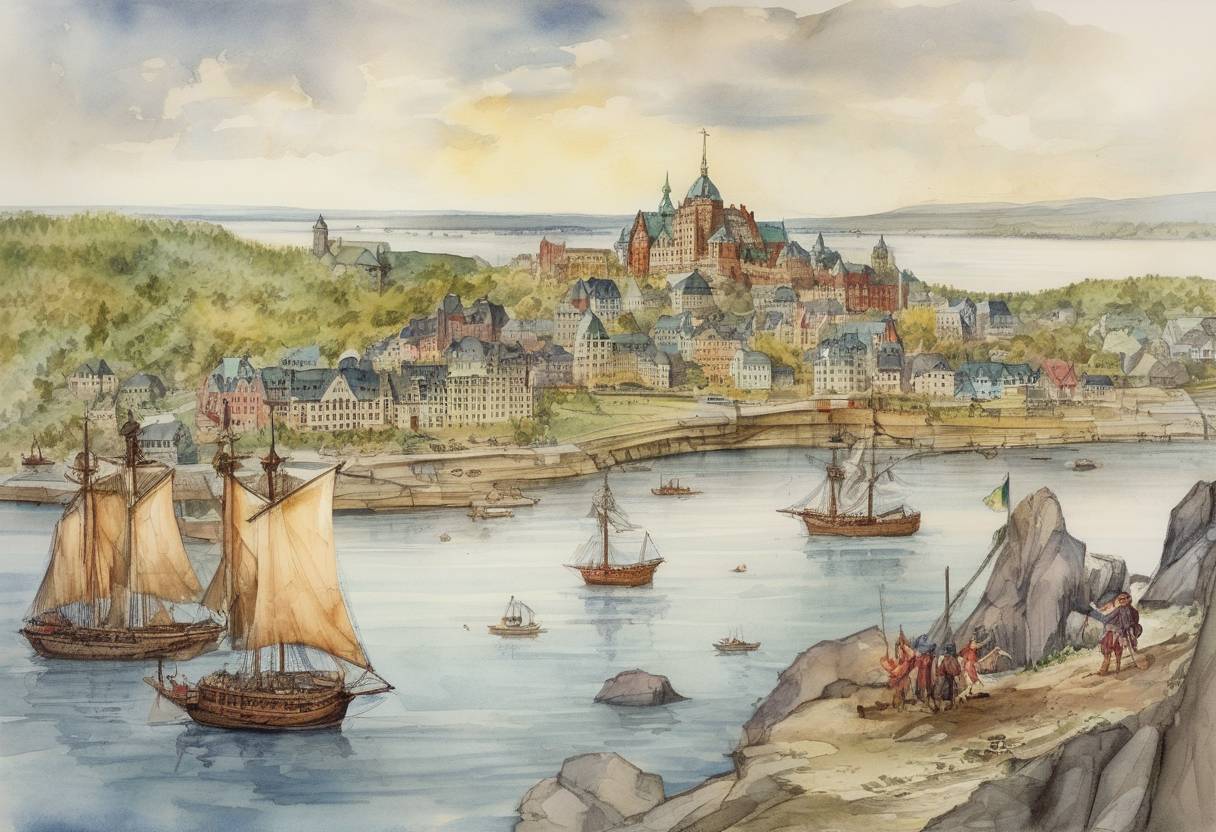
Founding of Quebec by Samuel de Champlain
On July 3, 1608, Samuel de Champlain, a French explorer and cartographer, founded the city of Quebec, which would become one of the most significant French settlements in North America. This event marked a pivotal moment in the history of French colonization in the New World.
Background
- Samuel de Champlain: Known as the “Father of New France,” Champlain was instrumental in establishing French presence in North America. Prior to founding Quebec, he had explored the St. Lawrence River and the northeastern coast of what is now the United States.
- French Colonization Efforts: France, eager to expand its influence and trade networks, particularly in fur, sought to establish permanent settlements in North America. Earlier attempts, such as the settlement on Île Sainte-Croix in 1604, had failed due to harsh conditions.
Founding of Quebec
- Location: Champlain chose a strategic site on the narrowest point of the St. Lawrence River, which he named “Kébec,” an Algonquin word meaning “where the river narrows.” This location was ideal for defense and trade.
- Construction: Champlain and his men constructed a fortified habitation, which served as both a trading post and a base for further exploration. The settlement included a storehouse, living quarters, and defensive structures.
Significance
- Trade and Alliances: Quebec quickly became a hub for the fur trade, establishing vital economic ties with Indigenous peoples, including the Algonquin, Montagnais, and Huron-Wendat. Champlain’s alliances with these groups were crucial for the survival and growth of the settlement.
- Expansion of New France: Quebec served as the capital of New France and a launching point for further exploration and expansion into the interior of the continent. It played a central role in the French colonial empire in North America.
- Cultural and Historical Impact: The founding of Quebec laid the groundwork for the development of French culture and language in Canada, which continues to be a significant aspect of Canadian identity today.
Aftermath
- Growth and Challenges: Over the following decades, Quebec grew despite challenges such as harsh winters, conflicts with Indigenous groups, and competition with English and Dutch settlers.
- Legacy: Today, Quebec City is one of the oldest cities in North America and a UNESCO World Heritage site, recognized for its historical significance and well-preserved colonial architecture.
The founding of Quebec by Samuel de Champlain was a cornerstone in the establishment of French influence in North America, shaping the cultural and political landscape of the region for centuries to come.