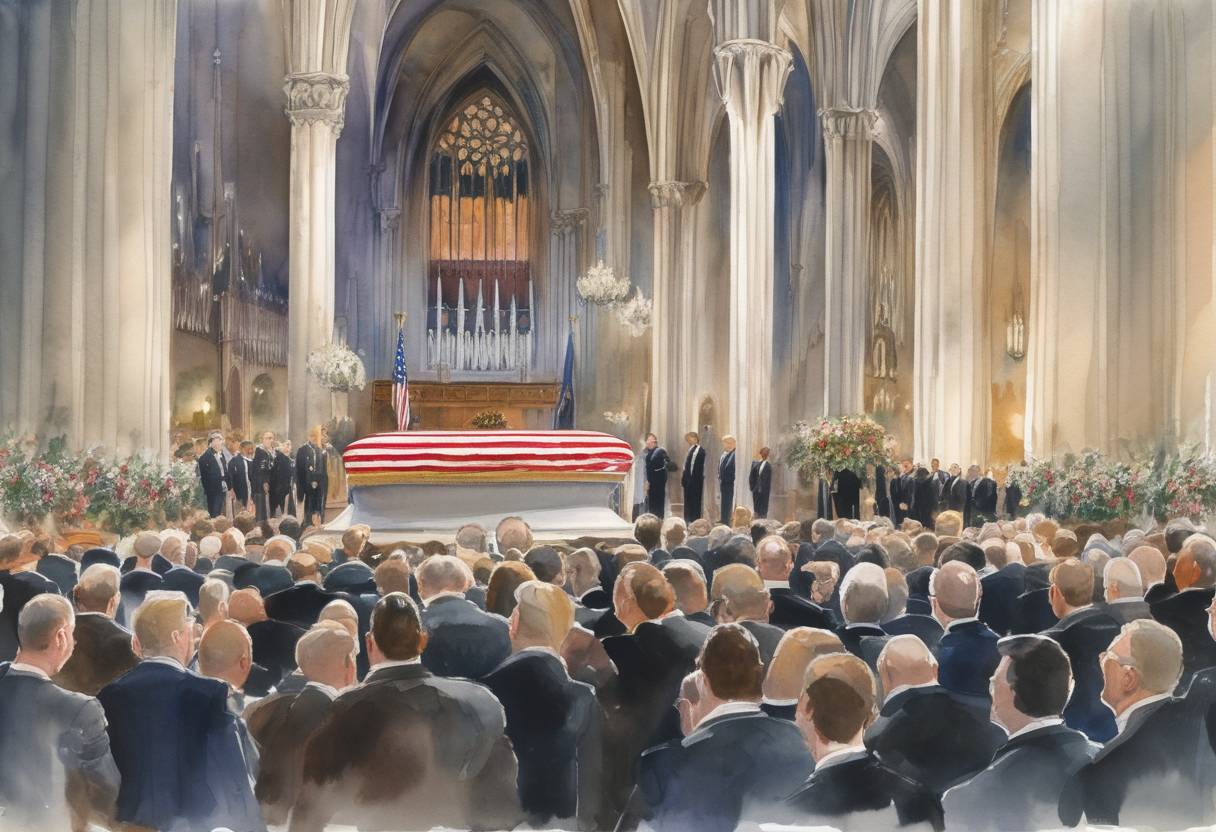
On June 11, 2004, the funeral of former U.S. President Ronald Reagan took place at the Washington National Cathedral in Washington, D.C. This event marked the culmination of a week of national mourning for the 40th President of the United States, who passed away on June 5, 2004, at the age of 93 after a long battle with Alzheimer’s disease.
Context and Background
Ronald Reagan served as President from 1981 to 1989, a period marked by significant political and economic changes both domestically and internationally. His presidency is often remembered for its conservative policies, the end of the Cold War, and the economic reforms known as “Reaganomics.” After leaving office, Reagan retired to California, where he lived until his death.
The Funeral Service
The state funeral on June 11 was a solemn and grand affair, attended by dignitaries from around the world, including former British Prime Minister Margaret Thatcher, former Soviet leader Mikhail Gorbachev, and numerous current and former U.S. presidents and first ladies. The service was led by the Reverend John Danforth, an Episcopal priest and former U.S. Senator.
Key Elements of the Service
Eulogies and Tributes: The service included eulogies from several notable figures, including President George W. Bush, former Canadian Prime Minister Brian Mulroney, and former British Prime Minister Margaret Thatcher, whose tribute was delivered by video due to her health.
Military Honors: As a former Commander-in-Chief, Reagan was accorded full military honors. This included a 21-gun salute and the playing of “Taps” by a military bugler.
Procession and Attendance: The funeral procession through Washington, D.C., was witnessed by thousands of mourners lining the streets. Inside the cathedral, the service was attended by approximately 4,000 guests, including members of Congress, Supreme Court justices, and foreign dignitaries.
Aftermath and Burial
Following the service at the Washington National Cathedral, Reagan’s body was flown back to California. He was interred at the Ronald Reagan Presidential Library in Simi Valley, California, during a sunset ceremony attended by family and close friends.
Historical Significance
Ronald Reagan’s funeral was a moment of reflection on his impact on American politics and global affairs. It highlighted the end of an era and underscored the lasting influence of his presidency on subsequent political discourse. The event also served as a unifying moment for the nation, bringing together people across the political spectrum to honor his legacy.
Reagan’s funeral was one of the most watched events of its kind, with millions tuning in to pay their respects to a leader who had left a profound mark on the 20th century.