Assassination Attempt on Napoleon III by Felice Orsini - January 14, 1858
1858 · Paris, France
Napoleon III of France escapes an assassination attempt by Felice Orsini, an Italian nationalist.
May 5, 1821
Napoleon Bonaparte dies in exile on the island of Saint Helena.
Longwood, Saint Helena | French Empire
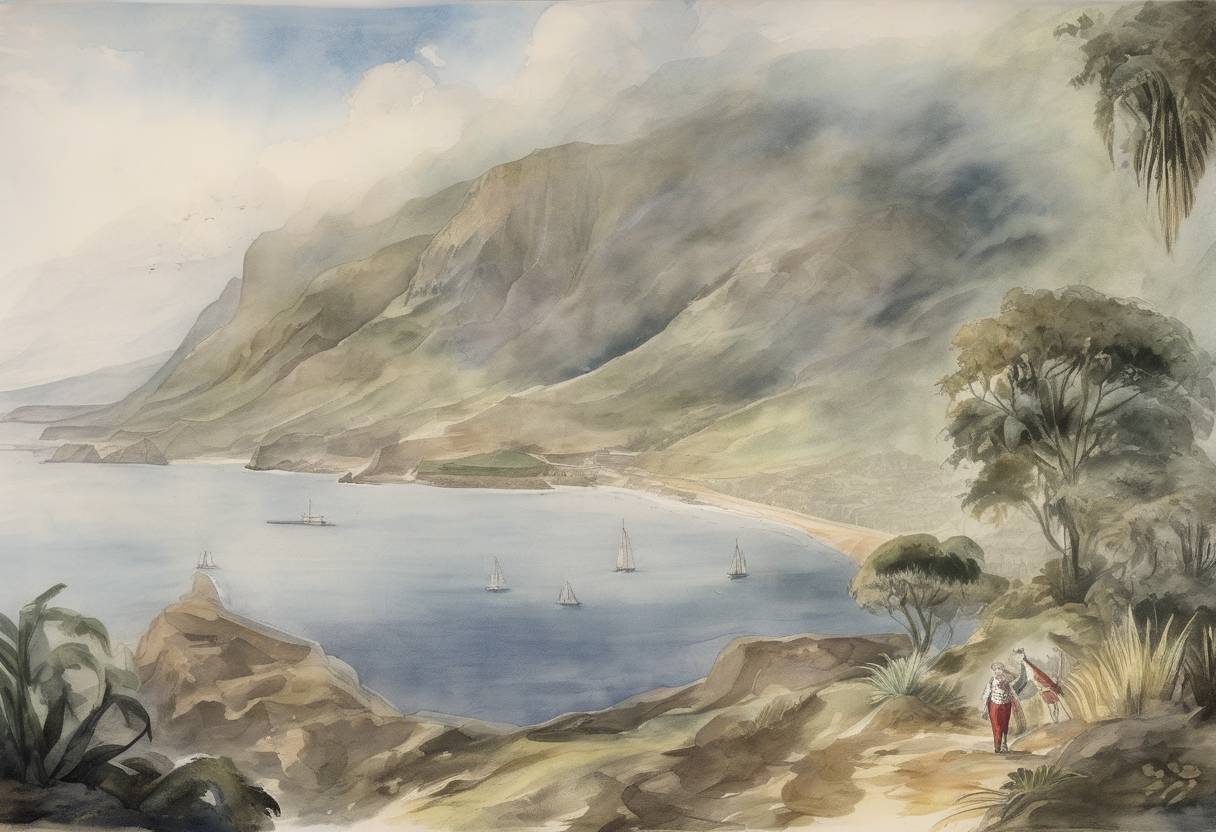
On May 5, 1821, Napoleon Bonaparte, the former Emperor of the French, died in exile on the remote island of Saint Helena in the South Atlantic Ocean. His death marked the end of a significant era in European history, characterized by his rise to power, military conquests, and eventual downfall.
Napoleon Bonaparte rose to prominence during the French Revolution, eventually becoming the Emperor of the French in 1804. His reign was marked by a series of military campaigns known as the Napoleonic Wars, which saw France dominate much of Europe. However, his ambition and relentless expansion led to widespread conflict and resistance from other European powers.
The turning point came with his disastrous invasion of Russia in 1812, followed by a series of defeats that culminated in his abdication in 1814. Napoleon was initially exiled to the island of Elba, but he escaped in 1815, returning to power for a brief period known as the Hundred Days. His final defeat at the Battle of Waterloo in June 1815 led to his second abdication.
After his defeat at Waterloo, Napoleon was exiled by the British to Saint Helena, a remote island located in the South Atlantic Ocean, far from Europe. This location was chosen to prevent any further attempts at escape or return to power. Napoleon arrived on the island in October 1815, where he lived under British supervision.
During his time on Saint Helena, Napoleon was housed at Longwood House, where he lived with a small entourage. His health gradually deteriorated, and he spent much of his time dictating his memoirs, reflecting on his life and career.
Napoleon Bonaparte died on May 5, 1821, at the age of 51. The official cause of death was recorded as stomach cancer, although there has been speculation over the years about the possibility of arsenic poisoning. An autopsy conducted by his physician, Dr. Francesco Antommarchi, supported the diagnosis of stomach cancer.
Napoleon’s death had significant historical implications. It marked the definitive end of the Napoleonic era and the beginning of a new phase in European history, characterized by the restoration of monarchies and the re-establishment of the balance of power.
In 1840, Napoleon’s remains were returned to France and interred in a grand tomb at Les Invalides in Paris, where they remain to this day. His legacy continues to be a subject of extensive study and debate, with his military genius and authoritarian rule leaving a lasting impact on France and the world.
Napoleon’s life and death are pivotal in understanding the transformation of Europe in the 19th century. His legal reforms, particularly the Napoleonic Code, have had a lasting influence on legal systems worldwide. His military strategies are still studied in military academies, and his complex legacy as both a champion of revolutionary ideals and an imperial ruler continues to fascinate historians and the public alike.
Source: en.wikipedia.org