The Nika Riots: A Detailed Account
Background
The Nika Riots, one of the most violent and destructive uprisings in the history of Constantinople, began on January 13, 532. These riots were rooted in the complex social and political tensions of the Byzantine Empire during the reign of Emperor Justinian I. The immediate cause of the riots was a chariot race at the Hippodrome, a popular venue for public entertainment and a focal point for political expression.
Causes
The riots were fueled by a combination of factors:
Political Tensions: The Byzantine Empire was divided into factions, most notably the Blues and the Greens, which were originally chariot racing teams but had evolved into powerful political entities. These factions often clashed, and their rivalries reflected broader societal divisions.
Social Discontent: High taxes and perceived corruption within Justinian’s administration had led to widespread dissatisfaction among the populace. The emperor’s ambitious building projects, including the Hagia Sophia, placed a heavy financial burden on the citizens.
Judicial Injustice: The immediate spark for the riots was the arrest and execution of several members of the Blues and Greens for murder. When two of the condemned managed to escape and sought sanctuary in a church, both factions united in demanding clemency, which Justinian initially refused.
The Riots
On January 13, during a chariot race at the Hippodrome, the crowd began chanting “Nika” (meaning “Victory” or “Conquer”), signaling their unified opposition to the emperor. The situation quickly escalated into a full-scale riot that lasted for a week.
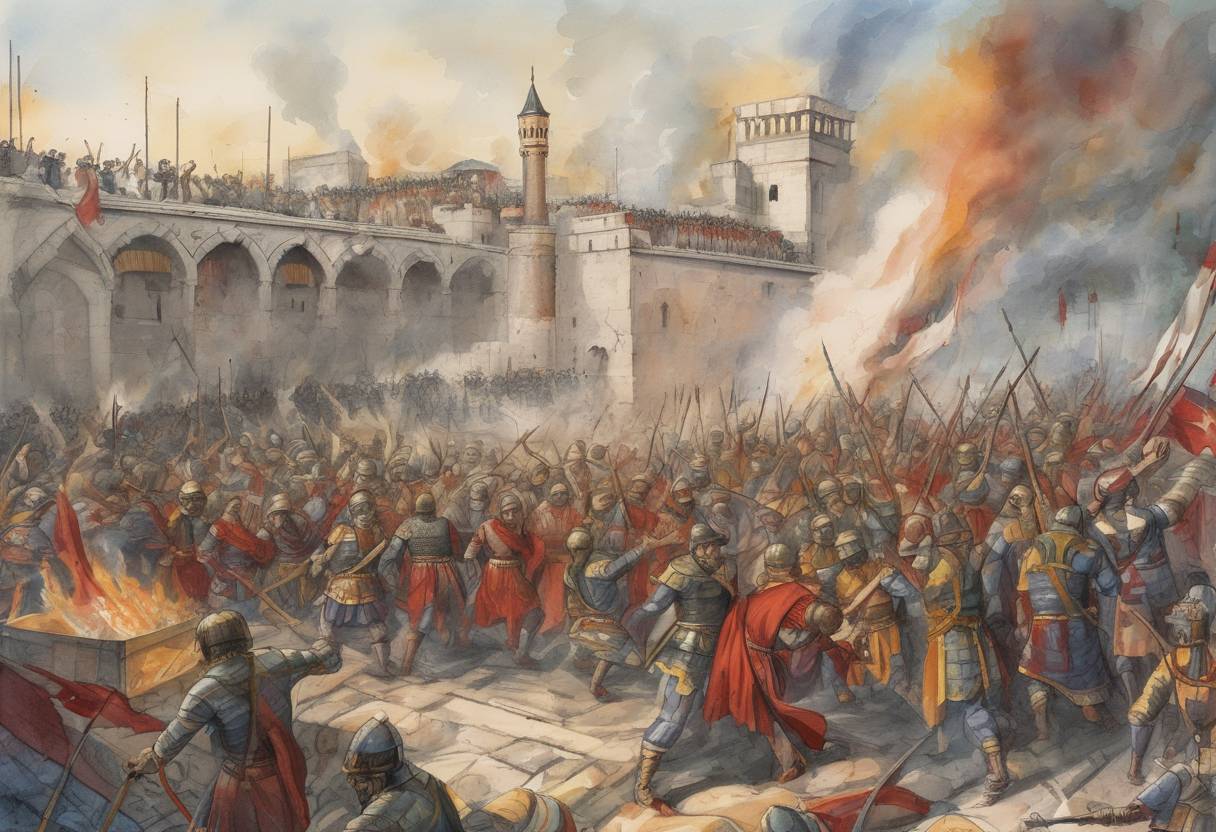
Destruction: The rioters set fire to much of the city, including the Hagia Sophia, the Church of St. Irene, and the Baths of Zeuxippus. The destruction was extensive, with large parts of Constantinople reduced to ruins.
Political Maneuvering: Initially, Justinian considered fleeing the city, but his wife, Empress Theodora, famously persuaded him to stay and confront the crisis. Her resolve played a crucial role in the eventual suppression of the riots.
Suppression and Aftermath
Military Intervention: Justinian ordered his generals, Belisarius and Mundus, to suppress the revolt. They led troops into the Hippodrome, where they trapped and slaughtered thousands of rioters, effectively ending the uprising.
Casualties: It is estimated that around 30,000 people were killed during the riots, marking it as one of the deadliest episodes in the city’s history.
Reconstruction and Reforms: In the aftermath, Justinian embarked on a massive reconstruction effort, including the rebuilding of the Hagia Sophia, which became an architectural marvel of the Byzantine Empire. The riots also prompted Justinian to implement reforms aimed at stabilizing his rule and addressing some of the grievances that had fueled the unrest.
Historical Significance
The Nika Riots highlighted the volatile nature of urban politics in Constantinople and the significant influence of public opinion on imperial authority. They underscored the challenges faced by Justinian in maintaining control over a diverse and often fractious empire. The events also demonstrated the critical role of Empress Theodora in Byzantine politics and the importance of decisive leadership in times of crisis.