Battle of Nesjar: March 25, 1016
1015 · Nesjar, Norway
Battle of Nesjar; King Olaf II of Norway defeats a coalition led by Earl Svein Håkonsson, solidifying his rule over Norway.
June 7, 0879
The Battle of Hafrsfjord, traditionally dated to this year, is believed to have taken place near Stavanger, Norway. It was a decisive battle that led to the unification of Norway under King Harald Fairhair.
Stavanger, Norway
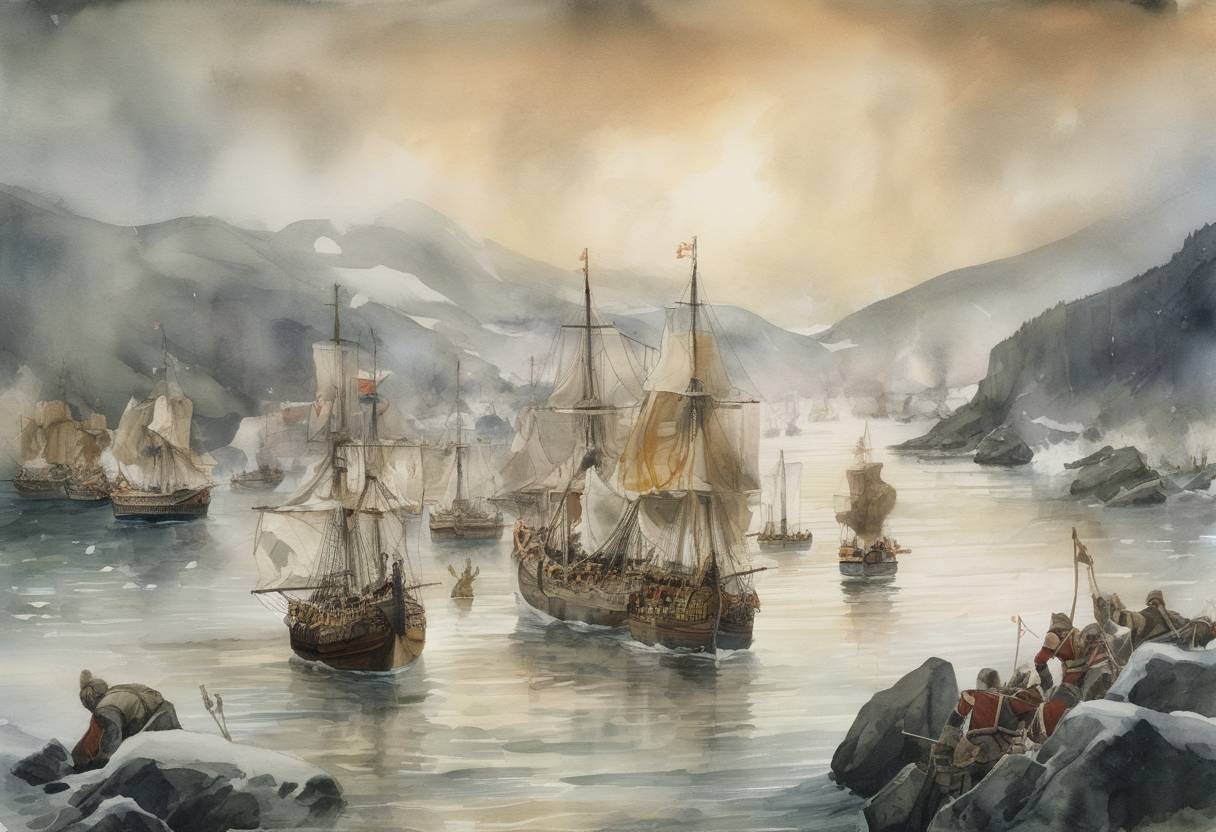
The Battle of Hafrsfjord is a significant event in Norwegian history, traditionally dated to around 872, although some sources suggest it may have occurred closer to 880. This battle is pivotal as it marked the unification of Norway under the rule of King Harald Fairhair (Harald Hårfagre). The battle took place near Stavanger, in the southwestern part of present-day Norway.
Before the battle, Norway was divided into numerous petty kingdoms and chiefdoms, each ruled by local chieftains. Harald Fairhair, a young and ambitious leader, sought to consolidate these fragmented territories into a single kingdom. According to sagas, his motivation was partly personal, driven by a vow to win the hand of Gyda Eiriksdottir, who would only marry him if he became the king of a united Norway.
The Battle of Hafrsfjord was the culmination of Harald’s efforts to unify the Norwegian territories. It involved a series of confrontations with various regional leaders who opposed his centralizing ambitions. The exact details of the battle are not well-documented, but it is believed to have been a large naval engagement, with Harald’s forces clashing against a coalition of rival chieftains.
Harald’s victory at Hafrsfjord was decisive. It effectively ended significant resistance to his rule and allowed him to establish himself as the first King of Norway. This unification laid the foundation for the development of a more centralized Norwegian state.
The Battle of Hafrsfjord is a landmark event in the history of Norway, symbolizing the transition from fragmented rule to a unified kingdom. While the exact date and details remain subjects of historical debate, the battle’s significance in shaping the future of Norway is undisputed. It set the stage for the development of a national identity and the eventual emergence of Norway as a distinct political entity in medieval Europe.
Source: en.wikipedia.org