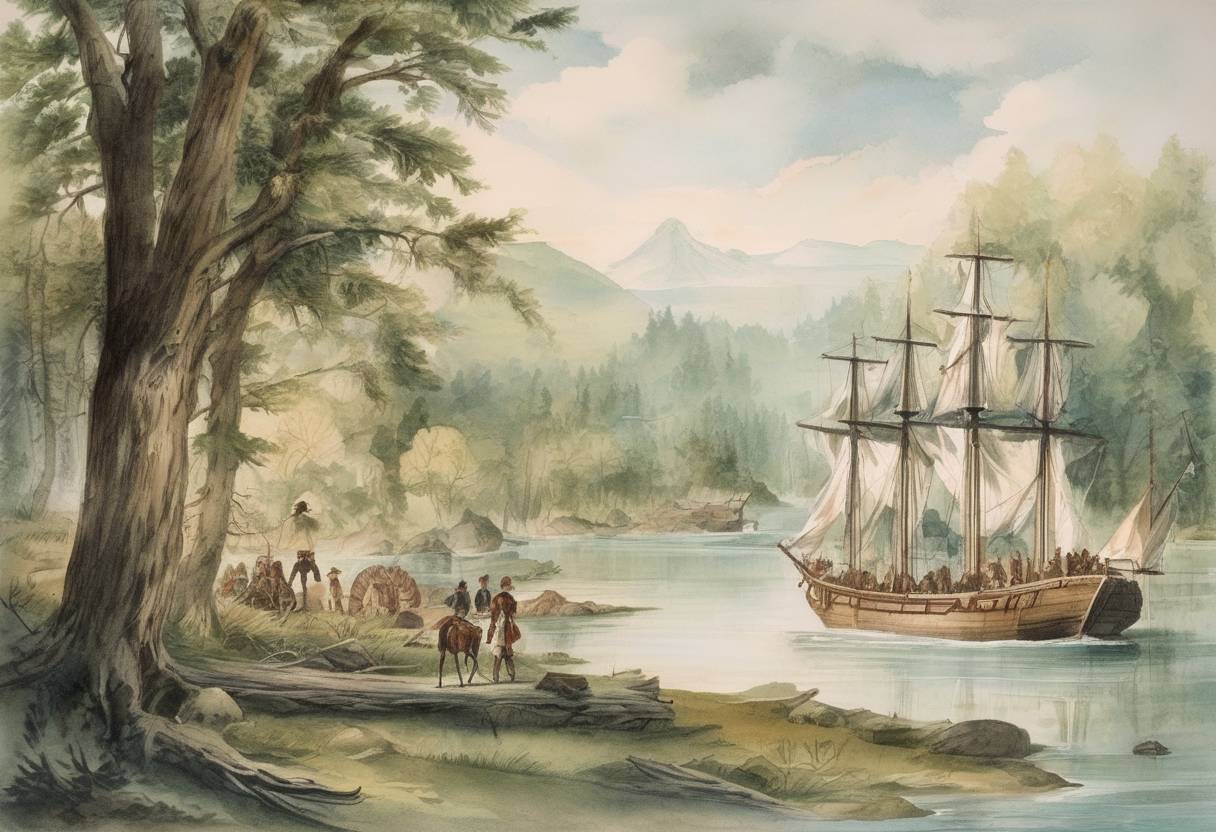
The Lewis and Clark Expedition: Departure from Camp Dubois
On May 14, 1804, the Lewis and Clark Expedition, officially known as the Corps of Discovery Expedition, embarked on its historic journey from Camp Dubois, located near present-day Wood River, Illinois. This expedition was commissioned by President Thomas Jefferson following the acquisition of the Louisiana Territory from France in 1803, a monumental event that effectively doubled the size of the United States.
Background
- Louisiana Purchase (1803): The United States acquired approximately 828,000 square miles of territory from France for $15 million. This acquisition prompted the need to explore and map the vast, uncharted lands.
- Objective: The primary goals were to map the newly acquired territory, establish trade with Native American tribes, and assert American sovereignty over the land. Additionally, Jefferson hoped to find a practical route across the western half of the continent and gather scientific and economic information.
- Meriwether Lewis: Appointed by Jefferson as the leader of the expedition. Lewis was a skilled soldier and outdoorsman, and he had served as Jefferson’s personal secretary.
- William Clark: Co-leader of the expedition, Clark was an experienced frontiersman and cartographer. He was responsible for map-making and managing the expedition’s logistics.
The Journey Begins
- Departure from Camp Dubois: On May 14, 1804, the expedition set out from Camp Dubois, traveling up the Missouri River. The Corps consisted of approximately 45 members, including soldiers, boatmen, and interpreters.
- Vessel: The expedition utilized a specially designed keelboat and two smaller pirogues to navigate the river.
Significance
- Scientific and Geographic Discoveries: The expedition provided valuable information about the geography, biology, and ethnography of the western territories. It documented numerous plant and animal species previously unknown to science.
- Native American Relations: The Corps of Discovery established diplomatic relations with various Native American tribes, which were crucial for the success of the journey.
- Mapping and Exploration: The maps and journals produced by Lewis and Clark laid the groundwork for future exploration and settlement of the American West.
Aftermath
- Return: The expedition returned to St. Louis on September 23, 1806, after traveling over 8,000 miles.
- Legacy: The Lewis and Clark Expedition is considered one of the most successful and significant exploration endeavors in American history. It paved the way for westward expansion and contributed to the United States’ understanding of its new territories.
The departure from Camp Dubois marked the beginning of a journey that would forever change the landscape and history of the United States, highlighting the spirit of exploration and discovery that characterized the early 19th century.