Liberation of Kraków: January 19, 1945
1945 · Kraków, Poland
The Soviet Union invaded Kraków, Poland, liberating it from Nazi German occupation during World War II.
January 17, 1945
The Soviet Union captures Warsaw, Poland, from Nazi Germany during World War II.
Warsaw, Poland | Soviet Red Army
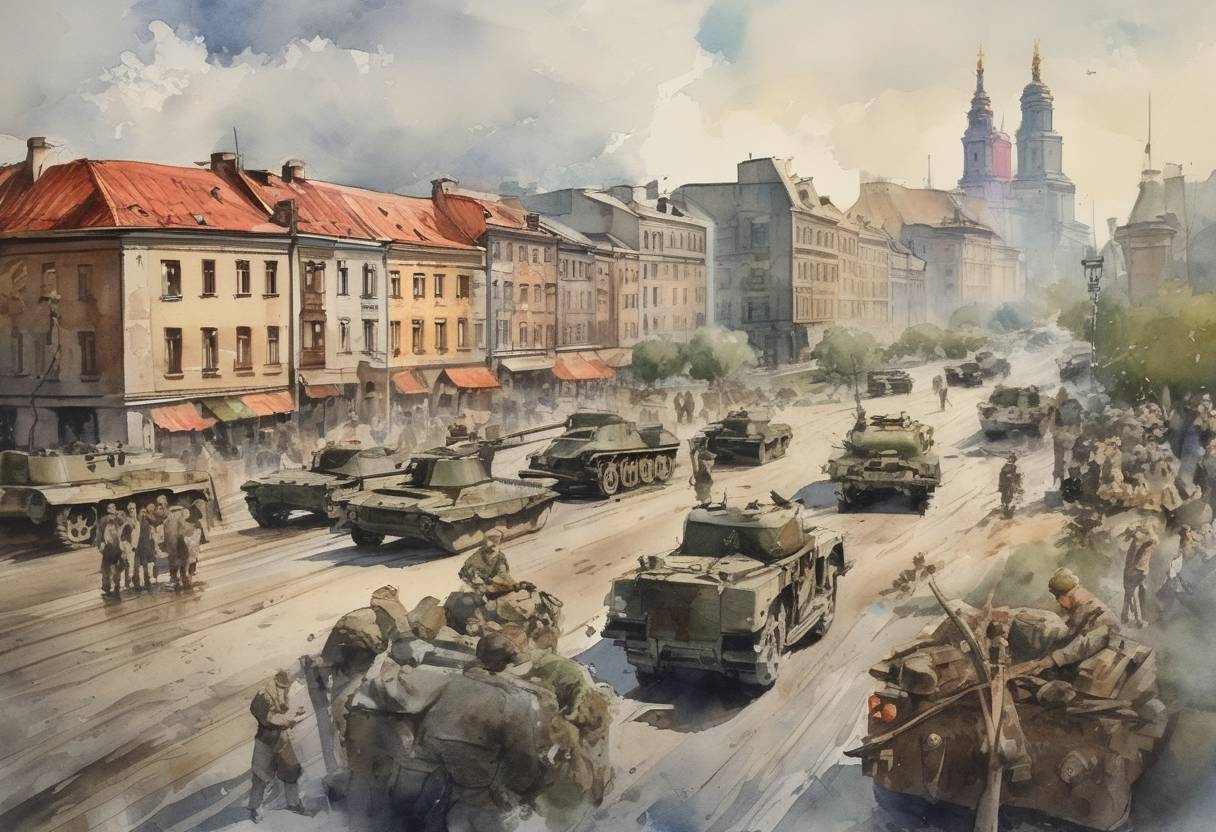
On January 17, 1945, the Soviet Union’s Red Army successfully captured Warsaw, Poland, from Nazi Germany, marking a significant turning point in the Eastern Front of World War II. This event was part of the larger Vistula-Oder Offensive, a major Soviet operation aimed at pushing German forces westward and liberating occupied territories.
Nazi Occupation of Warsaw: Warsaw had been under Nazi occupation since the early days of World War II, following the German invasion of Poland in September 1939. The city suffered immense destruction and hardship, particularly during the Warsaw Uprising in 1944, when the Polish resistance attempted to liberate the city from German control. The uprising was brutally suppressed, leading to massive civilian casualties and the near-total destruction of Warsaw.
Soviet Strategy: By late 1944, the Soviet Union had gained significant momentum on the Eastern Front. The Red Army’s successful operations in Belarus and Ukraine set the stage for a major offensive into Poland. The Vistula-Oder Offensive, launched on January 12, 1945, aimed to break through German defenses along the Vistula River and advance towards the Oder River, bringing Soviet forces closer to Berlin.
Advance on Warsaw: The Soviet offensive involved several fronts, with the 1st Belorussian Front, commanded by Marshal Georgy Zhukov, playing a crucial role in the capture of Warsaw. The Red Army’s rapid advance overwhelmed the German defenses, which were already weakened by previous battles and the strategic withdrawal of German forces.
Liberation of Warsaw: On January 17, 1945, Soviet troops entered Warsaw. The city was largely in ruins due to the earlier uprising and subsequent German demolition efforts. The capture of Warsaw was achieved with relatively little resistance, as German forces had already retreated westward.
Strategic Gains: The capture of Warsaw was a significant strategic victory for the Soviet Union. It not only liberated the Polish capital but also paved the way for further advances into German-occupied territory, eventually leading to the Battle of Berlin and the end of the war in Europe.
Impact on Poland: The liberation of Warsaw marked the beginning of Soviet influence over Poland, which would last for several decades. The post-war period saw the establishment of a communist government aligned with the Soviet Union, fundamentally altering Poland’s political landscape.
Historical Legacy: The capture of Warsaw is remembered as a pivotal moment in the final stages of World War II. It underscored the shifting balance of power in Eastern Europe and highlighted the Red Army’s role in defeating Nazi Germany.
The fall of Warsaw to Soviet forces was a crucial step in the Allied efforts to bring an end to the war in Europe, demonstrating the relentless push of the Red Army towards victory.
Source: en.wikipedia.org