John F. Kennedy Elected as the 35th President of the United States
1960 · Washington, D.C., United States
John F. Kennedy was elected as the 35th President of the United States, defeating Vice President Richard Nixon.
November 8, 1988
George H. W. Bush was elected as the 41st President of the United States, defeating Democratic candidate Michael Dukakis.
Washington, D.C., United States | United States government
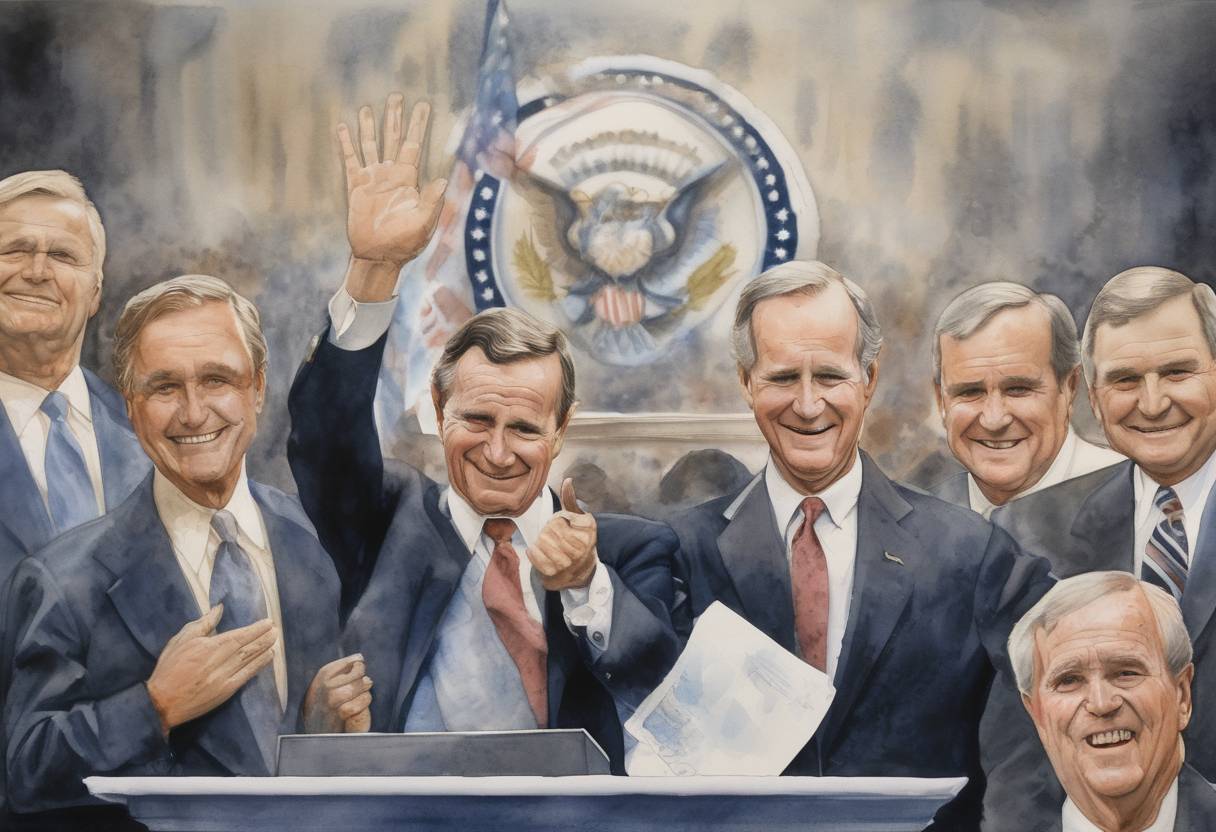
On November 8, 1988, George H. W. Bush was elected as the 41st President of the United States, defeating the Democratic candidate, Michael Dukakis. This election marked a significant moment in U.S. political history, as it was the first time since 1836 that a sitting vice president was elected to the presidency.
George H. W. Bush: Prior to his presidential campaign, Bush served as Vice President under Ronald Reagan from 1981 to 1989. His extensive political career also included roles such as Director of the CIA, U.S. Ambassador to the United Nations, and a member of the U.S. House of Representatives.
Michael Dukakis: The Democratic candidate, Dukakis, was the Governor of Massachusetts. He was known for his focus on economic issues and his reputation for effective state governance.
Bush’s Campaign: Bush’s campaign capitalized on the economic prosperity of the Reagan years, promising to continue the policies that had led to economic growth. His campaign slogan, “A Kinder, Gentler Nation,” aimed to appeal to a broad spectrum of voters.
Dukakis’s Campaign: Dukakis focused on domestic issues, including healthcare reform and environmental protection. However, his campaign struggled with effective messaging against Bush’s well-organized campaign.
Notable Moments: The 1988 election is remembered for its negative campaigning. The Bush campaign effectively used attack ads, such as the infamous “Willie Horton” ad, which played on fears of crime and questioned Dukakis’s record on law and order.
Electoral Vote: George H. W. Bush won a decisive victory in the Electoral College, securing 426 votes to Dukakis’s 111.
Popular Vote: Bush received approximately 53.4% of the popular vote, while Dukakis garnered about 45.6%.
Bush Presidency: Bush’s presidency would later be marked by significant events such as the end of the Cold War, the Gulf War, and domestic challenges including economic recession.
Political Impact: The election solidified the Republican hold on the presidency, marking the third consecutive Republican victory. It also highlighted the increasing importance of media and advertising in political campaigns.
Legacy: Bush’s election underscored the continuity of Reagan-era policies and set the stage for future political dynamics in the United States.
The 1988 election remains a pivotal moment in American political history, illustrating the complexities of campaign strategies and the impact of political legacies.
Source: www.history.com