Establishment of the British East Africa Protectorate on June 23, 1887
1887 · London, United Kingdom
The British East Africa Protectorate is established, marking another step in Britain's expansion in Africa.
February 5, 1885
King Leopold II of Belgium establishes the Congo Free State as his personal possession, leading to significant exploitation and human rights abuses.
Brussels, Belgium | Belgian monarchy
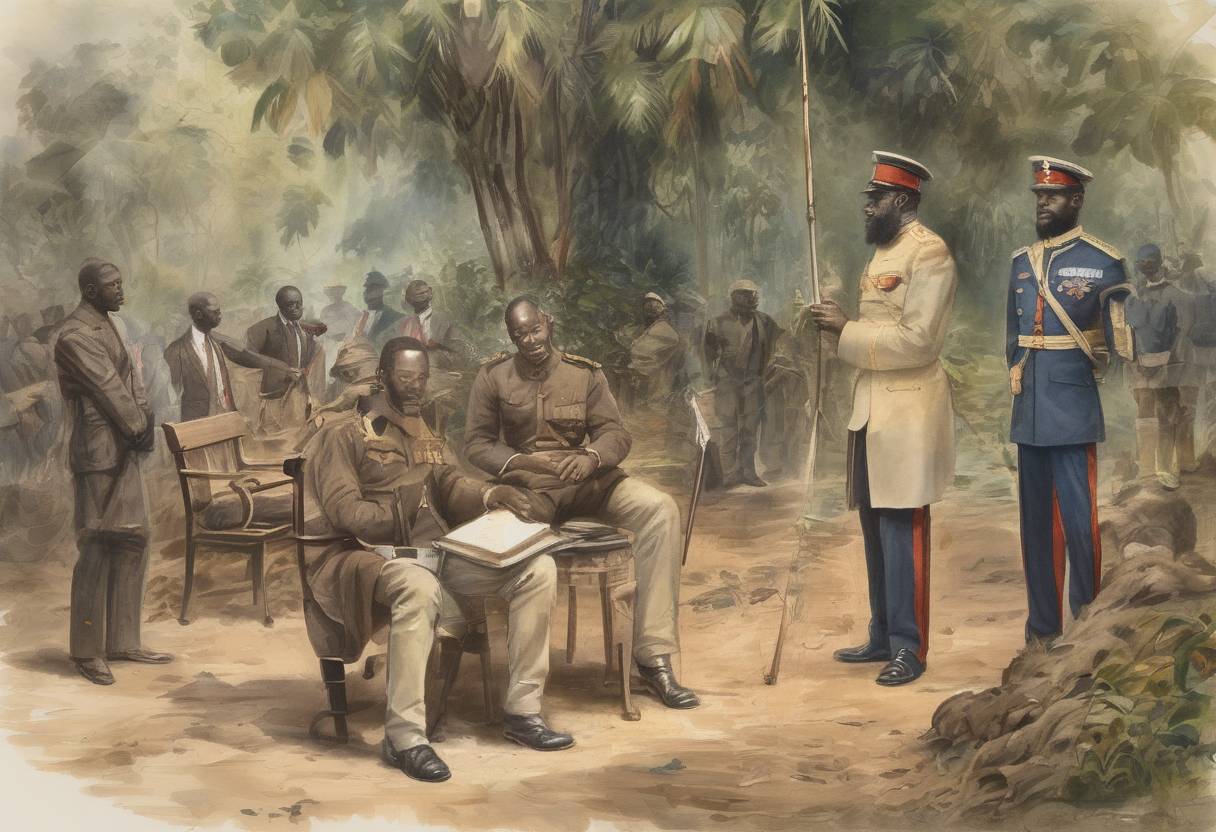
On February 5, 1885, King Leopold II of Belgium officially established the Congo Free State as his personal possession. This event marked the beginning of a period characterized by severe exploitation and human rights abuses in the region, which would have lasting impacts on the Congo and its people.
Scramble for Africa: The late 19th century was a period of intense colonial expansion by European powers, known as the “Scramble for Africa.” During this time, European nations sought to acquire territories in Africa to exploit their resources and expand their influence.
Berlin Conference (1884-1885): The Berlin Conference, held from November 1884 to February 1885, was convened by European powers to regulate the colonization and trade in Africa. It was during this conference that Leopold II’s claim to the Congo Basin was recognized, largely due to his diplomatic efforts and promises of humanitarian and philanthropic work.
Personal Ownership: Unlike other colonial territories, the Congo Free State was not a colony of Belgium but rather the personal property of King Leopold II. This unique arrangement allowed Leopold to exercise unchecked control over the region.
Economic Exploitation: Leopold’s primary interest in the Congo was economic gain. The region was rich in natural resources, particularly rubber and ivory, which were in high demand in Europe. Leopold established a system of forced labor to extract these resources, leading to widespread exploitation of the Congolese people.
Forced Labor and Atrocities: The administration of the Congo Free State was marked by brutal practices, including forced labor, physical punishment, and mutilation. The indigenous population was coerced into collecting rubber and other resources under threat of violence.
Population Decline: The harsh conditions and violence led to a significant decline in the Congolese population. It is estimated that millions of people died as a result of the exploitation, disease, and famine during Leopold’s rule.
International Outcry: Reports of the atrocities committed in the Congo Free State eventually reached the international community, leading to widespread condemnation. Prominent figures, such as British journalist E.D. Morel and American writer Mark Twain, campaigned against the abuses.
Transfer of Control: In 1908, due to mounting pressure and scandal, the Belgian government took control of the Congo Free State from Leopold II, transforming it into the Belgian Congo. This transition marked the end of Leopold’s personal rule, but the legacy of exploitation and suffering continued to affect the region.
The establishment of the Congo Free State by King Leopold II is a stark example of the darker aspects of colonialism, highlighting the severe human rights abuses that can occur under unchecked power. It serves as a reminder of the importance of international oversight and the protection of human rights in colonial and post-colonial contexts.
Source: en.wikipedia.org