Establishment of the Republic of China
1912 · Nanjing, China
The Republic of China was officially established, marking the end of the Qing Dynasty.
January 23, 1368
Zhu Yuanzhang ascends to the throne of China as the Hongwu Emperor, marking the beginning of the Ming Dynasty.
Nanjing, China | Ming Dynasty
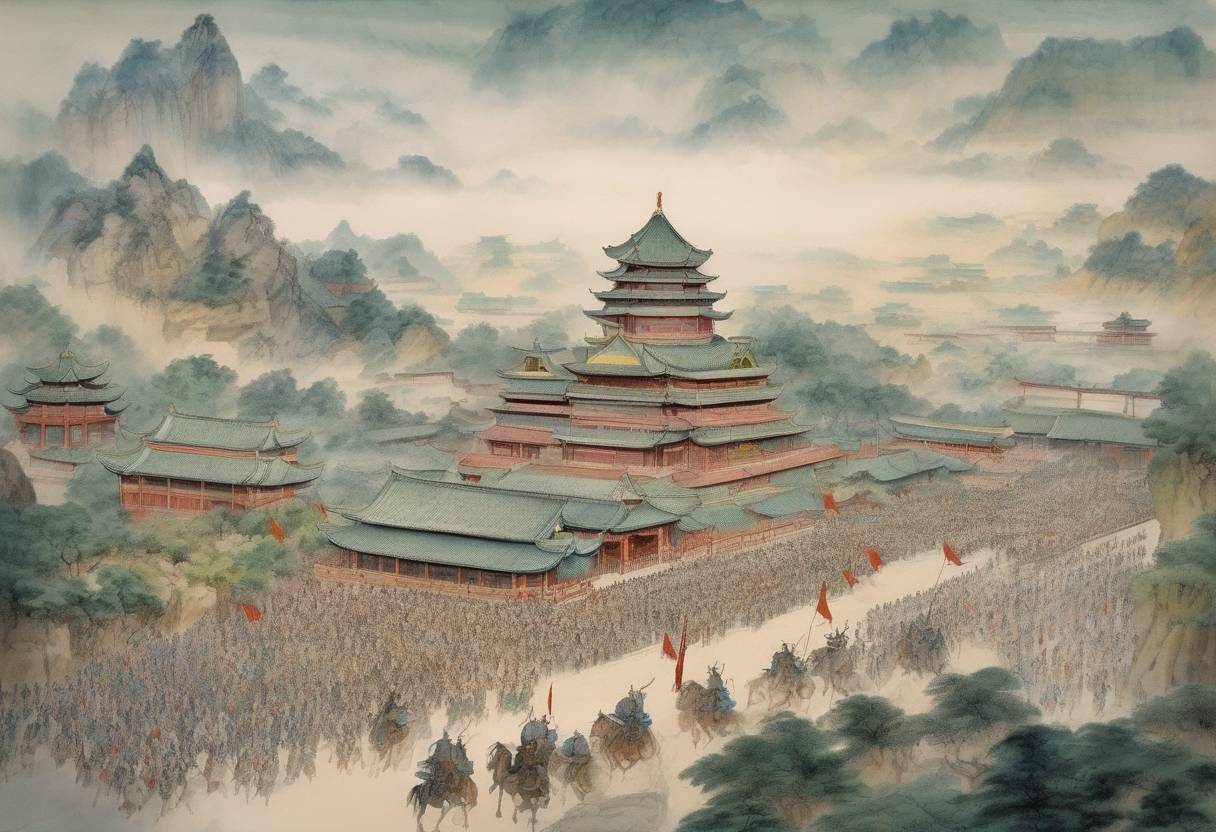
On January 23, 1368, Zhu Yuanzhang ascended to the throne as the Hongwu Emperor, marking the beginning of the Ming Dynasty in China. This event was a pivotal moment in Chinese history, signifying the end of the Mongol-led Yuan Dynasty and the restoration of Han Chinese rule.
Mongol Rule and Decline: The Yuan Dynasty, established by Kublai Khan in 1271, was the first foreign-led dynasty to rule all of China. Over time, the Yuan faced numerous challenges, including economic difficulties, corruption, and widespread dissatisfaction among the Han Chinese population.
Red Turban Rebellion: The decline of the Yuan Dynasty was accelerated by the Red Turban Rebellion, a peasant uprising that began in the 1350s. Zhu Yuanzhang, originally a peasant himself, joined the rebellion and quickly rose through the ranks due to his leadership skills and strategic acumen.
Rise of Zhu Yuanzhang: Zhu’s military prowess and political acumen allowed him to consolidate power among various rebel factions. By 1367, he had successfully captured Nanjing, which he made his capital, and began preparations to overthrow the Yuan Dynasty.
Capture of Dadu: On January 23, 1368, Zhu Yuanzhang declared himself emperor after his forces captured Dadu (modern-day Beijing), the Yuan capital. This victory effectively ended Mongol rule in China.
Establishment of the Ming Dynasty: Zhu Yuanzhang took the reign name Hongwu, meaning “Vastly Martial,” and established the Ming Dynasty. His reign marked a return to traditional Han Chinese governance and Confucian principles.
Restoration of Han Rule: The ascension of the Hongwu Emperor restored Han Chinese rule after nearly a century of Mongol domination, fostering a sense of national identity and cultural revival.
Reforms and Policies: The Hongwu Emperor implemented numerous reforms to stabilize and strengthen China. These included land reforms to support peasant farmers, the re-establishment of the civil service examination system, and efforts to reduce corruption.
Legacy: The Ming Dynasty, lasting until 1644, is remembered for its cultural and economic prosperity, as well as its contributions to art, literature, and architecture. The dynasty also expanded China’s influence through maritime exploration, most notably under the admiral Zheng He.
Zhu Yuanzhang’s rise to power and the establishment of the Ming Dynasty marked a new era in Chinese history, characterized by a return to traditional values and significant advancements in various fields. His legacy as the Hongwu Emperor set the foundation for one of China’s most celebrated dynasties.
Source: en.wikipedia.org