October 9, 1934

King Alexander I of Yugoslavia was assassinated in Marseille, France, during a state visit, leading to political instability in Yugoslavia.


Marseille, France | Yugoslav Monarchy
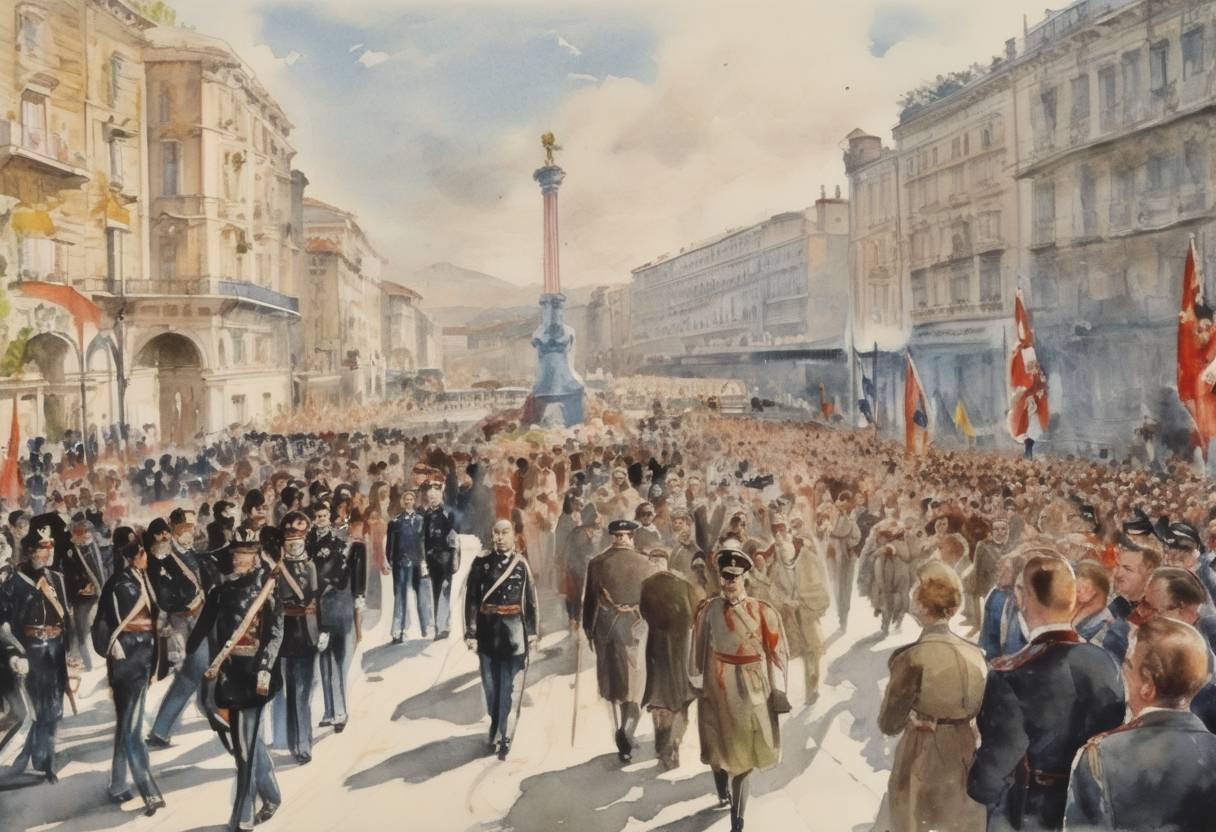
Watercolor painting based depiction of King Alexander I of Yugoslavia was assassinated in Marseille, France, during a state visit, leading to political instability in Yugoslavia. (1934)

Assassination of King Alexander I of Yugoslavia

On October 9, 1934, King Alexander I of Yugoslavia was assassinated in Marseille, France, during a state visit. This event marked a significant moment in European history, leading to political instability in Yugoslavia and impacting international relations in the prelude to World War II.

Background

King Alexander I, born in 1888, ascended to the throne of the Kingdom of Serbs, Croats, and Slovenes (later renamed Yugoslavia) in 1921. His reign was characterized by efforts to unify the diverse ethnic groups within the kingdom, which often led to tensions and political unrest. In 1929, he established a royal dictatorship, abolishing the constitution and political parties in an attempt to stabilize the nation.

The Assassination

  • Date and Location: The assassination occurred on October 9, 1934, in Marseille, France.
  • Assassin: The assassin was Vlado Chernozemski, a member of the Internal Macedonian Revolutionary Organization (IMRO), which sought independence for Macedonia from Yugoslavia. The organization was known for its violent tactics and had connections with the Croatian nationalist group, the Ustaše.
  • Method: During a motorcade procession through the streets of Marseille, Chernozemski approached the king’s car and fired multiple shots, killing King Alexander I and French Foreign Minister Louis Barthou, who was accompanying him.

Immediate Aftermath

  • Political Consequences: The assassination plunged Yugoslavia into political uncertainty. King Alexander’s son, Peter II, was only 11 years old at the time, necessitating a regency led by his cousin, Prince Paul.
  • International Impact: The assassination strained relations between Yugoslavia and its neighbors, particularly Bulgaria, where IMRO had significant influence. It also highlighted the rising tide of nationalist and separatist movements in Europe during the interwar period.

Broader Historical Significance

  • European Tensions: The assassination underscored the fragile political landscape of Europe in the 1930s, with nationalist movements and political extremism on the rise.
  • Prelude to World War II: The instability in Yugoslavia and the Balkans contributed to the complex web of alliances and hostilities that eventually led to World War II.

King Alexander I’s assassination remains a pivotal event in the history of Yugoslavia and Europe, illustrating the challenges of maintaining unity in a diverse and politically volatile region.