The Second Continental Congress Convenes in Philadelphia
1775 · Philadelphia, United States
The Second Continental Congress convenes in Philadelphia, Pennsylvania.
September 5, 1774
The First Continental Congress convened in Philadelphia, Pennsylvania, with delegates from twelve of the thirteen American colonies, marking a significant step towards American independence.
Philadelphia, United States | Continental Congress
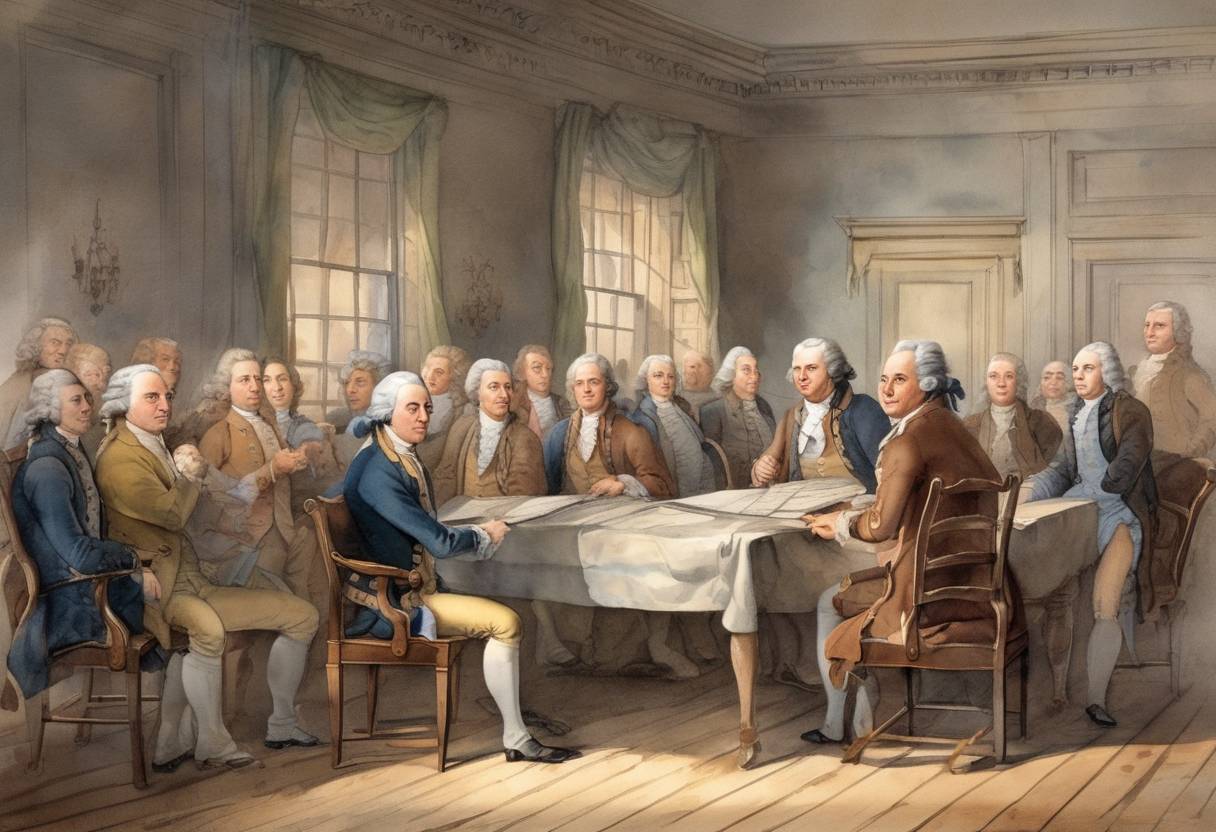
On September 5, 1774, the First Continental Congress convened in Philadelphia, Pennsylvania, marking a pivotal moment in the American colonies’ journey toward independence. This assembly was a response to growing tensions between the colonies and the British government, particularly following the implementation of the Intolerable Acts.
The Intolerable Acts: In 1774, the British Parliament passed a series of punitive measures known as the Intolerable Acts (or Coercive Acts) in response to the Boston Tea Party. These acts aimed to reassert British authority by closing Boston Harbor, altering the Massachusetts government, and allowing royal officials accused of crimes to be tried in Britain.
Colonial Unity: The harshness of the Intolerable Acts galvanized the colonies, fostering a sense of unity and shared purpose. The colonies recognized the need for a collective response to British policies, leading to the call for a congress.
Location and Attendance: The Congress met at Carpenter’s Hall in Philadelphia, Pennsylvania. Delegates from twelve of the thirteen colonies attended, with Georgia being the only colony not represented. Notable figures included George Washington, Patrick Henry, John Adams, and Samuel Adams.
Objectives: The primary goals of the Congress were to address colonial grievances, articulate a collective stance against British policies, and establish a unified response. The delegates sought to balance their loyalty to the British crown with their demand for rights and self-governance.
Declaration and Resolves: The Congress issued the Declaration and Resolves, which outlined colonial objections to the Intolerable Acts, asserted colonial rights, and called for the repeal of the offensive legislation. It also established a boycott of British goods, known as the Continental Association, to pressure Britain economically.
Petition to the King: The delegates drafted a petition to King George III, seeking redress of grievances and hoping to avoid further escalation. Despite their efforts, the petition was ultimately ignored by the British government.
Foundation for Future Action: The First Continental Congress laid the groundwork for future cooperation among the colonies. It set a precedent for collective action and communication, leading to the convening of the Second Continental Congress in 1775, which would eventually oversee the American Revolutionary War.
The First Continental Congress was a crucial step toward American independence. It demonstrated the colonies’ ability to unite in the face of adversity and laid the foundation for the development of a national identity. The decisions made during this congress set the stage for the escalating conflict with Britain, ultimately leading to the Declaration of Independence in 1776.
The Congress’s actions reflected the growing sentiment for self-determination and resistance against perceived tyranny, marking the beginning of a transformative period in American history.
Source: www.history.com