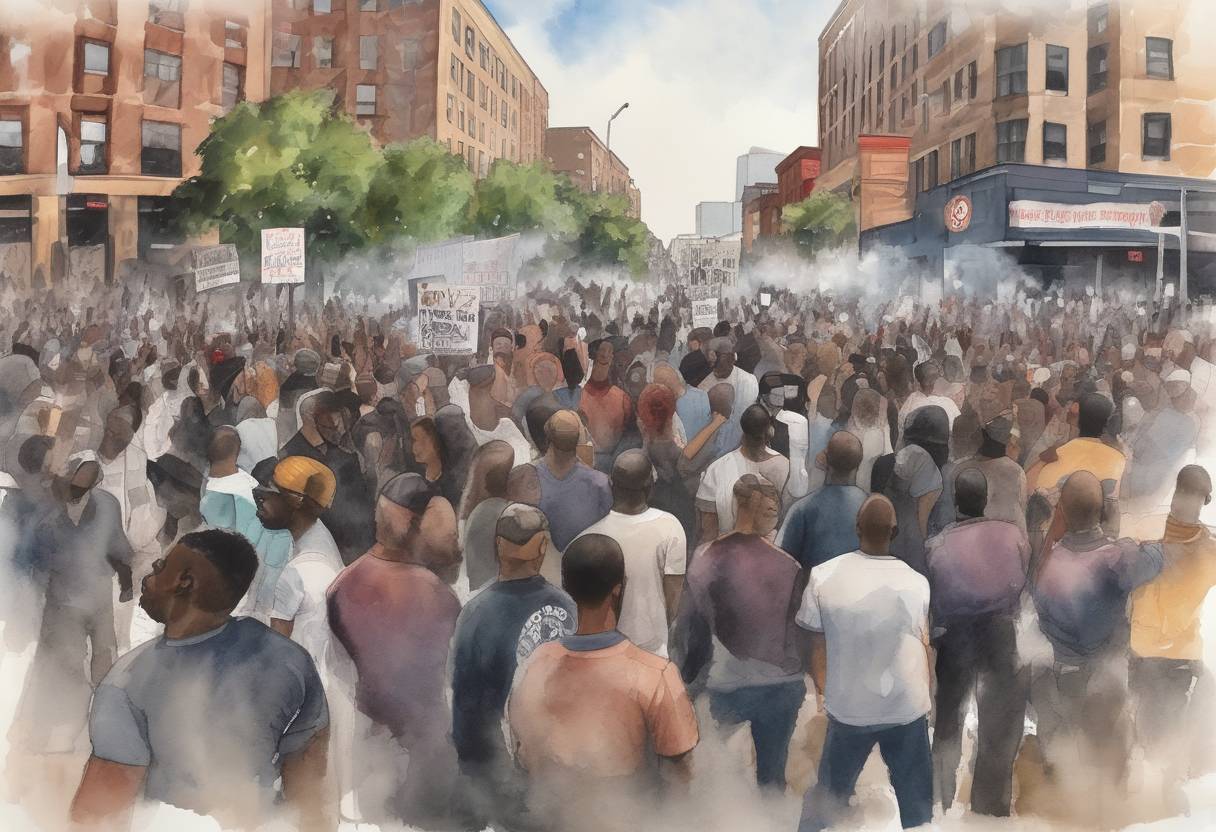
Protests Erupt in Minneapolis Following the Death of George Floyd
On May 26, 2020, protests erupted in Minneapolis, Minnesota, following the death of George Floyd, an African American man who died in police custody the previous day. This incident became a catalyst for a global movement against racial injustice and police brutality.
Background
George Floyd, a 46-year-old African American man, died on May 25, 2020, after a Minneapolis police officer, Derek Chauvin, knelt on his neck for approximately nine minutes during an arrest. The incident was captured on video by a bystander and quickly spread across social media, sparking outrage and calls for justice.
Key Events Leading Up to the Protests
- May 25, 2020: George Floyd was arrested on suspicion of using a counterfeit $20 bill at a local convenience store. During the arrest, Officer Derek Chauvin knelt on Floyd’s neck despite Floyd’s repeated pleas that he could not breathe.
- Video Footage: The video of the incident, showing Floyd’s distress and eventual unresponsiveness, went viral, leading to widespread condemnation from the public and various organizations.
The Protests
- May 26, 2020: Protests began in Minneapolis, initially peaceful, with demonstrators gathering at the site of Floyd’s death and the Minneapolis Police Department’s Third Precinct. Protesters demanded accountability for the officers involved and broader reforms to address systemic racism and police brutality.
- Escalation: As the day progressed, tensions escalated, and some protests turned violent, with instances of looting and property damage reported. The Third Precinct building was eventually set on fire in the following days.
Broader Impact
- National and Global Movement: The protests in Minneapolis quickly spread to other cities across the United States and around the world, becoming part of a larger movement advocating for racial justice and police reform.
- Policy Changes and Reforms: The incident prompted discussions and actions on police reform, including calls to defund or restructure police departments, the implementation of body cameras, and changes in use-of-force policies.
- Legal Proceedings: Derek Chauvin was arrested and charged with second-degree unintentional murder, third-degree murder, and second-degree manslaughter. In April 2021, he was found guilty on all charges and later sentenced to 22.5 years in prison.
Historical Significance
The protests following George Floyd’s death marked a pivotal moment in the ongoing struggle for civil rights in the United States. They highlighted the pervasive issues of racial inequality and police violence, leading to significant public discourse and legislative efforts aimed at addressing these systemic problems. The movement underscored the power of grassroots activism and the role of social media in mobilizing global support for social justice causes.