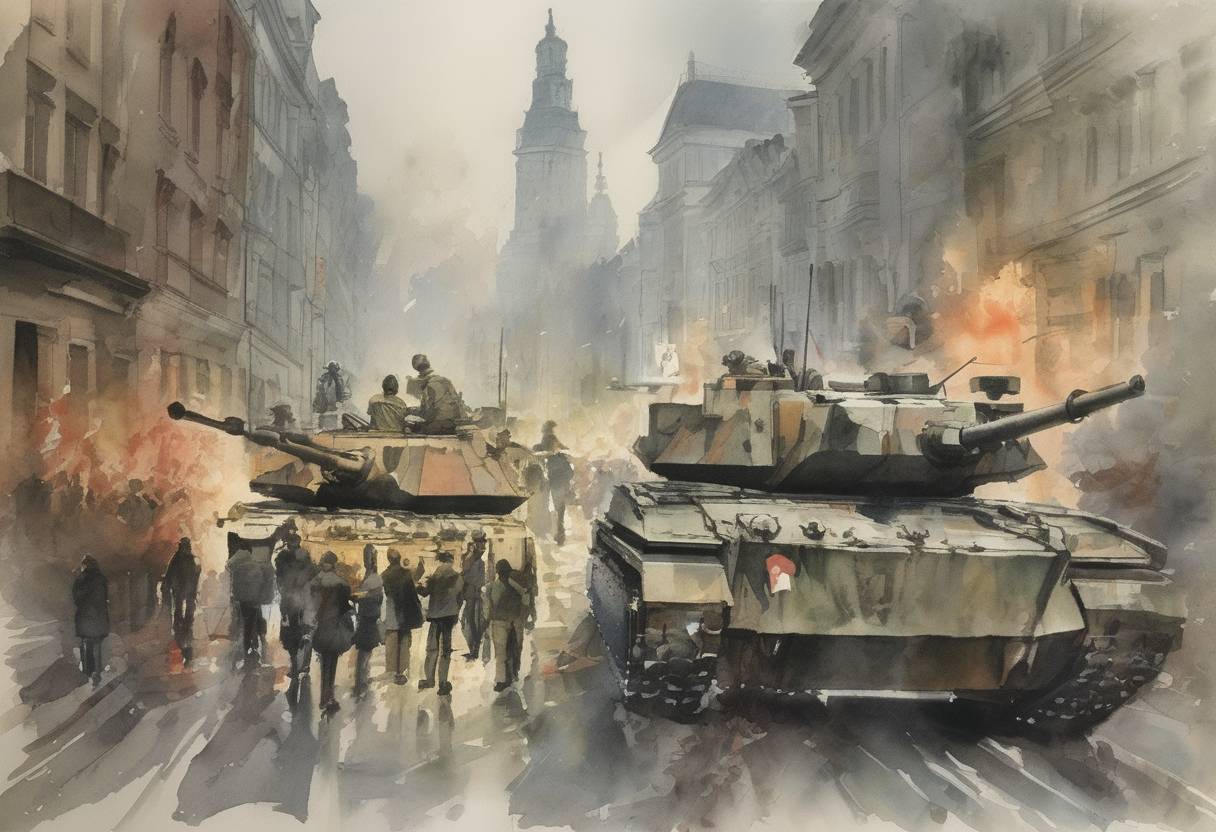
Martial Law in Poland: December 13, 1981
On December 13, 1981, the Polish government, led by General Wojciech Jaruzelski, declared martial law in an effort to suppress the growing influence of the Solidarity movement. This pivotal moment in Polish history marked a significant confrontation between the communist regime and a burgeoning opposition movement that sought greater political freedom and workers’ rights.
Background
- Solidarity Movement: Solidarity, or “Solidarność” in Polish, was a trade union founded in September 1980 at the Gdańsk Shipyard under the leadership of Lech Wałęsa. It quickly grew into a broader social movement advocating for workers’ rights and political reform, gaining millions of members across Poland.
- Political Climate: The rise of Solidarity posed a direct challenge to the Communist Party’s control in Poland. The movement’s demands for greater freedoms and its ability to mobilize mass protests alarmed both the Polish government and the Soviet Union.
Key Events Leading to Martial Law
- Economic Struggles: Poland faced severe economic difficulties, including food shortages and inflation, which fueled public discontent and support for Solidarity.
- Government Pressure: The Polish government, under pressure from the Soviet Union, sought to curb Solidarity’s influence. The Kremlin viewed the movement as a threat to the stability of the Eastern Bloc.
- Failed Negotiations: Attempts at negotiation between Solidarity and the government failed to produce a compromise, leading to increased tensions.
Declaration of Martial Law
- Implementation: On December 13, 1981, martial law was declared. The government imposed curfews, restricted travel, and banned public gatherings. Communication lines were cut, and media outlets were censored.
- Arrests and Repression: Thousands of Solidarity members and activists, including Lech Wałęsa, were arrested. The military took control of key infrastructure, and the streets were patrolled by soldiers and tanks.
- International Reaction: The declaration of martial law drew widespread condemnation from the international community, including the United States and Western European countries, which imposed economic sanctions on Poland.
Aftermath and Consequences
- Suppression of Solidarity: The imposition of martial law effectively crushed the Solidarity movement’s immediate ability to operate openly, though it continued to exist underground.
- Economic Impact: The sanctions and continued economic mismanagement exacerbated Poland’s economic woes, leading to further hardship for the Polish population.
- Long-term Effects: Despite the crackdown, Solidarity’s ideals persisted, contributing to the eventual weakening of communist control. By 1989, Solidarity played a crucial role in negotiating a peaceful transition to a democratic government in Poland.
Historical Significance
The declaration of martial law in Poland was a critical moment in the Cold War era, highlighting the tensions between authoritarian regimes and popular movements for freedom and reform. It underscored the resilience of the Polish people and set the stage for the eventual collapse of communist rule in Eastern Europe.
This event remains a powerful reminder of the struggle for human rights and the enduring impact of grassroots movements in shaping history.