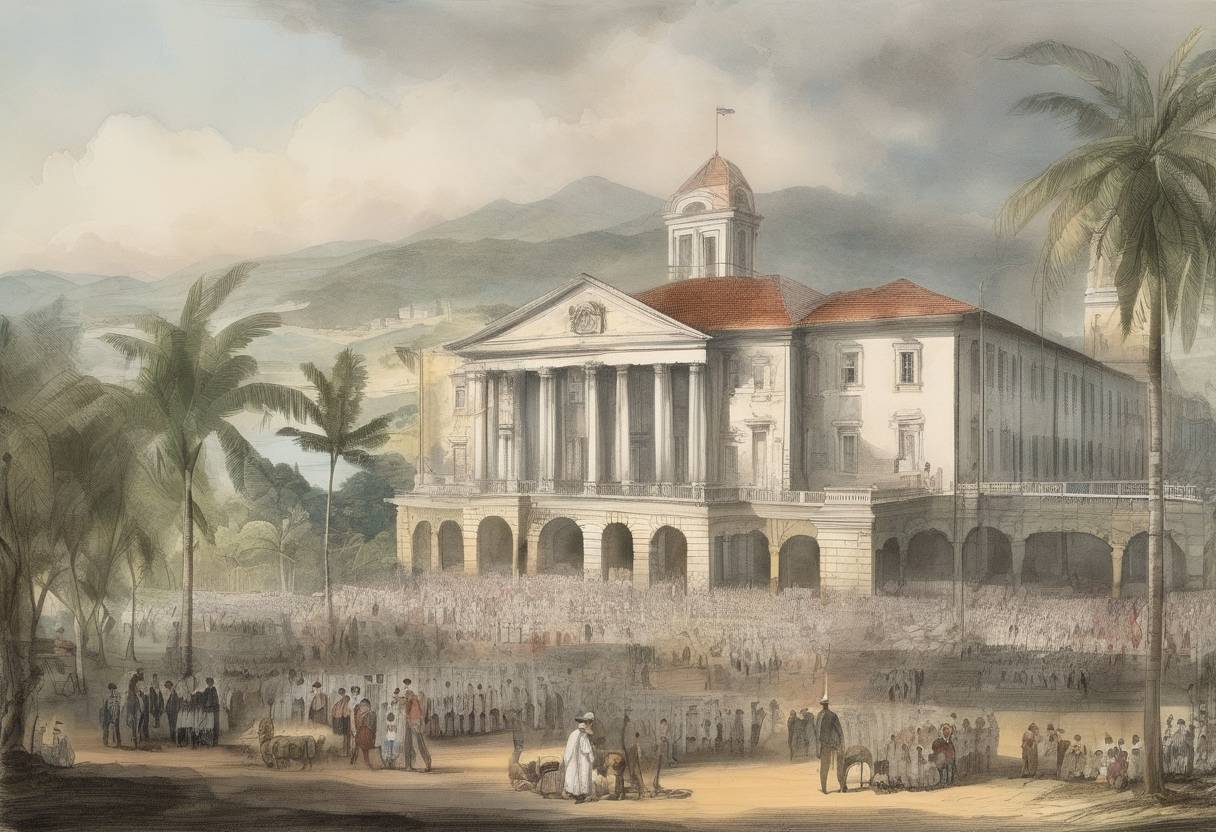
Panama Declares Independence from Spain and Joins Gran Colombia
On November 28, 1821, Panama declared its independence from Spanish rule, marking a significant moment in the history of the region. This event was part of a larger wave of independence movements across Latin America during the early 19th century, as colonies sought to break free from European colonial powers.
Context and Background
Spanish Colonial Rule: Panama had been under Spanish control since the early 16th century, serving as a crucial transit point for goods and wealth flowing between the Americas and Spain. The strategic importance of the Isthmus of Panama made it a valuable asset for the Spanish Empire.
Influence of Independence Movements: By the early 1800s, the spirit of independence was sweeping across Latin America. Influenced by the successful independence movements in neighboring regions, Panamanians were inspired to seek their own freedom from colonial rule.
Economic and Social Factors: Economic hardships and social inequalities under Spanish rule fueled discontent among the local population. The creole elite, in particular, were motivated by the desire for greater economic autonomy and political power.
The Path to Independence
Revolutionary Sentiment: The independence movement in Panama was largely peaceful compared to other regions. Revolutionary sentiment was bolstered by the weakening of Spanish authority due to the Peninsular War (1807-1814) and the subsequent political instability in Spain.
Local Leadership: Key figures in Panama’s independence movement included José de Fábrega, who played a pivotal role in negotiating the transition of power. The movement was characterized by cooperation between local leaders and the creole elite.
Declaration of Independence: On November 28, 1821, Panama declared its independence from Spain in a relatively bloodless transition. The declaration was made in the city of Panama, with local leaders quickly moving to establish a new government.
Joining Gran Colombia
Union with Gran Colombia: Following its declaration of independence, Panama chose to join the Republic of Gran Colombia, a political entity that included present-day Colombia, Venezuela, Ecuador, and Panama. This decision was influenced by the desire for protection and political stability.
Simón Bolívar’s Vision: The union with Gran Colombia was in line with Simón Bolívar’s vision of a united Latin America. Bolívar, a key figure in the independence movements across the continent, advocated for the creation of large federations to counterbalance European influence.
Aftermath and Significance
Short-lived Union: Panama’s union with Gran Colombia was relatively short-lived. By 1831, internal conflicts and regional differences led to the dissolution of Gran Colombia, and Panama became part of the Republic of New Granada (later Colombia).
Legacy of Independence: Panama’s independence from Spain marked the beginning of a new era in its history. The event laid the groundwork for future political developments and the eventual establishment of Panama as a sovereign nation in 1903.
Historical Impact: The independence movement in Panama was part of the broader struggle for freedom and self-determination in Latin America. It highlighted the region’s desire to break free from colonial domination and shape its own destiny.
Panama’s declaration of independence and subsequent union with Gran Colombia were pivotal moments in the region’s history, reflecting the complex interplay of local and continental forces during the age of independence.