1941 · Nyeri, Kenya
Robert Baden-Powell, the founder of the Boy Scouts, dies in Nyeri, Kenya.
July 29, 1907
Sir Robert Baden-Powell held the first experimental camp on Brownsea Island, which led to the establishment of the Boy Scout movement.
Brownsea Island, United Kingdom | Boy Scouts
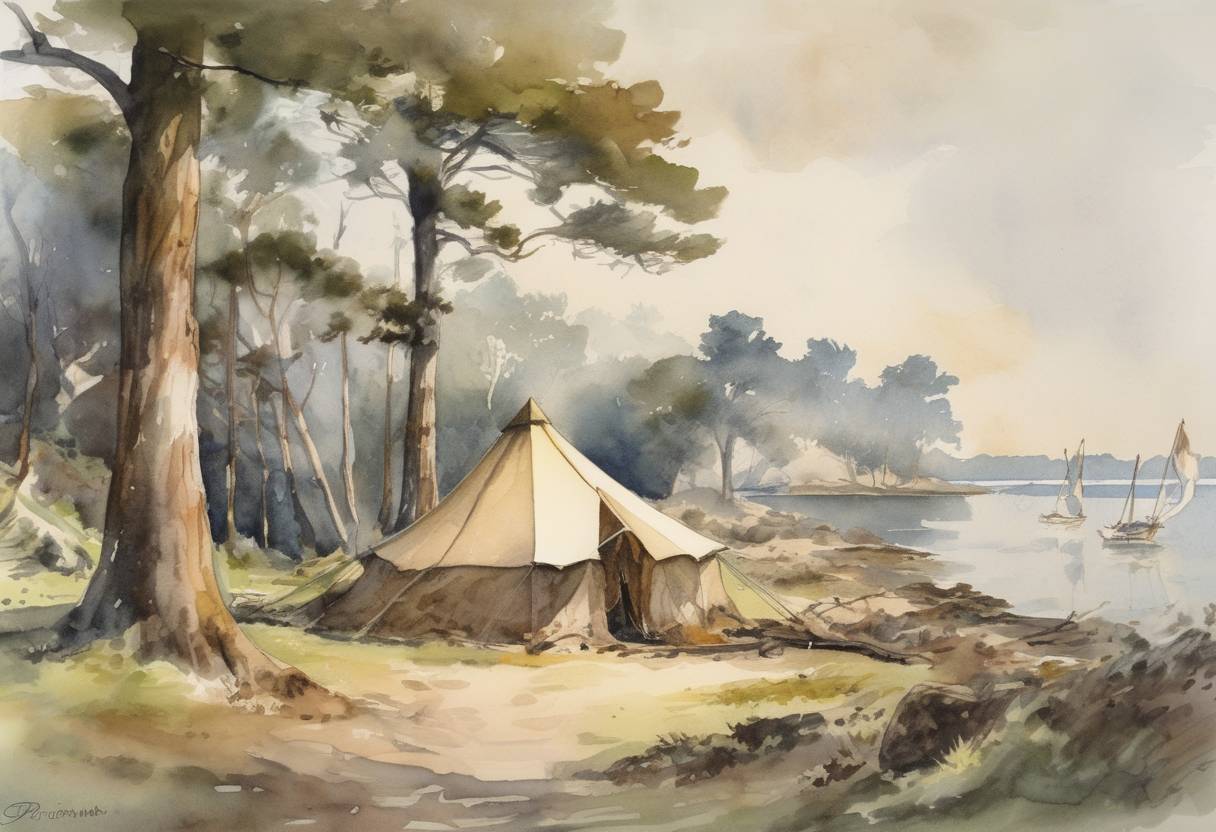
On July 29, 1907, Sir Robert Baden-Powell, a British Army officer, held the first experimental camp on Brownsea Island, located in Poole Harbour, Dorset, England. This event marked the inception of the Boy Scout movement, which would grow to become a global phenomenon.
Baden-Powell had gained fame for his defense of Mafeking during the Second Boer War and had written a military training manual, “Aids to Scouting,” which unexpectedly gained popularity among boys and youth organizations in Britain. Recognizing the potential to channel this interest into a structured program, Baden-Powell sought to develop a new form of youth training that emphasized outdoor activities, self-reliance, and moral development.
The camp on Brownsea Island was designed as a practical test of Baden-Powell’s ideas. It ran from July 29 to August 9, 1907, and included 20 boys from diverse social backgrounds, reflecting Baden-Powell’s vision of inclusivity. The boys were divided into four patrols: Wolves, Ravens, Bulls, and Curlews, each led by a patrol leader, a structure that would become a cornerstone of the Scouting organization.
During the camp, the boys participated in a variety of activities that would later form the basis of the Scouting program. These included:
The success of the Brownsea Island camp convinced Baden-Powell of the viability of his ideas. In 1908, he published “Scouting for Boys,” a handbook that laid out the principles and practices of Scouting. The book was an immediate success, leading to the rapid formation of Scout troops across Britain and eventually around the world.
The Boy Scout movement emphasized character building, citizenship, and personal development, and it has had a lasting impact on youth education globally. Today, Scouting organizations exist in nearly every country, with millions of members who continue to follow the principles established by Baden-Powell over a century ago.
The experimental camp on Brownsea Island was a pivotal moment in the history of youth education and outdoor activities. Sir Robert Baden-Powell’s innovative approach not only created a new movement but also fostered a spirit of adventure, community service, and personal growth that continues to inspire young people worldwide.
Source: en.wikipedia.org