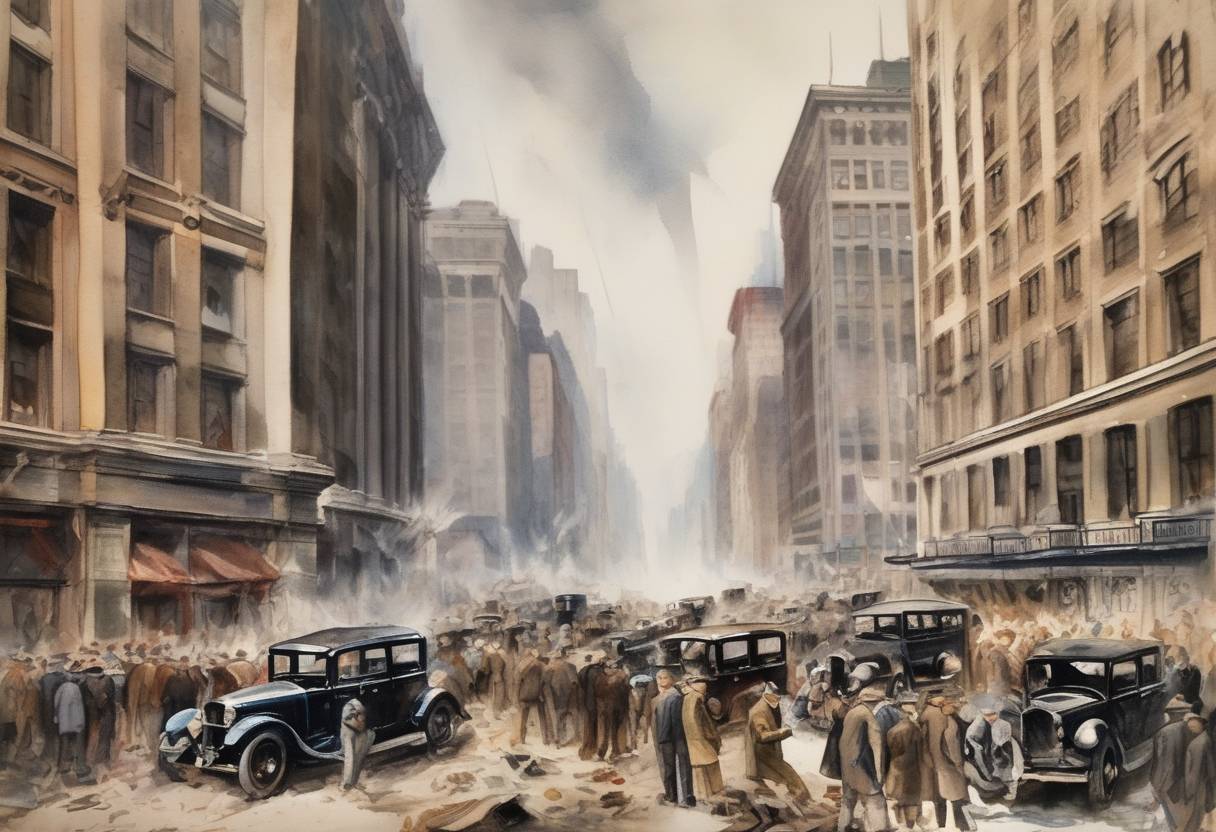
The Wall Street Crash of 1929: Black Thursday
Overview
On October 24, 1929, a day that would become infamously known as “Black Thursday,” the New York Stock Exchange (NYSE) experienced an unprecedented sell-off of shares. This event marked the beginning of the Wall Street Crash of 1929, which heralded the onset of the Great Depression, a severe worldwide economic downturn that lasted throughout the 1930s.
Context Leading Up to Black Thursday
Economic Boom of the 1920s: The decade preceding the crash, often referred to as the “Roaring Twenties,” was characterized by rapid economic growth and widespread prosperity in the United States. This period saw significant advancements in technology and industry, leading to increased consumer spending and investment in the stock market.
Stock Market Speculation: The 1920s also witnessed rampant speculation in the stock market. Many investors, including ordinary citizens, engaged in buying stocks on margin, meaning they borrowed money to purchase shares, betting that prices would continue to rise.
Warning Signs: Despite the apparent prosperity, there were underlying economic weaknesses, such as uneven wealth distribution, overproduction in agriculture and industry, and a slowdown in consumer spending. By mid-1929, stock prices had reached unsustainable levels, and some experts began to warn of an impending correction.
Events of Black Thursday
Panic Selling: On the morning of October 24, 1929, panic set in as investors began to sell off their stocks en masse. The volume of trades was so high that the ticker tape, which reported stock prices, fell hours behind.
Market Intervention: In an attempt to stabilize the market, a group of leading bankers and financiers, including Richard Whitney, vice president of the NYSE, pooled their resources to buy large blocks of blue-chip stocks. This intervention temporarily halted the decline and restored some confidence.
Temporary Reprieve: Although the market recovered slightly by the end of the day, the respite was short-lived. The following week saw further declines, culminating in even more significant drops on October 28 (“Black Monday”) and October 29 (“Black Tuesday”).
Aftermath and Consequences
The Great Depression: The crash did not cause the Great Depression by itself, but it was a significant catalyst. The economic downturn that followed was marked by widespread unemployment, bank failures, and a severe contraction in industrial output.
Global Impact: The effects of the crash and subsequent depression were felt worldwide, leading to economic hardship in many countries and contributing to political instability.
Regulatory Changes: In response to the crash and its aftermath, the U.S. government implemented several regulatory reforms in the 1930s, including the establishment of the Securities and Exchange Commission (SEC) to oversee the stock market and protect investors.
Historical Significance
The Wall Street Crash of 1929 serves as a stark reminder of the dangers of speculative bubbles and the importance of financial regulation. It also highlights the interconnectedness of global economies and the far-reaching impacts of economic policy and market behavior.