The Siege of Jerusalem: October 2, 1187
1187 · Jerusalem, Kingdom of Jerusalem
The Siege of Jerusalem ended with the city being captured by Saladin, the Sultan of Egypt and Syria, marking a significant event in the Crusades.
July 4, 1187
The Battle of Hattin takes place, where Saladin defeats the Crusader states, leading to the Muslim reconquest of Jerusalem.
Hattin, Israel | Ayyubid Sultanate
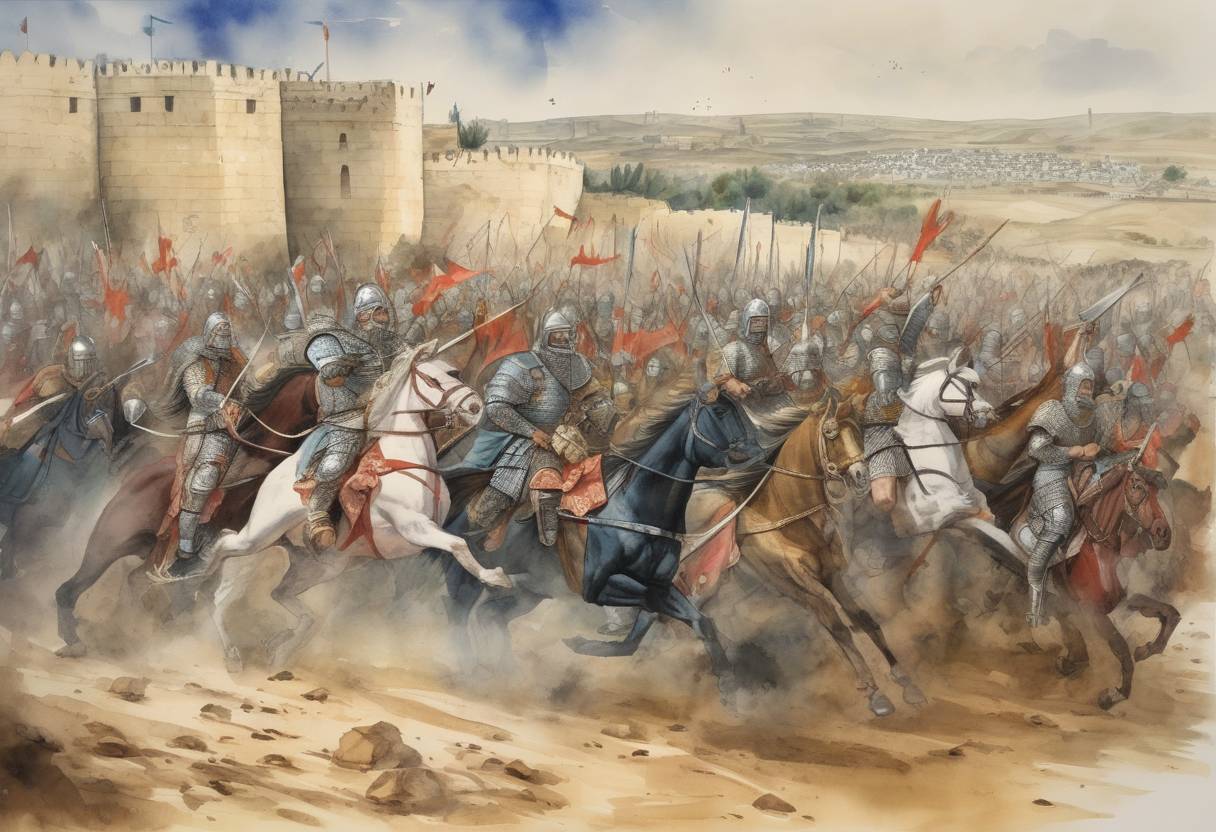
The Battle of Hattin, fought on July 4, 1187, was a pivotal engagement during the Crusades, marking a decisive victory for the Muslim forces led by Sultan Saladin over the Crusader states. This battle significantly altered the balance of power in the Holy Land and paved the way for the Muslim reconquest of Jerusalem.
Background: The Crusader states, established in the Levant following the First Crusade, had been a source of tension and conflict with the surrounding Muslim territories. By the late 12th century, Saladin, the Sultan of Egypt and Syria, had unified much of the Muslim Near East under his leadership, aiming to reclaim Jerusalem and other territories held by the Crusaders.
Tensions Rise: In the years leading up to the battle, hostilities between the Crusaders and Saladin’s forces had intensified. The breaking of a truce by the Crusader leader Raynald of Châtillon, who attacked a Muslim caravan, provided Saladin with a casus belli to launch a full-scale campaign against the Crusader states.
Location: The battle took place near the extinct volcano known as the Horns of Hattin, located in present-day Israel, west of the Sea of Galilee.
Forces Involved: Saladin commanded a large and well-organized army, estimated at around 20,000 men, including cavalry and infantry. The Crusader forces, led by King Guy of Lusignan, numbered approximately 20,000 as well, but included a significant number of non-combatants.
Tactical Movements: Saladin’s forces strategically cut off the Crusaders from water sources, exacerbating the effects of the scorching July heat. The Crusaders, encumbered by their heavy armor and desperate for water, were forced into a grueling march.
Outcome: The battle culminated in a decisive Muslim victory. The Crusader army was effectively annihilated, with many knights captured or killed. King Guy and other high-ranking nobles were taken prisoner. Raynald of Châtillon was executed by Saladin himself.
Fall of Jerusalem: The defeat at Hattin left the Crusader states vulnerable. By October 1187, Saladin’s forces had captured Jerusalem, a significant blow to Christian control in the region.
Third Crusade: The loss of Jerusalem prompted the launch of the Third Crusade (1189–1192), led by European monarchs such as Richard the Lionheart, Philip II of France, and Frederick Barbarossa, aiming to reclaim the Holy City.
Legacy: The Battle of Hattin is often seen as a turning point in the Crusades, demonstrating Saladin’s military prowess and strategic acumen. It also highlighted the vulnerabilities of the Crusader states, leading to a reevaluation of their military and political strategies.
The Battle of Hattin remains a significant event in the history of the Crusades, symbolizing the ebb and flow of control over the Holy Land and the enduring legacy of this period in Christian-Muslim relations.
Source: en.wikipedia.org