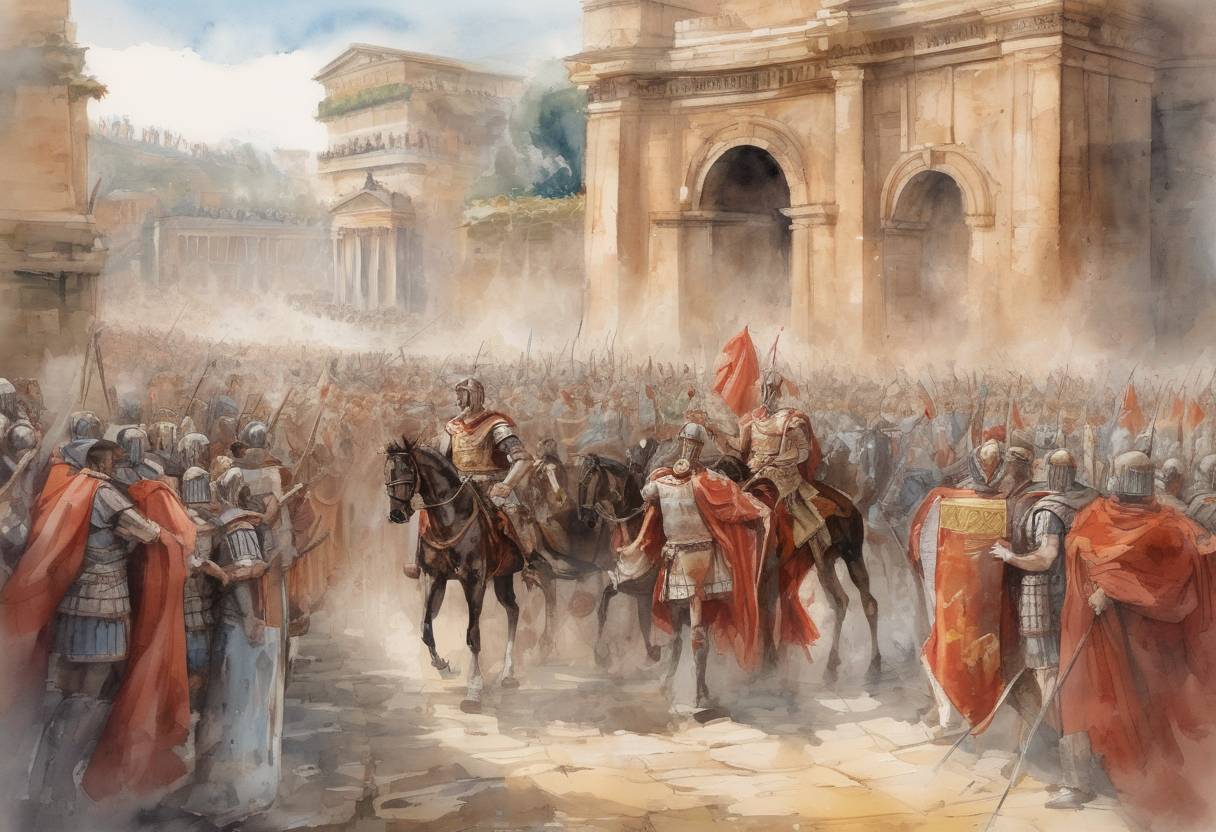
Constantius II Enters Rome: April 28, 357
On April 28, 357, Roman Emperor Constantius II made a significant entrance into Rome, marking his first visit to the city. This event was a celebration of his victory over the usurper Magnentius, a pivotal moment in the consolidation of his power over the Roman Empire.
Background
Constantius II was one of the sons of Constantine the Great and had been ruling as a co-emperor since 337, following his father’s death. The Roman Empire was divided among Constantine’s three sons, but internal strife and power struggles soon ensued.
Magnentius, a Roman general of Germanic origin, had declared himself emperor in 350 after leading a coup against Constans, Constantius II’s brother. This led to a civil war between Magnentius and Constantius II, who sought to reclaim control over the western part of the empire.
The Battle of Mursa Major
The conflict between Constantius II and Magnentius culminated in the Battle of Mursa Major in 351, one of the largest and bloodiest battles of the Roman civil wars. Constantius II emerged victorious, but the battle inflicted heavy casualties on both sides, weakening the Roman military.
The Defeat of Magnentius
Following his defeat at Mursa Major, Magnentius retreated to Gaul. Constantius II pursued him relentlessly, and after a series of engagements, Magnentius was decisively defeated at the Battle of Mons Seleucus in 353. Facing inevitable capture, Magnentius committed suicide, leaving Constantius II as the sole ruler of the Roman Empire.
The Entrance into Rome
Constantius II’s entry into Rome on April 28, 357, was a carefully orchestrated event designed to solidify his authority and celebrate his triumph over Magnentius. Despite being the emperor for many years, Constantius had never visited the city, the heart of the empire. His arrival was marked by grand ceremonies and public celebrations, showcasing his power and legitimacy as the uncontested ruler.
Significance
Consolidation of Power: Constantius II’s victory over Magnentius and his subsequent entry into Rome marked the end of significant internal conflict, allowing him to focus on external threats and governance.
Religious Influence: Constantius II was a staunch supporter of Arian Christianity, and his reign saw significant religious developments, including the promotion of Arianism over Nicene Christianity.
Legacy: His reign was characterized by efforts to maintain the unity of the Roman Empire amidst external pressures and internal religious disputes. His policies and military campaigns laid the groundwork for the future stability of the empire.
Constantius II’s entrance into Rome was not just a personal triumph but a moment that underscored the resilience and continuity of the Roman imperial system in the face of internal challenges.