Establishment of Jamestown: May 13, 1607
1607 · Jamestown, United States
English settlers establish Jamestown, the first permanent English settlement in North America.
March 12, 1609
The Bermuda Islands became an English colony following the wreck of the Sea Venture, a ship of the Virginia Company, which led to the settlement of the islands.
Bermuda, Bermuda | Virginia Company
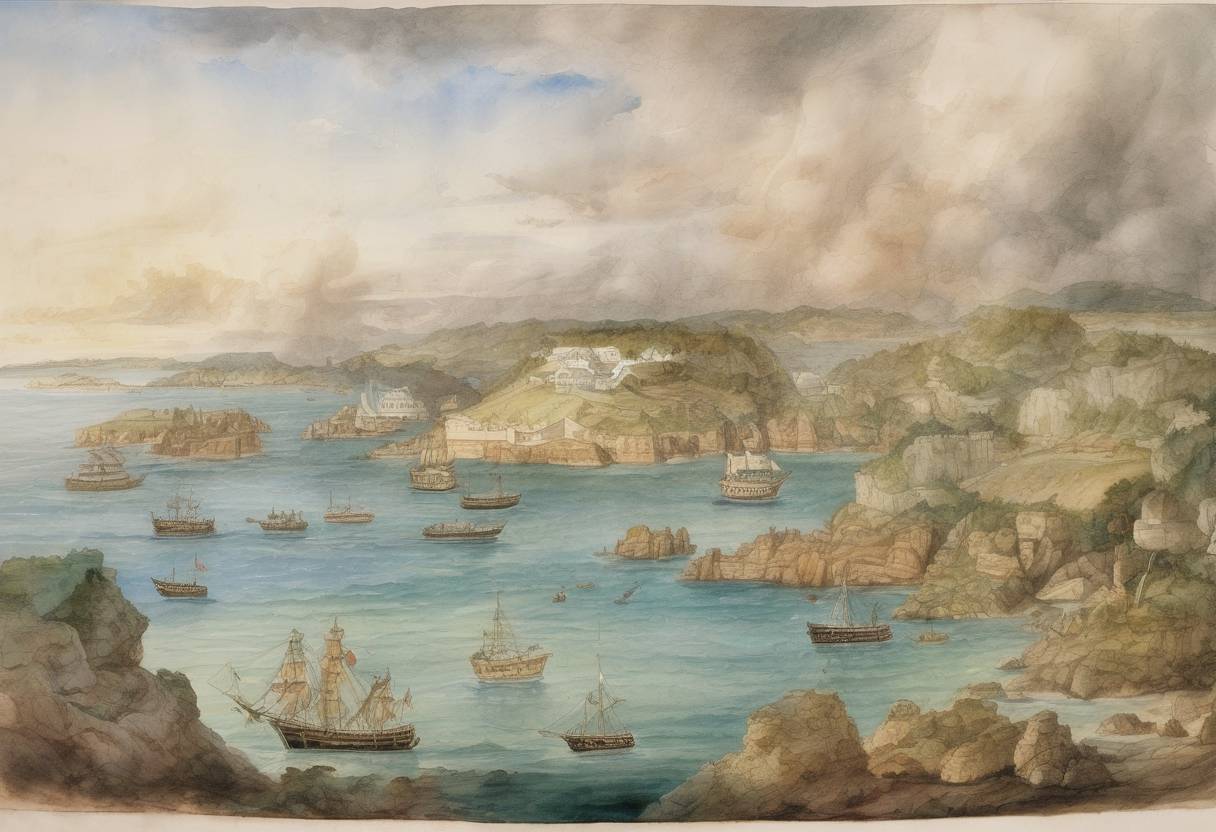
On July 28, 1609, the Sea Venture, the flagship of the Virginia Company, was caught in a severe storm while en route to the Jamestown Colony in Virginia. This event marked a pivotal moment in the history of Bermuda, leading to its settlement and eventual establishment as an English colony.
The Virginia Company was an English joint-stock company chartered by King James I in 1606 with the purpose of establishing settlements on the coast of North America. In 1609, the company organized a fleet of nine ships to transport settlers and supplies to the struggling Jamestown Colony. The Sea Venture, commanded by Admiral Sir George Somers, was the lead ship of this fleet.
During the voyage, the fleet encountered a massive hurricane. The Sea Venture, carrying approximately 150 passengers and crew, was separated from the other ships and began to take on water. After several days of battling the storm, the ship was deliberately driven onto the reefs of Bermuda to prevent it from sinking. Remarkably, all aboard survived the wreck and made it to shore.
The survivors spent the next nine months on Bermuda, which was then uninhabited. They utilized the island’s resources to build two new ships, the Deliverance and the Patience, to continue their journey to Jamestown. During their stay, they found the island to be fertile and hospitable, which led to the decision to claim it for England.
Arrival in Jamestown: In May 1610, the Deliverance and the Patience finally reached Jamestown, bringing much-needed supplies and news of Bermuda’s potential.
Establishment of a Colony: The Virginia Company recognized the strategic and economic importance of Bermuda. In 1612, the company sent a group of settlers to establish a permanent colony on the islands, marking the beginning of English colonization there.
Charter and Governance: Bermuda was initially governed as part of the Virginia Company’s territory. In 1615, it was transferred to the newly formed Somers Isles Company, named in honor of Admiral Somers.
Cultural Impact: The story of the Sea Venture’s wreck and the subsequent settlement of Bermuda inspired William Shakespeare’s play “The Tempest,” highlighting its cultural significance.
The settlement of Bermuda played a crucial role in the expansion of English influence in the Atlantic. It served as a strategic naval base and a stopover point for ships traveling between England and its American colonies. The successful colonization of Bermuda also demonstrated the resilience and adaptability of English settlers, contributing to the broader narrative of European colonial expansion during the Age of Exploration.
In summary, the wreck of the Sea Venture on July 28, 1609, was a transformative event that led to the English settlement of Bermuda, shaping the island’s history and its role in the colonial Atlantic world.
Source: www.britannica.com