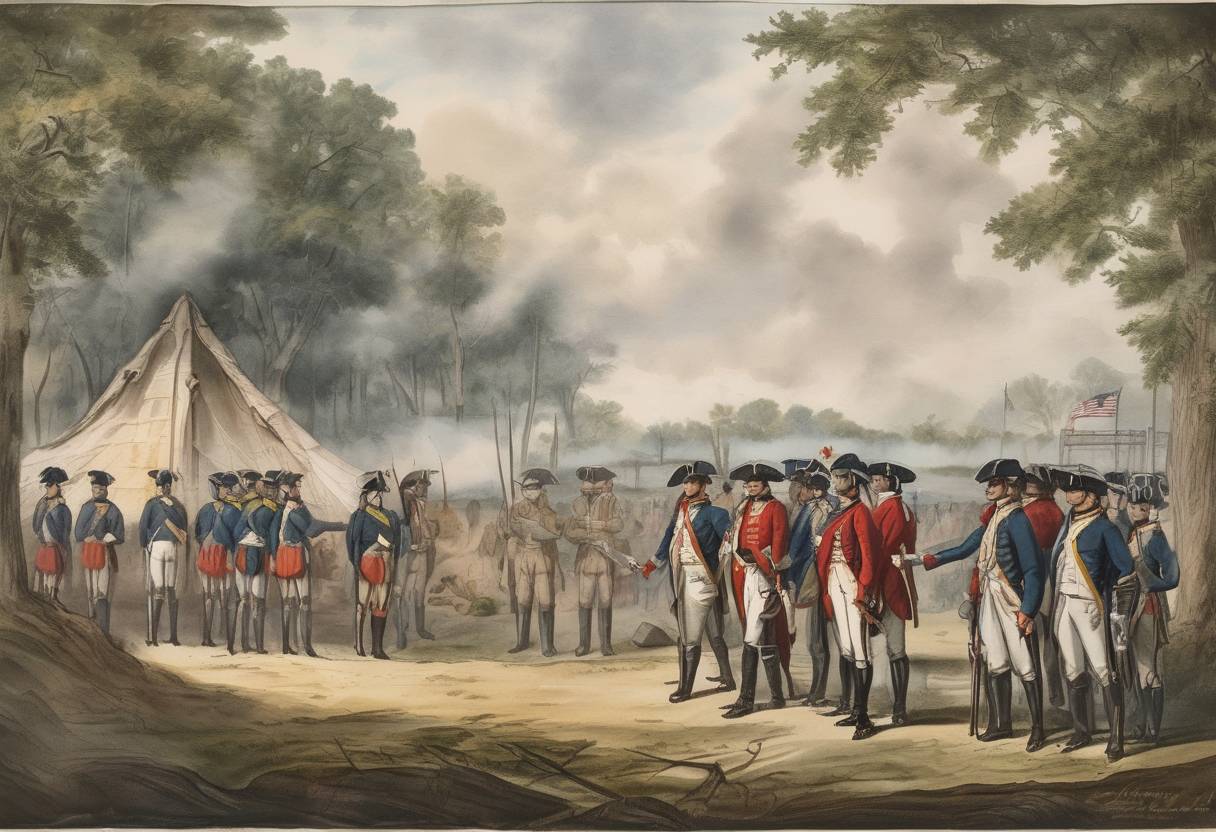
The Treaty of Fort Jackson: Ending the Creek War
On August 9, 1814, the Treaty of Fort Jackson was signed, marking the end of the Creek War, a pivotal conflict in the southeastern United States. This treaty had significant implications for the Creek Nation and the expansion of the United States.
Background
The Creek War (1813-1814) was part of the larger conflict known as the War of 1812. It involved the Creek Nation, a confederation of Native American tribes in the southeastern United States, and American settlers. The war was primarily a civil conflict within the Creek Nation between the Red Sticks, a faction seeking to resist American encroachment and preserve traditional ways, and other Creek factions more inclined towards accommodation with settlers.
The conflict escalated with the Red Stick attack on Fort Mims in August 1813, which resulted in a massacre of settlers and militia. This event galvanized American military response, leading to a series of battles.
Key Events Leading to the Treaty
Battle of Horseshoe Bend (March 27, 1814): General Andrew Jackson led American forces, including allied Native American tribes, to a decisive victory against the Red Sticks. This battle effectively broke the power of the Red Stick faction and paved the way for the treaty.
Surrender and Negotiations: Following their defeat, the Creek leaders sought peace. Negotiations were conducted at Fort Jackson, where General Jackson imposed harsh terms on the Creek Nation.
Terms of the Treaty
The Treaty of Fort Jackson required the Creek Nation to:
Cede Land: The Creek were forced to cede approximately 23 million acres of land, over half of their territory, to the United States. This land, located in present-day Alabama and Georgia, was crucial for American expansion.
Acknowledge U.S. Sovereignty: The treaty effectively placed the Creek Nation under U.S. authority, limiting their autonomy and influence.
Aftermath and Significance
Impact on the Creek Nation: The loss of land and autonomy was devastating for the Creek people, leading to economic hardship and displacement.
Expansion of U.S. Territory: The land acquired through the treaty facilitated American settlement and agricultural development in the Southeast, contributing to the growth of the cotton economy.
Rise of Andrew Jackson: The successful campaign against the Creek and the subsequent treaty bolstered Andrew Jackson’s reputation, setting the stage for his future political career, including his presidency.
The Treaty of Fort Jackson is a significant event in American history, illustrating the complex dynamics of Native American resistance, U.S. expansionism, and the broader context of the War of 1812. It underscores the profound and often tragic impact of American territorial ambitions on indigenous peoples.