The Siege of Constantinople: April 2, 1453
1453 · Constantinople, Byzantine Empire
Mehmed II, the Ottoman Sultan, began the siege of Constantinople, which would eventually lead to the fall of the Byzantine Empire.
June 17, 1462
Vlad the Impaler attempts to assassinate Mehmed II, leading to the Night Attack at Târgoviște.
Târgoviște, Wallachia | Wallachian forces
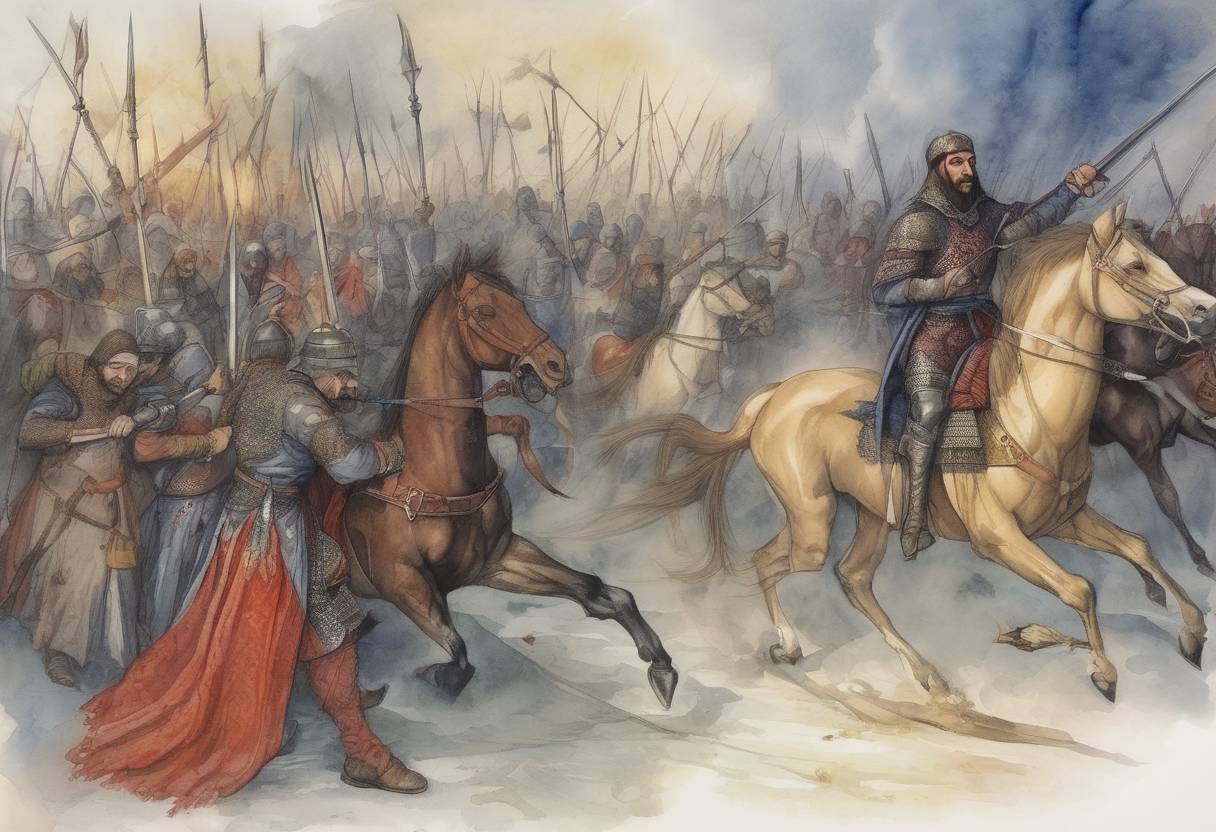
In the mid-15th century, the Ottoman Empire, under the rule of Sultan Mehmed II, was expanding its influence into Eastern Europe. Vlad III, also known as Vlad the Impaler or Vlad Dracula, was the Voivode (Prince) of Wallachia, a region strategically located between the Ottoman Empire and the Kingdom of Hungary. Vlad’s rule was marked by his fierce resistance against Ottoman encroachment and his notorious reputation for impaling his enemies.
Tensions between Vlad and Mehmed II escalated due to Vlad’s refusal to pay tribute to the Ottomans and his aggressive raids into Ottoman territories. In response, Mehmed II launched a campaign to subdue Wallachia and replace Vlad with a more compliant ruler. By the summer of 1462, Mehmed II had amassed a large army and advanced into Wallachia, aiming to capture Vlad and secure the region.
On the night of June 17, 1462, Vlad the Impaler orchestrated a daring assault on the Ottoman camp near Târgoviște, the capital of Wallachia. This event, known as the Night Attack, was a bold attempt to assassinate Sultan Mehmed II and disrupt the Ottoman forces.
The Night Attack at Târgoviște remains a significant episode in the history of Eastern European resistance against Ottoman expansion, illustrating the complex dynamics of power, warfare, and diplomacy in the region during the 15th century.
Source: en.wikipedia.org