Establishment of Arlington National Cemetery
1864 · Arlington, United States
Arlington National Cemetery was established when 200 acres of the grounds of Arlington House were officially set aside as a military cemetery.
May 30, 1868
The first Decoration Day, later known as Memorial Day, was observed in the United States to honor those who died in the Civil War.
Arlington, United States | Grand Army of the Republic
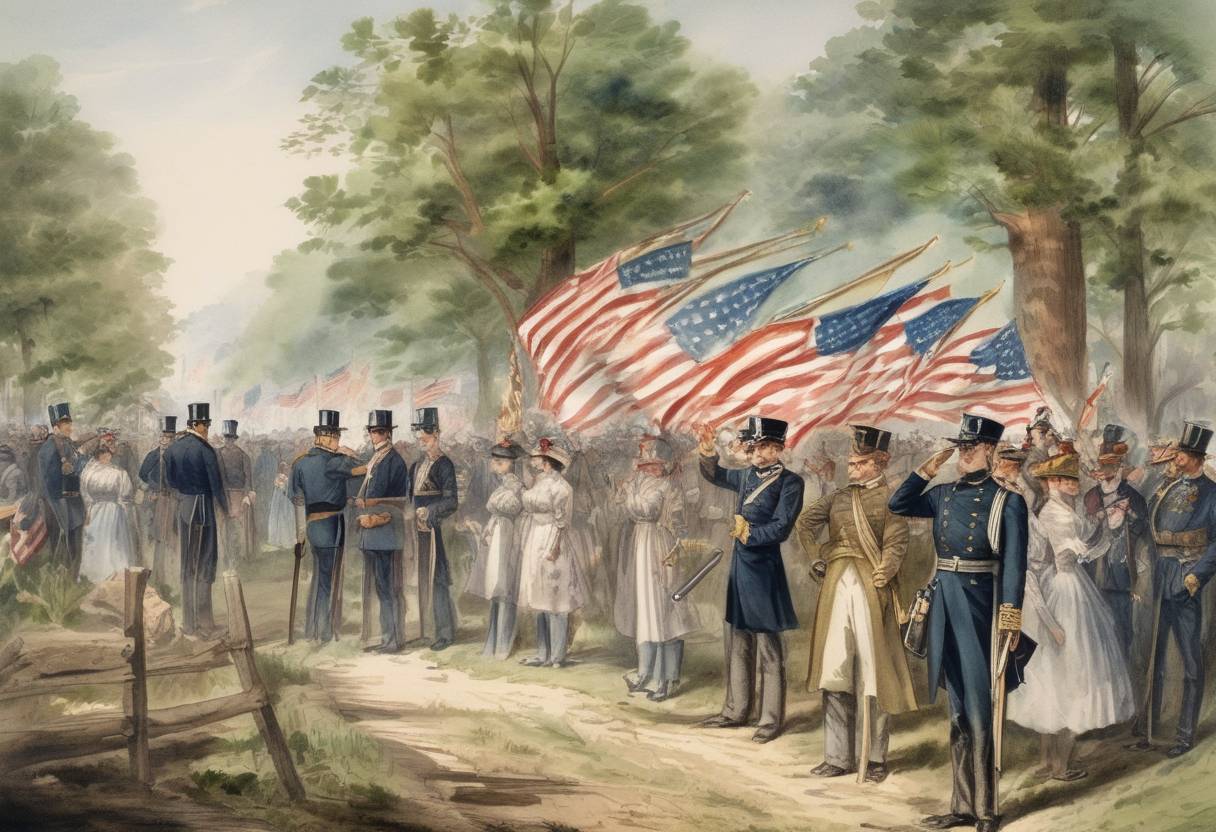
The first Decoration Day, which later became known as Memorial Day, was observed on May 30, 1868, in the United States. This day was set aside to honor and remember the soldiers who died during the American Civil War. The establishment of Decoration Day marked a significant moment in American history, reflecting the nation’s efforts to heal and commemorate the sacrifices made during one of its most tumultuous periods.
Post-Civil War Context: The American Civil War (1861-1865) was a devastating conflict that resulted in the loss of approximately 620,000 lives. The war left deep scars across the nation, and communities sought ways to honor the fallen soldiers.
General John A. Logan’s Proclamation: The idea for Decoration Day was formalized by General John A. Logan, the national commander of the Grand Army of the Republic (GAR), an organization of Union veterans. On May 5, 1868, Logan issued General Order No. 11, designating May 30 as a day for “strewing with flowers or otherwise decorating the graves of comrades who died in defense of their country during the late rebellion.”
Date Selection: May 30 was chosen as the date for Decoration Day because it was not the anniversary of any particular battle, allowing it to be a neutral day of remembrance.
Ceremonies and Traditions: On the first Decoration Day, flowers were placed on the graves of Union and Confederate soldiers at Arlington National Cemetery. The ceremony included speeches, prayers, and the decoration of graves with flowers and flags.
National Participation: While the observance began in the North, Southern states held their own commemorations on different dates. Over time, the practice spread across the country, fostering a sense of national unity and remembrance.
Expansion of Commemoration: Initially focused on honoring Civil War soldiers, the scope of Decoration Day expanded after World War I to include American military personnel who died in all wars.
Official Recognition: In 1971, Memorial Day was declared a national holiday by an act of Congress, to be observed on the last Monday in May, ensuring a three-day weekend for federal employees.
Decoration Day, now Memorial Day, serves as a poignant reminder of the sacrifices made by military personnel in service to the United States. It underscores the importance of national unity and the collective memory of those who have given their lives for their country. The observance has become a time for reflection, gratitude, and the honoring of all who have served in the armed forces.
Through its evolution, Memorial Day continues to be a day of national significance, fostering a spirit of remembrance and respect for those who have paid the ultimate price in defense of freedom and democracy.
Source: en.wikipedia.org