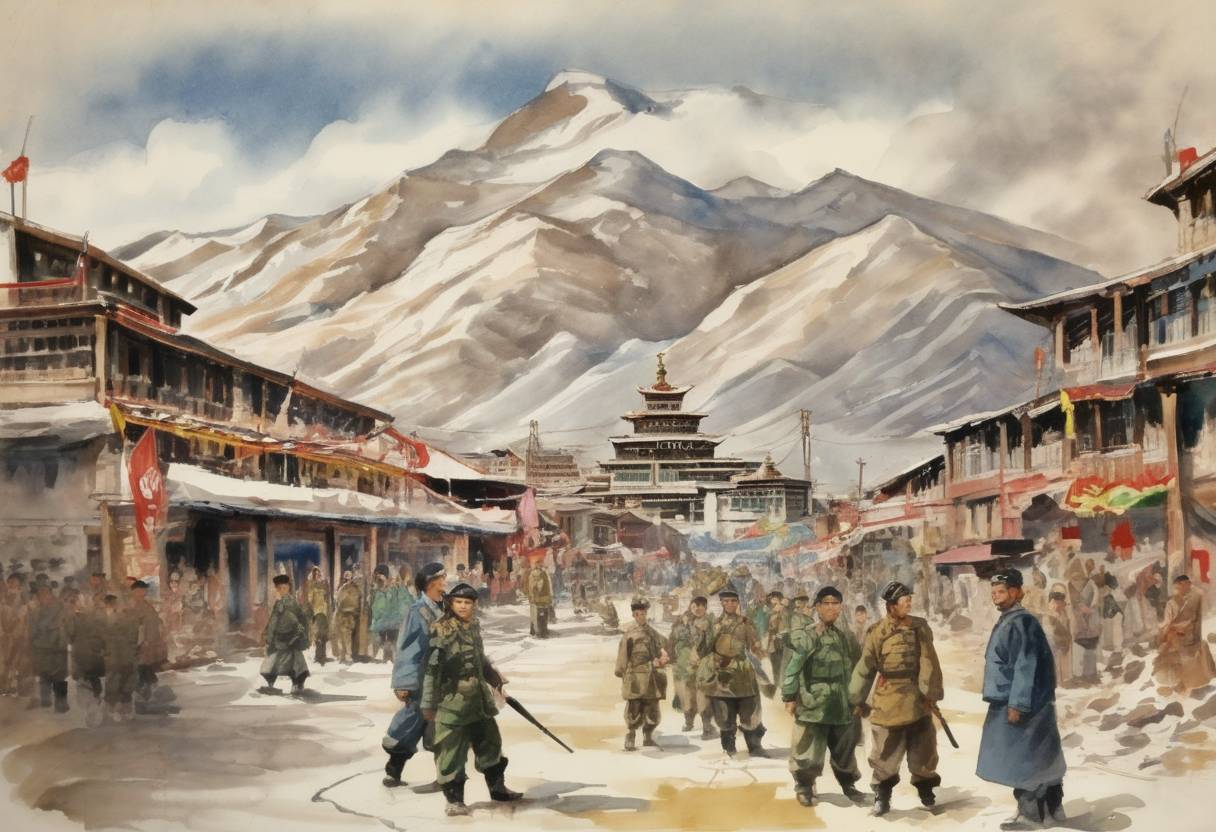
The Capture of Chamdo and the Annexation of Tibet
On October 19, 1950, the People’s Liberation Army (PLA) of China captured the city of Chamdo, a significant event marking the beginning of the annexation of Tibet by the People’s Republic of China. This military action was part of a broader campaign by the Chinese government to assert control over Tibet, which it considered a part of its territory.
Historical Context
Tibet’s Status Pre-1950: Prior to the Chinese invasion, Tibet functioned as a de facto independent region, having declared independence from China in 1913 following the fall of the Qing Dynasty. However, this independence was not recognized by the Chinese government or the international community.
Chinese Civil War: The conclusion of the Chinese Civil War in 1949 saw the establishment of the People’s Republic of China under the Communist Party, led by Mao Zedong. The new government was determined to consolidate its control over all territories it considered part of China, including Tibet.
Key Events Leading to the Capture
PLA’s Advance: In 1950, the PLA began advancing into Tibetan territory. The Chinese government justified its actions by claiming it was liberating Tibet from imperialist forces and integrating it into the motherland.
Chamdo Campaign: The campaign to capture Chamdo was a strategic move to cut off Tibetan resistance and force negotiations. Chamdo, located in eastern Tibet, was a critical administrative and military center.
The Capture of Chamdo
Military Engagement: The PLA launched a coordinated attack on Chamdo, overwhelming the Tibetan forces. The operation lasted for about two weeks, culminating in the capture of the city on October 19, 1950.
Tibetan Resistance: The Tibetan forces, poorly equipped and outnumbered, were unable to mount a significant defense against the PLA’s modern military capabilities.
Aftermath and Consequences
Seventeen Point Agreement: Following the capture of Chamdo, the Tibetan government was compelled to negotiate with the Chinese. In May 1951, the Seventeen Point Agreement was signed, which affirmed Chinese sovereignty over Tibet but promised autonomy and religious freedom for the region.
Integration into China: The capture of Chamdo and subsequent events led to the integration of Tibet into the People’s Republic of China. This has remained a contentious issue, with ongoing debates about Tibetan autonomy and human rights.
Long-term Impact: The annexation of Tibet has had lasting implications for Sino-Tibetan relations and remains a sensitive topic in international politics. The Tibetan government-in-exile, led by the Dalai Lama, continues to advocate for greater autonomy and preservation of Tibetan culture and religion.
The capture of Chamdo was a pivotal moment in the history of Tibet and China, setting the stage for decades of complex political and cultural dynamics between the two.