The Inauguration of the Orient Express: June 5, 1883
1883 · Paris, France
The first regularly scheduled Orient Express train service began, linking Paris and Istanbul.
October 4, 1883
The Orient Express made its inaugural journey from Paris to Istanbul, marking the beginning of a new era in luxury train travel.
Paris, France | Compagnie Internationale des Wagons-Lits
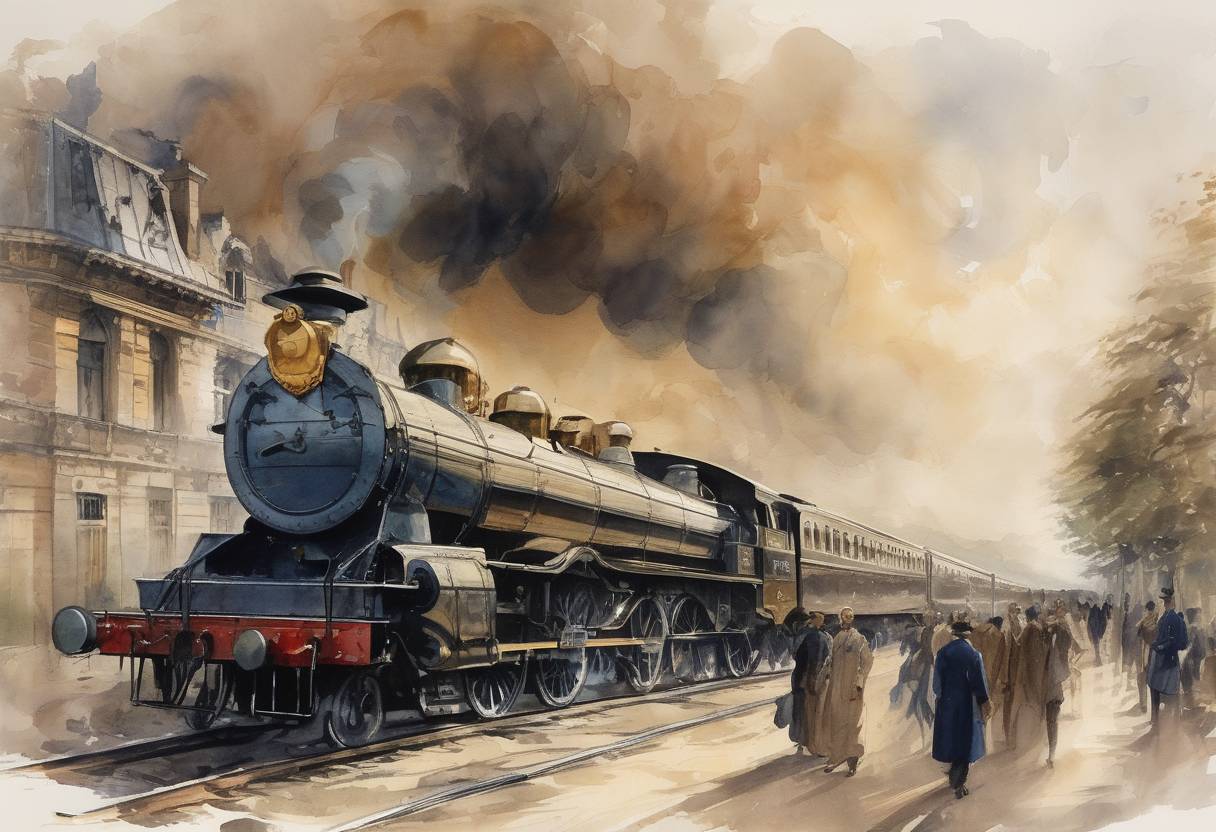
On October 4, 1883, the Orient Express embarked on its inaugural journey, marking a significant milestone in the history of luxury train travel. This legendary train, operated by the Compagnie Internationale des Wagons-Lits, set off from Paris, France, and traveled to Istanbul, then known as Constantinople, in the Ottoman Empire. This journey not only revolutionized long-distance travel but also became synonymous with luxury, intrigue, and romance.
The late 19th century was a period of rapid industrialization and technological advancement, particularly in transportation. Railways were expanding across Europe, facilitating faster and more efficient travel. Georges Nagelmackers, a Belgian entrepreneur, envisioned a train service that would offer unparalleled comfort and luxury, connecting the major cities of Europe.
Departure: The Orient Express departed from the Gare de l’Est in Paris. The train was composed of luxurious sleeping cars, dining cars, and salon cars, all designed to provide a high level of comfort and elegance.
Route: The original route passed through several key cities, including Strasbourg, Munich, Vienna, Budapest, and Bucharest, before reaching its final destination in Istanbul. This journey covered approximately 1,700 miles and took several days to complete.
Luxury and Innovation: The train was equipped with plush interiors, fine dining services, and attentive staff, setting a new standard for travel. The inclusion of sleeping cars allowed passengers to travel in comfort overnight, a novel concept at the time.
Cultural Icon: The Orient Express quickly became a symbol of luxury and sophistication. It attracted an elite clientele, including royalty, diplomats, and celebrities, and inspired numerous works of fiction, most notably Agatha Christie’s “Murder on the Orient Express.”
Economic and Political Influence: The train facilitated greater economic and cultural exchange between Western and Eastern Europe. It also played a role in the political landscape, as it provided a means for diplomats and officials to travel across the continent.
Legacy: The Orient Express continued to operate in various forms throughout the 20th century, adapting to changes in political borders and transportation technology. Its legacy endures as a symbol of the golden age of rail travel.
The inaugural journey of the Orient Express on October 4, 1883, was more than just a transportation milestone; it was the beginning of a new era in luxury travel. Its influence extended beyond the realm of transportation, leaving an indelible mark on culture and society. Today, the Orient Express remains a legendary name, evoking the romance and elegance of a bygone era.
Source: en.wikipedia.org