Theodore Maiman and the First Laser Operation
1960 · Malibu, United States
Theodore Maiman operates the first laser at Hughes Research Laboratories in Malibu, California.
May 21, 1946
The first U.S. nuclear rocket fuel test occurred, marking a significant early step in nuclear propulsion research.
Los Alamos, United States | Los Alamos National Laboratory
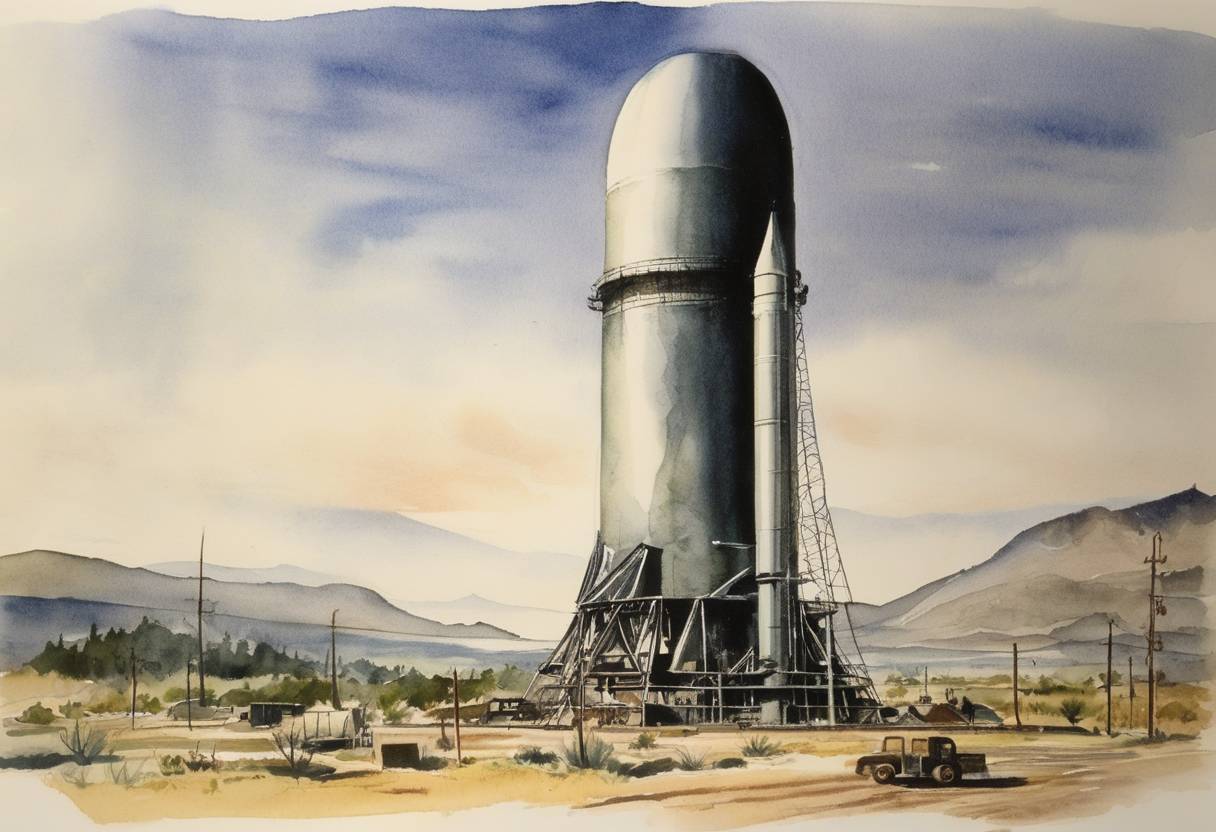
On May 21, 1946, the United States achieved a significant breakthrough in the development of nuclear propulsion technology with its first successful nuclear rocket fuel test. This event marked an important early step in the broader efforts to harness nuclear energy for space exploration.
In the aftermath of World War II, scientific advancements in nuclear technology spurred interest in exploring its potential applications beyond weaponry. The concept of using nuclear energy as a more efficient means of propelling spacecraft emerged during this period. The U.S. government established various programs to investigate these possibilities, viewing nuclear propulsion as a promising avenue to enable long-duration missions and enhance the capabilities of space exploration.
The first nuclear rocket fuel test involved the use of a fission reactor to heat a propellant, thereby generating thrust. The Nuclear Energy for the Propulsion of Aircraft (NEPA) project, initiated in response to wartime advancements and subsequent Cold War pressures, significantly contributed to this experimentation. While no flight tests were conducted at this stage, the static test represented a critical validation of the concept, proving that nuclear reactions could feasibly serve as a propulsion mechanism.
The success of the May 21 test provided foundational knowledge and impetus for future projects, including the Nuclear Engine for Rocket Vehicle Application (NERVA) program. NERVA, initiated in the late 1950s, further advanced the integration of nuclear propulsion into potential space missions, with the ultimate aim of supporting manned missions beyond Earth orbit.
Though the NERVA program was eventually terminated in the early 1970s due to shifting priorities and budget constraints, the knowledge gained from these early tests and subsequent research continues to influence modern efforts in developing robust propulsion systems for deep space exploration.
The nuclear rocket fuel test conducted on May 21, 1946, was a pivotal moment in the history of space technology. It laid the groundwork for subsequent achievements in nuclear rocket development and emphasized the enduring vision of harnessing nuclear energy to propel humanity further into the cosmos.
Source: www.everything2.com