The Duke of Wellington Ascends the Valdemaqueda Pass - October 23, 1812
1812 · Valdemaqueda, Spain
The Duke of Wellington ascends the Valdemaqueda Pass during the Peninsular War.
May 16, 1811
The Peninsular War: In the Battle of Albuera, British, Spanish, and Portuguese forces under the command of Sir William Beresford defeated the French army under Marshal Soult.
Albuera, Spain | British Army
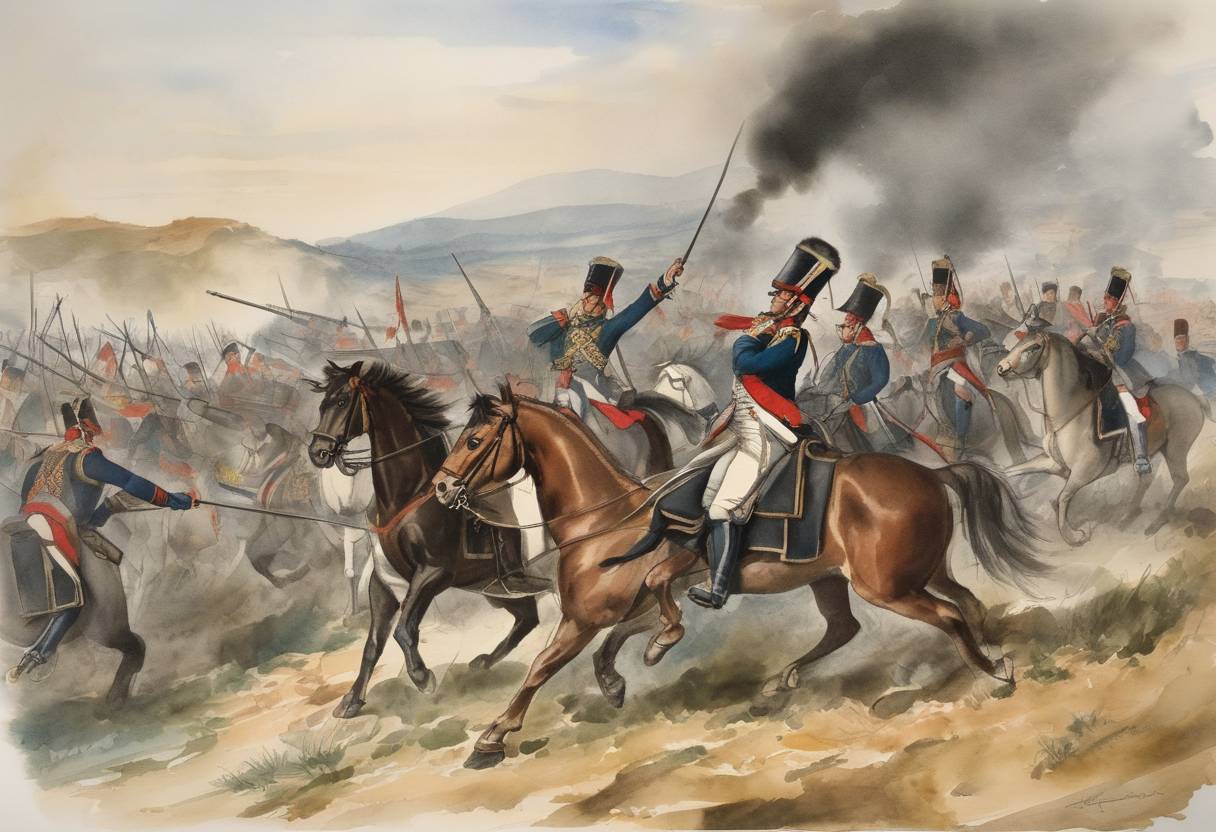
The Battle of Albuera was a significant engagement during the Peninsular War, part of the larger Napoleonic Wars. It took place on May 16, 1811, near the village of Albuera in southwestern Spain.
The Peninsular War, which began in 1808, was a major conflict involving Napoleon’s empire against the allied powers of Spain, the United Kingdom, and Portugal. The war was characterized by the struggle to liberate Iberian territories from French occupation.
In early 1811, Marshal Nicolas Soult led a French army aimed at capturing the strategic fortress town of Badajoz. In response, a coalition army comprising British, Spanish, and Portuguese forces, under the command of Marshal William Beresford, sought to prevent this, leading to the confrontation at Albuera.
Allied Forces: The coalition army consisted of around 35,000 troops. Commanded by Sir William Beresford, it included significant British contingents along with Spanish forces under Generals Joaquín Blake and Francisco Ballesteros, and Portuguese troops under Brigadier-General Carlos Lecor.
French Forces: Led by Marshal Nicolas Jean de Dieu Soult, the French numbered approximately 24,000. Soult’s forces were highly experienced veterans of previous Napoleonic campaigns.
The battle unfolded under torrential rain, complicating maneuvers and reducing visibility for both sides. Soult launched an aggressive initial attack, focusing on the weaker points of the allied line, particularly targeting flank positions intended to destabilize Beresford’s forces.
Diverse Tactics: Soult aimed to divide the allied army by targeting the flanks. His forces captured a significant position initially, but they were met by strong counterattacks.
Heavy Casualties: British infantry, despite enduring severe losses, notably held firm against multiple French assaults. The fight was marked by brutal close combat and a succession of bayonet charges.
Spanish Contribution: Spanish troops, although less well-regarded compared to their British counterparts, played a crucial role in holding the line during critical phases of the battle.
Portuguese Determination: The Portuguese contingent provided essential support, contributing to the sustained resistance against the French forces.
The battle concluded with the French forces retreating. Despite Soult’s tactical ingenuity, the allies achieved a strategic victory by maintaining control of the battlefield. The engagement inflicted severe casualties on both sides, with the coalition suffering about 6,000 casualties and the French around 8,000, reflecting the battle’s intensity.
Badajoz Siege: The battle delayed French attempts to relieve the besieged garrison at Badajoz, which Beresford aimed to capture.
Moral Victory: The victory at Albuera lifted the morale of the coalition forces and reinforced the determination of the Spanish and Portuguese to continue fighting against Napoleonic domination.
Long-term Impact: While hard-fought and costly, the battle was significant for its demonstration of allied cooperation against superior French tactical maneuvers. It underscored the efficacy of the combined Allied efforts against French imperial ambitions in the Iberian Peninsula.
The Battle of Albuera was thus an integral moment in the broader context of the Peninsular War, reflecting the complexities and dynamics of coalition warfare.
Source: en.wikipedia.org