Assassination of Emiliano Zapata on April 10, 1919
1919 · Chinameca, Mexico
Mexican revolutionary leader Emiliano Zapata was assassinated by government forces in Chinameca, Morelos.
November 20, 1910
Francisco I. Madero issues the Plan de San Luis Potosí, urging Mexicans to rise up against the presidency of Porfirio Díaz, which marks the start of the Mexican Revolution.
San Luis Potosí, Mexico
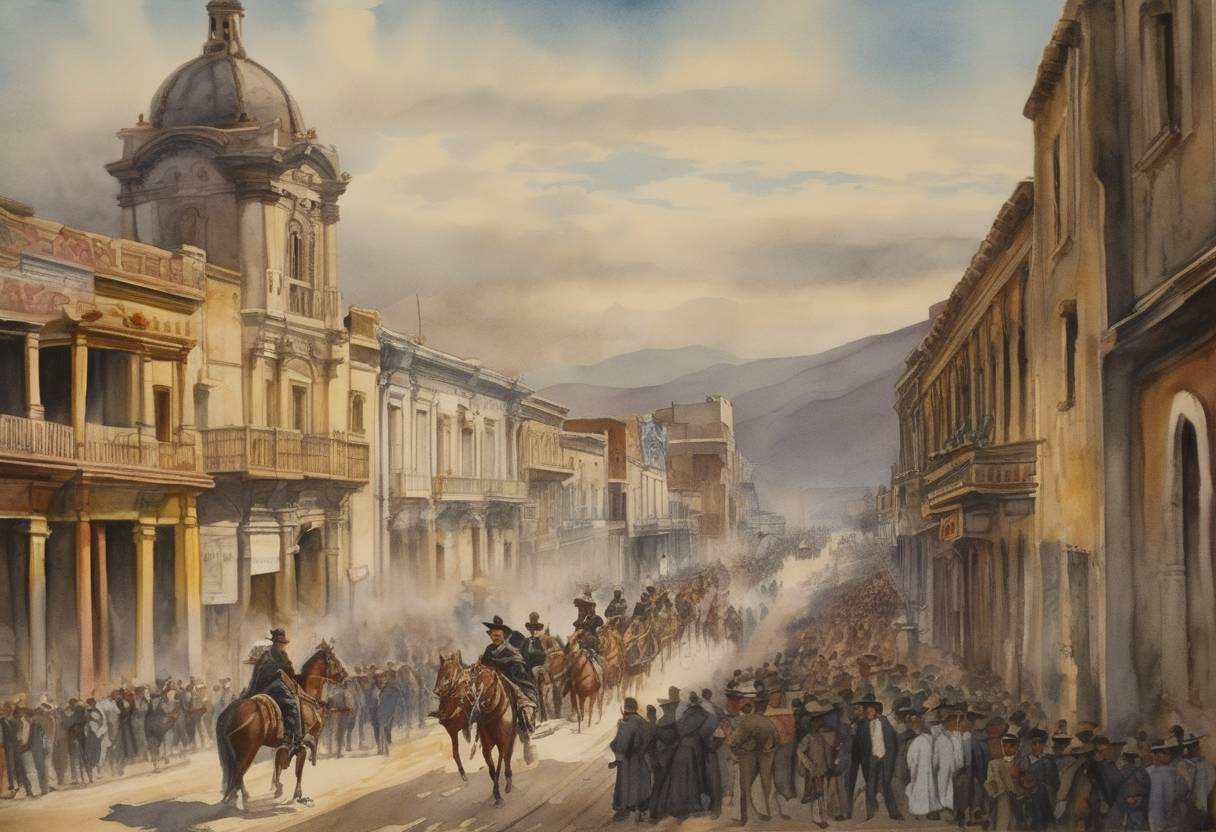
On November 20, 1910, Francisco I. Madero issued the Plan de San Luis Potosí, a pivotal document that catalyzed the outbreak of the Mexican Revolution. This declaration called for armed resistance against the longstanding presidency of Porfirio Díaz, marking a significant moment in the nation’s struggle for political transformation.
Porfirio Díaz had maintained control over the Mexican presidency for over three decades through a regime characterized by economic modernization juxtaposed with political oppression. Under Díaz, the wealthy elite prospered while the majority of Mexicans, particularly the rural poor, suffered under harsh working conditions and land dispossession.
Madero, a wealthy landowner himself, initially sought reform rather than revolution. Dissatisfied with the fraudulent elections of 1910 which ensured Díaz’s continued rule, Madero was arrested after attempting to run as an opposition candidate. While jailed, he crafted a plan that would ultimately become the foundation for widespread insurrection.
The Plan de San Luis Potosí, named after the city in which Madero was incarcerated, called for several key actions and reforms:
Forces Removal of Díaz: It declared the 1910 presidential elections null and void, urging Mexicans to reject Díaz’s regime as illegitimate.
Reinstatement of Democracy: Madero promised free, honest elections to restore democratic governance.
Land Reform and Justice: Although the Plan initially focused primarily on political change, it implicitly acknowledged social issues by encouraging action in the interests of broader justice and equality.
Call to Arms: The document set November 20, 1910, as the day for Mexicans to take up arms, a call that resonated with many disenfranchised groups across the country.
The Plan de San Luis Potosí quickly gained traction among diverse factions, including peasants, workers, and intellectuals who had suffered under Díaz’s authoritarian rule. Sparked by Madero’s vision, the revolution rapidly spread across Mexico, characterized by the participation of key figures like Emiliano Zapata in the south and Pancho Villa in the north.
Ultimately, the Mexican Revolution led to the downfall of Díaz in 1911, altering Mexico’s political landscape and paving the way for further social and economic reforms. Although the revolution was protracted and complex, resulting in significant violence and upheaval, the issuance of the Plan de San Luis Potosí on November 20, 1910, remains a historic commencement of a new era for Mexico. The revolution fundamentally redefined the country’s social and political order and influenced subsequent reform movements throughout Latin America.
Source: www.britannica.com