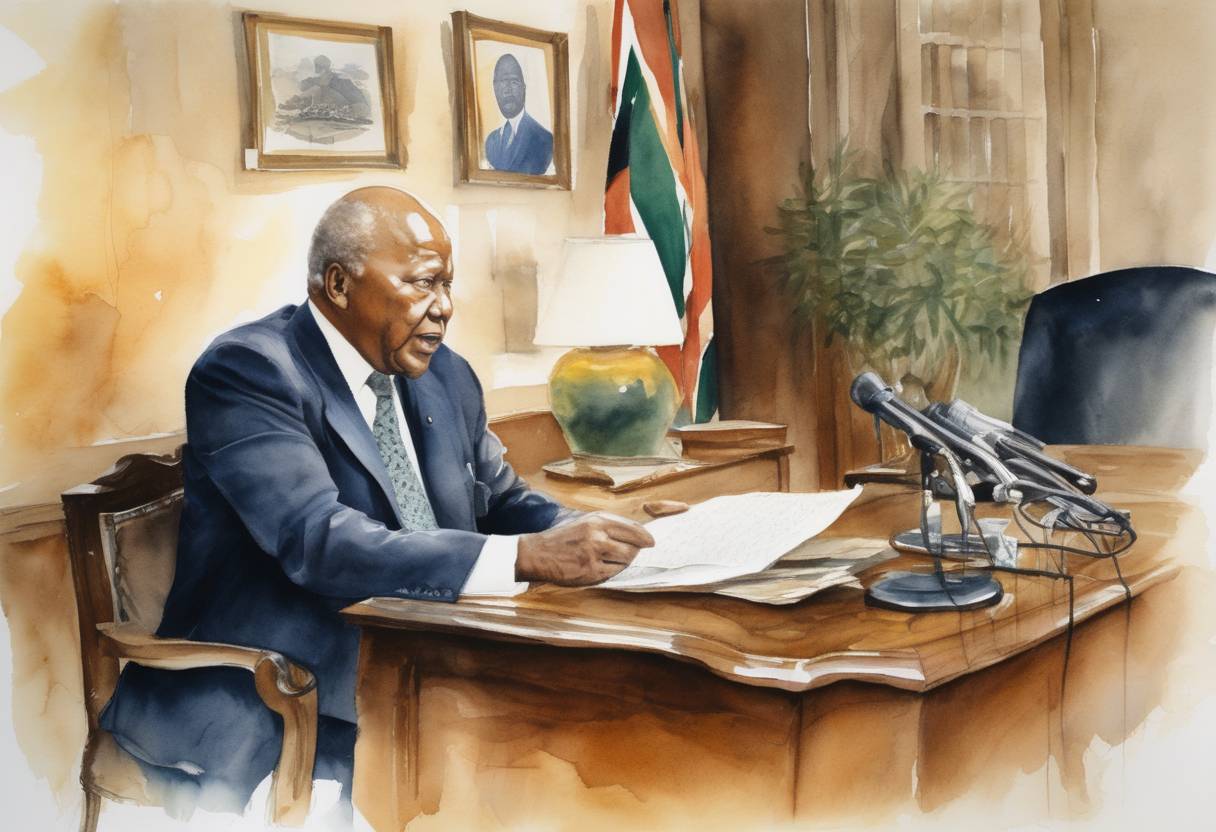
On February 2, 1990, in a monumental address to the South African Parliament, President Frederik Willem (F.W.) de Klerk announced significant political reforms that marked a turning point in the country’s history. This announcement would lead to the dismantling of the apartheid system, a policy of institutionalized racial segregation and discrimination enforced by the South African government since 1948.
Unbanning of Political Organizations
President de Klerk’s speech was groundbreaking, as it declared the unbanning of key liberation movements, most notably the African National Congress (ANC). The ANC, founded in 1912, had been fighting against racial oppression and segregation. It had been banned in 1960 following the Sharpeville Massacre, where the apartheid government had violently suppressed an anti-pass law protest, resulting in numerous deaths and international condemnation.
Promise to Release Nelson Mandela
The announcement also included a promise to release Nelson Mandela, the most prominent anti-apartheid revolutionary and ANC leader, who had been imprisoned since 1962. Mandela had become the symbol of the struggle against apartheid, and his release was a crucial demand from both national and international entities pushing for change in South Africa. The promise to release him was a significant step towards reconciliation and dialogue.
In addition to the unbanning of political organizations and the planned release of political prisoners, de Klerk lifted restrictions on other anti-apartheid movements, including the Pan Africanist Congress (PAC) and the South African Communist Party (SACP). These actions paved the way for a more inclusive political process aimed at transitioning South Africa towards a multi-racial democracy.
Historical Context and Aftermath
This announcement followed years of internal unrest, international sanctions, and growing pressure from sanctions-imposing countries urging the South African government to reform its racially discriminatory policies. The internal situation had become increasingly volatile with intensified resistance from both non-violent protests and armed militancy. President de Klerk, who had assumed office in September 1989, made the strategic decision to engage in dialogue and initiate reforms instead of escalating repression.
The announcement on February 2, 1990, set the stage for the complex and often tumultuous negotiations that would eventually lead to the dismantling of the apartheid regime. Nelson Mandela was released from Victor Verster Prison on February 11, 1990, an event witnessed by millions worldwide through media coverage.
The subsequent years involved rigorous negotiations among various political entities, which culminated in the first democratic elections in 1994. Nelson Mandela was elected as South Africa’s first black president, marking the official end of apartheid and a new era for the nation.
This day, February 2, 1990, is remembered as a pivotal moment in the struggle for freedom and change in South Africa, setting the wheels in motion towards building a unified, democratic society.