Henry I Crowned King of England
1100 · London, England
Henry I was crowned King of England at Westminster Abbey.
January 1, 1068
Edith of Wessex is crowned Queen of England following the conquest of England by her husband, King Harold II, who took the throne in 1066.
London, England | English Monarchy
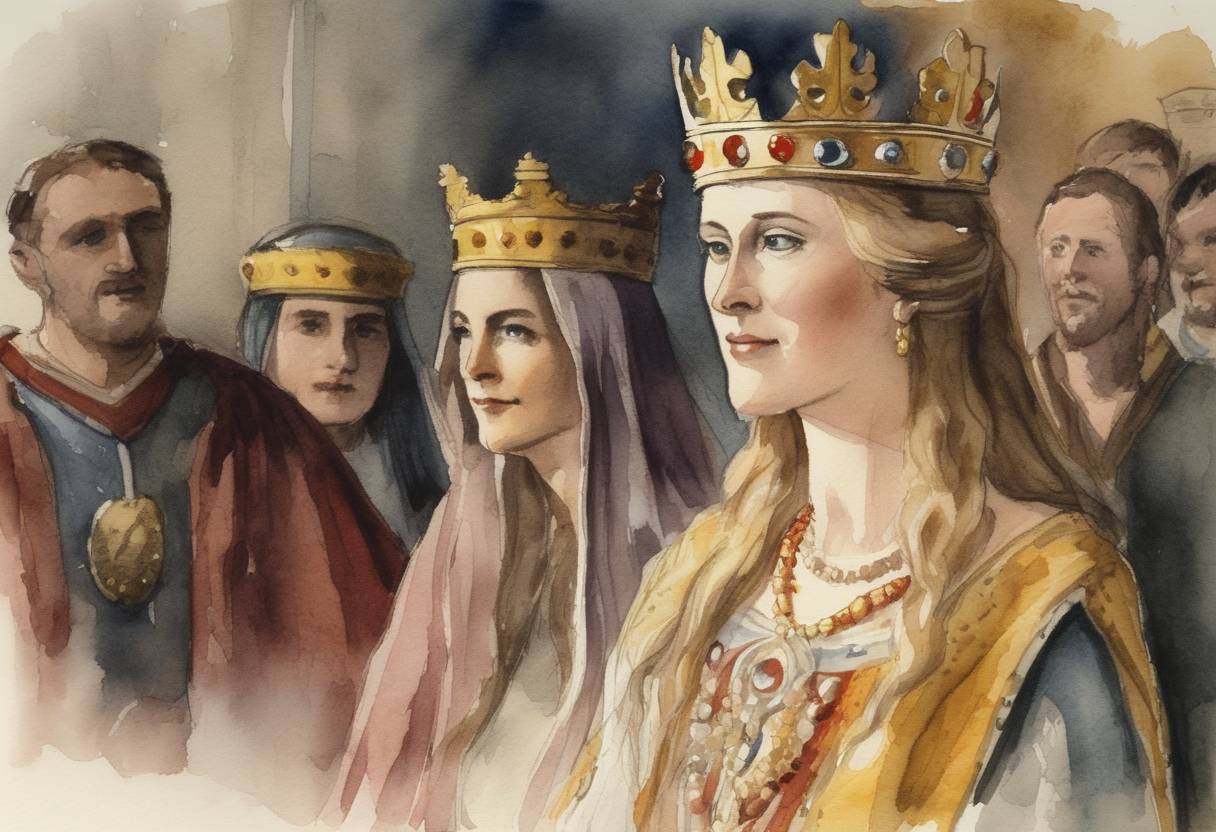
Edith of Wessex was crowned Queen of England on January 1, 1068. This event marked her formal recognition as queen following her marriage to King Harold II, who had ascended the English throne in 1066.
Edith of Wessex, also known as Edith Swanneck or Edith the Fair, was married to Harold Godwinson, the powerful Earl of Wessex. Harold became King Harold II of England in January 1066, succeeding Edward the Confessor. However, his reign was brief due to the Norman Conquest led by William the Conqueror.
While Edith of Wessex was well-known as Harold’s spouse, there is no documented evidence of her being crowned queen on January 1, 1068. Historical records surrounding her coronation are sparse, likely because the victory of William the Conqueror overshadowed any ceremonial acknowledgment of Harold’s claim posthumously.
Following the Battle of Hastings, Edith faced a rapidly changing political landscape:
The Norman Conquest, with which Edith’s storyline is intertwined, marked a turning point in English history. It introduced Norman culture, language, and governance, fundamentally reshaping medieval English society and architecture. Despite the lack of detailed records about Edith’s experiences post-conquest, she remains a significant figure representing the last of the Anglo-Saxon royal lineage in England.
Source: en.wikipedia.org