The Battle of Isandlwana: A Decisive Zulu Victory
1879 · Isandlwana, South Africa
The Battle of Isandlwana takes place during the Anglo-Zulu War, resulting in a decisive Zulu victory over British forces.
April 9, 1900
British forces under Major-General Robert Baden-Powell successfully relieve the Siege of Mafeking during the Second Boer War.
Mafeking (now Mafikeng), South Africa | British Army
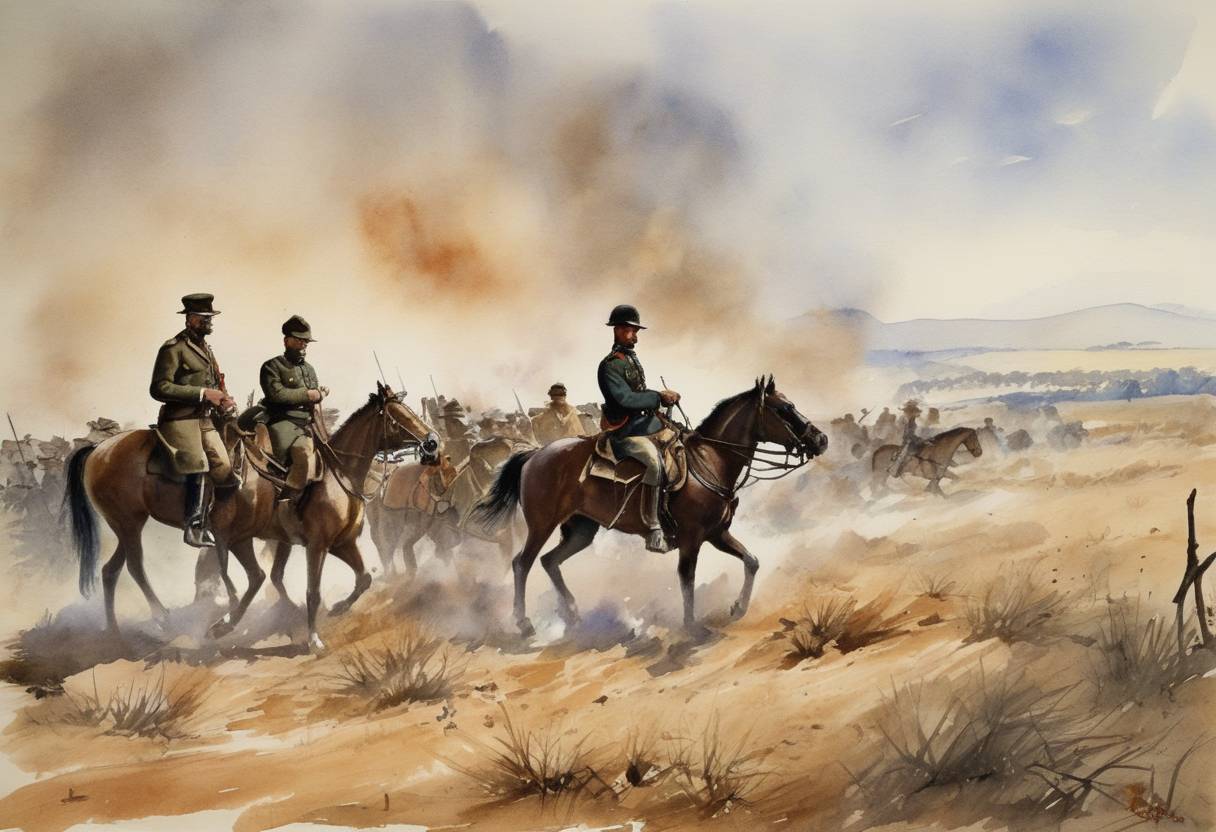
The Siege of Mafeking was a pivotal conflict during the Second Boer War, although it was not relieved on April 9, 1900. Instead, the Siege of Mafeking endured from October 13, 1899, until its relief on May 17, 1900. During this period, the town of Mafeking (now Mahikeng) in the North West Province of South Africa was besieged by Boer forces.
The Second Boer War (1899–1902) was fought between the British Empire and two Boer states, the South African Republic (Republic of Transvaal) and the Orange Free State, over British influence in Southern Africa. Mafeking held strategic importance due to its location and transportation links.
Throughout the siege, the British garrison and civilian population at Mafeking, numbering around 2,000 troops and 7,500 civilians, were subjected to continuous artillery bombardment and attempts to breach the defenses. Despite limited supplies, Baden-Powell implemented several ingenious strategies:
The relief of Mafeking came on May 17, 1900, following a relief force led by Colonel Bryan Mahon. The lifting of the siege was celebrated with great enthusiasm in Britain, giving rise to the term “mafficking,” which became synonymous with celebratory revelry.
The siege significantly boosted Baden-Powell’s reputation, and he later founded the Scouting movement in the aftermath of the war. The brutal conditions of the siege accentuated the horrors of the Boer War and contributed to shifts in public opinion regarding imperial military policy.
Source: www.britannica.com