The Belgian Revolution Begins: August 25, 1830
1830 · Brussels, Belgium
The Belgian Revolution begins, leading to the secession of the southern provinces from the United Kingdom of the Netherlands.
August 4, 1830
The Belgian Revolution against Dutch rule began, leading to Belgium's independence.
Brussels, Belgium | Kingdom of the Netherlands
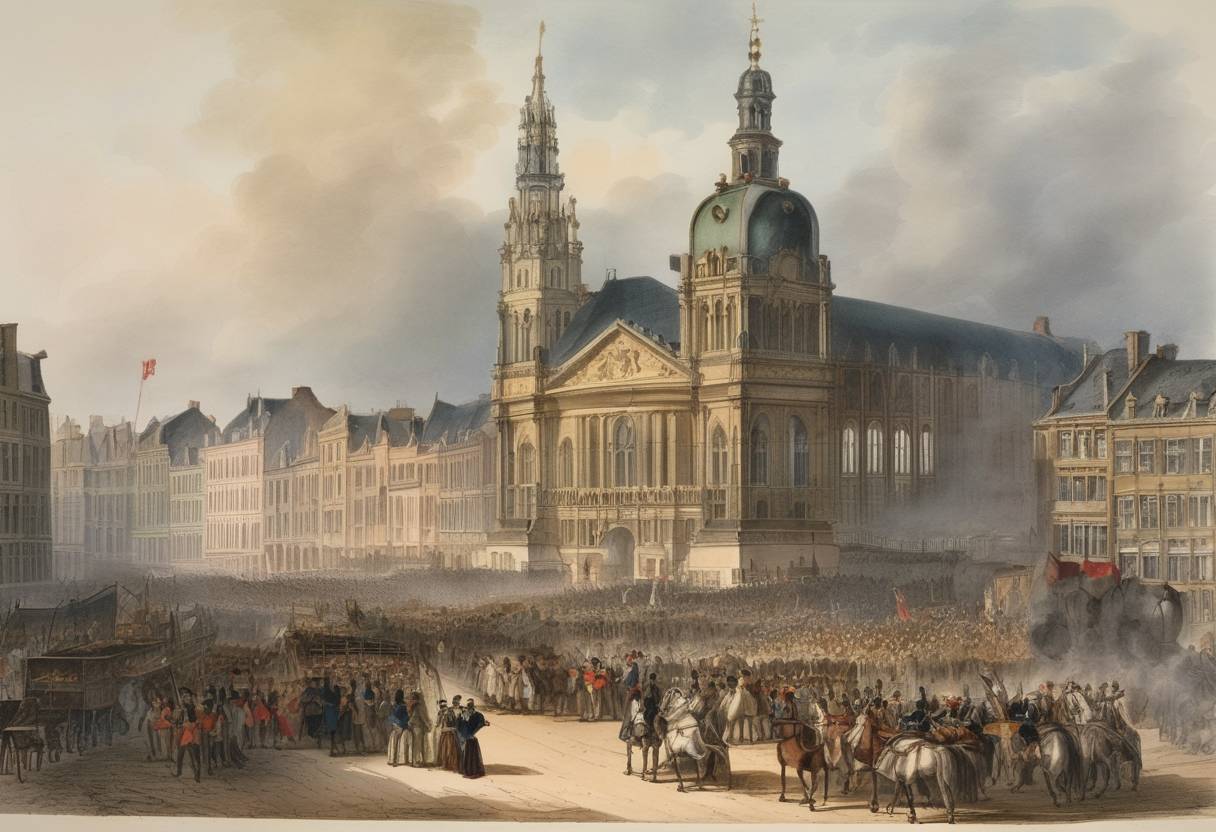
The Belgian Revolution, a pivotal moment in European history, began on August 25, 1830, marking the start of the struggle for independence from Dutch rule. This date is often confused with earlier manifestations of unrest, but August 25 is widely recognized as the official commencement of the revolutionary activities.
Following the Napoleonic Wars, the Congress of Vienna in 1815 established the United Kingdom of the Netherlands, a union of the former Austrian Netherlands (modern-day Belgium) with the Dutch territories. King William I of the Netherlands ruled this new nation. This political arrangement ignored significant cultural, religious, and linguistic differences between the predominantly Catholic and French-speaking Belgian population and the Protestant, Dutch-speaking north.
Tensions had been mounting due to King William I’s policies, which heavily favored the Dutch both economically and politically. Belgium’s predominantly Catholic populace was unhappy with the King’s support for Protestantism, and the French-speaking community was displeased with attempts to promote the Dutch language. Economically, the industrialists in Belgium were frustrated by policies they perceived as neglectful of their needs in favor of northern interests.
The revolution was ignited on the night of August 25, 1830, in Brussels during a performance of the opera “La Muette de Portici” at La Monnaie Theatre. The opera contained nationalistic themes that resonated deeply with the Belgian sentiment against Dutch rule. Inspired by the performance, riots broke out in the streets of Brussels. Citizens began to express their grievances more vocally, calling for political reform and greater autonomy.
The unrest quickly spread across the region, leading to violent clashes with Dutch forces. The revolution prompted a series of events throughout the following months that culminated in widespread rebellion against Dutch rule. On September 27, 1830, after several skirmishes and political maneuverings, Belgian rebels succeeded in expelling Dutch troops from most of Belgium.
Belgium declared its independence on October 4, 1830, and after initial resistance, the Dutch recognized Belgium’s independence in 1839 with the signing of the Treaty of London. The revolution led to the establishment of Belgium as a constitutional monarchy and marked a significant realignment in European power structures, altering the balance of influence and paving the way for future developments in the region.
The Belgian Revolution of 1830 remains a crucial chapter in the history of Belgium, exemplifying the struggle for self-determination and national identity amidst broader European dynamics.
Source: www.britannica.com