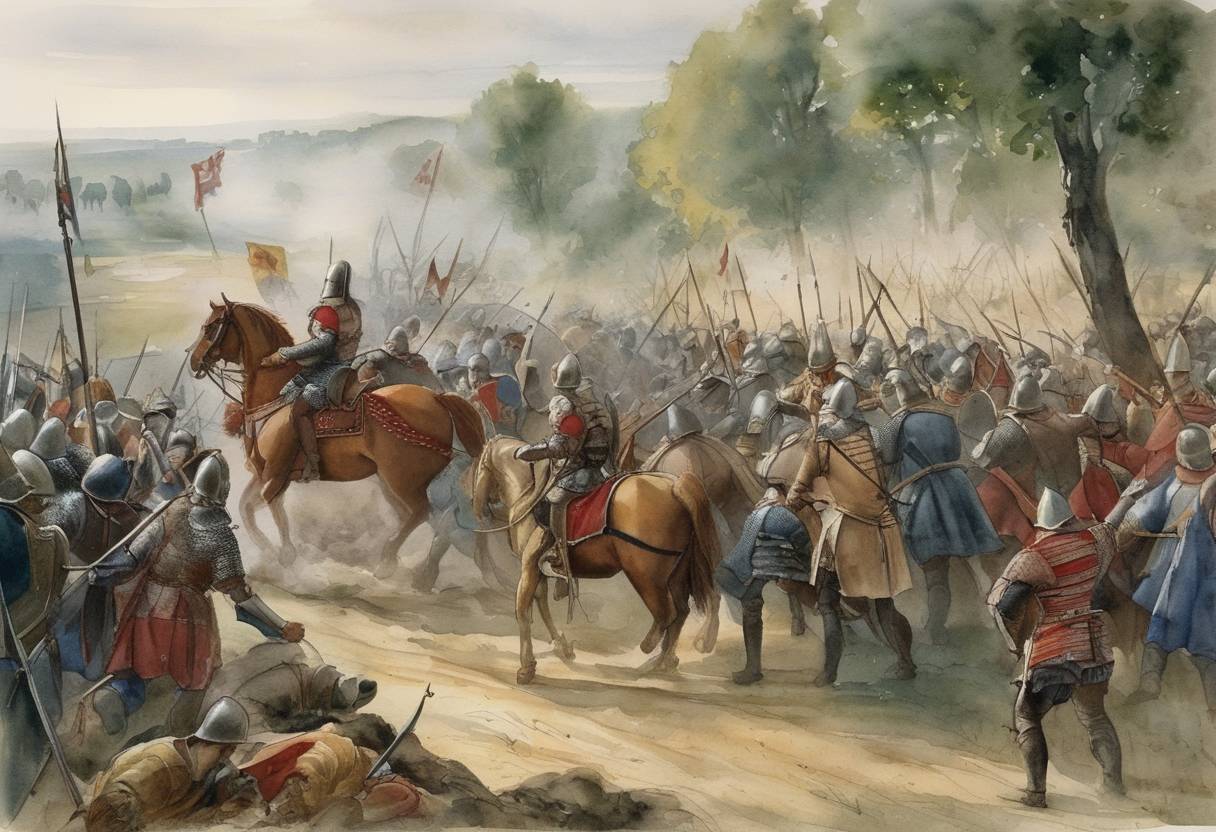
Philip VI Invades Aquitaine: A Catalyst for the Hundred Years’ War
On May 24, 1337, King Philip VI of France formally initiated hostilities against the English-held territory of Aquitaine, a critical action that contributed to the outbreak of the Hundred Years’ War. This bold move by Philip VI was a culmination of escalating tensions rooted in dynastic claims, economic competition, and feudal allegiances that had been developing between the English and French monarchies.
Background
Aquitaine, a vast and economically valuable region in southwestern France, had long been a possession of the English crown due to historic ties stemming from the marriage of Eleanor of Aquitaine to King Henry II of England in the 12th century. Despite being part of the French kingdom, English control over Aquitaine allowed England significant influence within France, leading to a complex feudal relationship where English kings were technically vassals to the French crown.
The immediate cause for conflict arose from disputes over territorial control and sovereignty, exacerbated by overlapping claims to the French throne following the death of King Charles IV of France in 1328. While Philip VI, the Valois candidate, succeeded Charles IV, England’s King Edward III also laid claim to the French throne through his mother, Isabella of France, Charles IV’s sister. This rivalry intensified territorial disputes, with Aquitaine being central to the conflict.
The Invasion
Philip VI’s decision to confiscate Aquitaine on May 24, 1337, was framed as a legal action against Edward III’s failure to honor feudal obligations. By asserting direct control over the territory, Philip aimed to weaken English power in France and affirm his authority. This confiscation effectively marked the breakdown of diplomatic relations, as Edward III saw it as a direct challenge to his rights and sovereignty, particularly given the economic significance of Aquitaine’s wine trade for England.
Consequences
The invasion of Aquitaine set into motion a series of retaliatory measures and alignments, with Edward III formally declaring himself the rightful king of France in 1340. This declaration extended beyond personal rivalry, as it opened hostilities on a larger European scale, igniting the prolonged conflict known as the Hundred Years’ War. The initial phases of the war saw pivotal battles, shifting alliances, and extensive campaigning, fundamentally influencing the medieval political landscape.
The conflict had profound consequences on both nations, leading to military innovations, shifts in power dynamics, and national identity formation that would shape the future of Europe. The political turmoil and intermittent warfare continued until 1453, deeply embedding the legacies of both English and French claims to territorial and royal sovereignty.