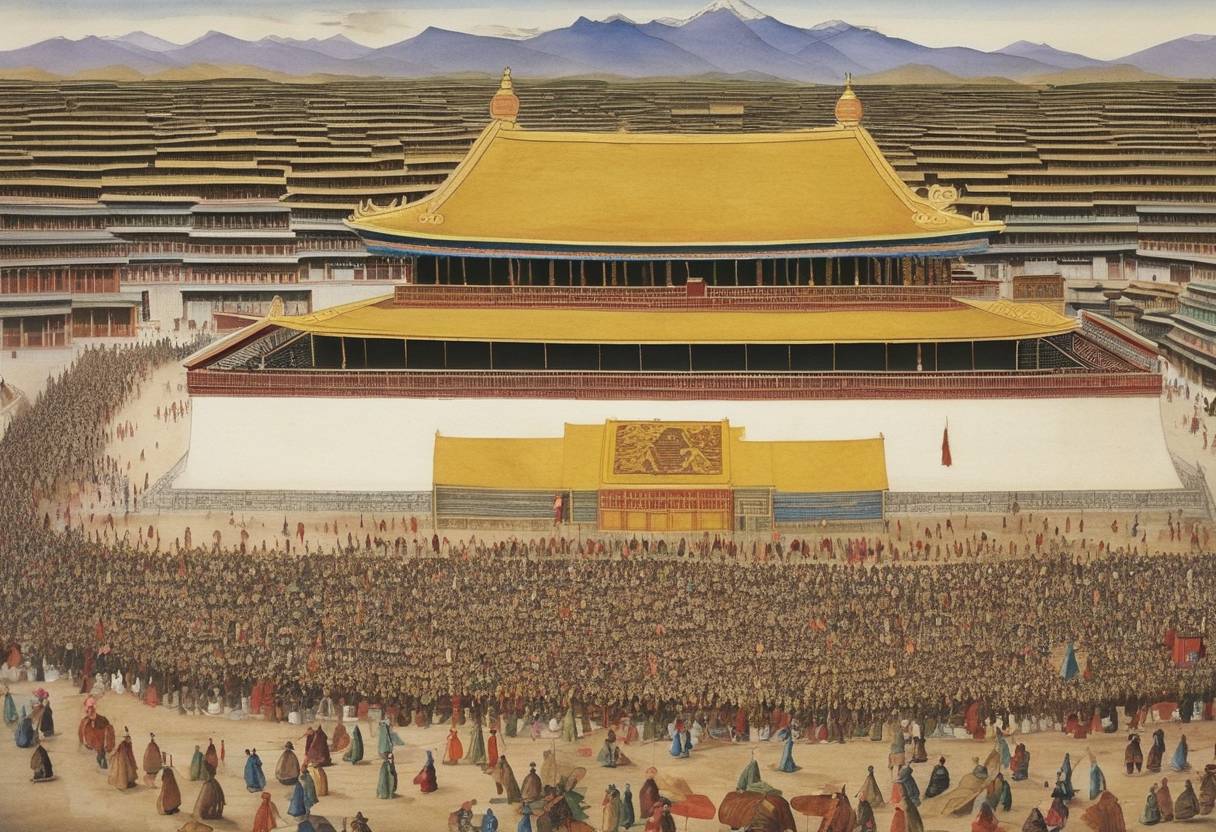
Jokhang Temple and Its Historical Significance
The Jokhang Temple, located in Lhasa, Tibet, is a pivotal site in Tibetan Buddhism and is considered the spiritual heart of the region. While there is no direct event on March 19, 1553, tied to the completion of the temple, understanding its history provides context to its significance.
Historical Context
Songtsen Gampo’s Reign
- Era: Songtsen Gampo, the 33rd king of the Yarlung Dynasty, reigned in the 7th century. He is credited with the founding of the Tibetan Empire and played a crucial role in the introduction of Buddhism to Tibet.
- Significance: He married Princess Wencheng of the Chinese Tang dynasty and Princess Bhrikuti of Nepal, both of whom were devout Buddhists. Their influence was instrumental in the establishment and propagation of Buddhism in Tibet.
Construction of Jokhang Temple
- Foundation: The temple was originally constructed in the 7th century CE during Songtsen Gampo’s reign. It is traditionally believed that its establishment was at the behest of his two wives, who brought sacred Buddhist images and relics as part of their dowries.
- Architectural Influence: The Jokhang Temple’s architecture combines elements of Indian, Nepalese, and Tang Dynasty styles, reflecting the cultural synthesis that Buddhism represented at the time.
Ceremonial and Religious Significance
- Cultural Hub: Over the centuries, Jokhang Temple developed into a major pilgrimage site. It houses numerous sacred Buddhist artifacts and statues, including the revered Jowo Rinpoche statue, purportedly brought by Princess Wencheng.
- Annual Events: The temple is central to various Tibetan Buddhist festivals and rituals, attracting pilgrims from across the region. The most notable is the Great Prayer Festival (Monlam Chenmo), which has been celebrated for centuries.
UNESCO World Heritage
- Designation: In 2000, Jokhang Temple was recognized as part of the UNESCO World Heritage Site, inscribed as an extension of the Potala Palace World Heritage Site, underlining its global cultural and historical importance.
While no specific event is recorded on March 19, 1553, that date could coincide with a traditional, ceremonial, or commemorative event, especially given Jokhang Temple’s lasting religious and cultural significance throughout Tibetan history.