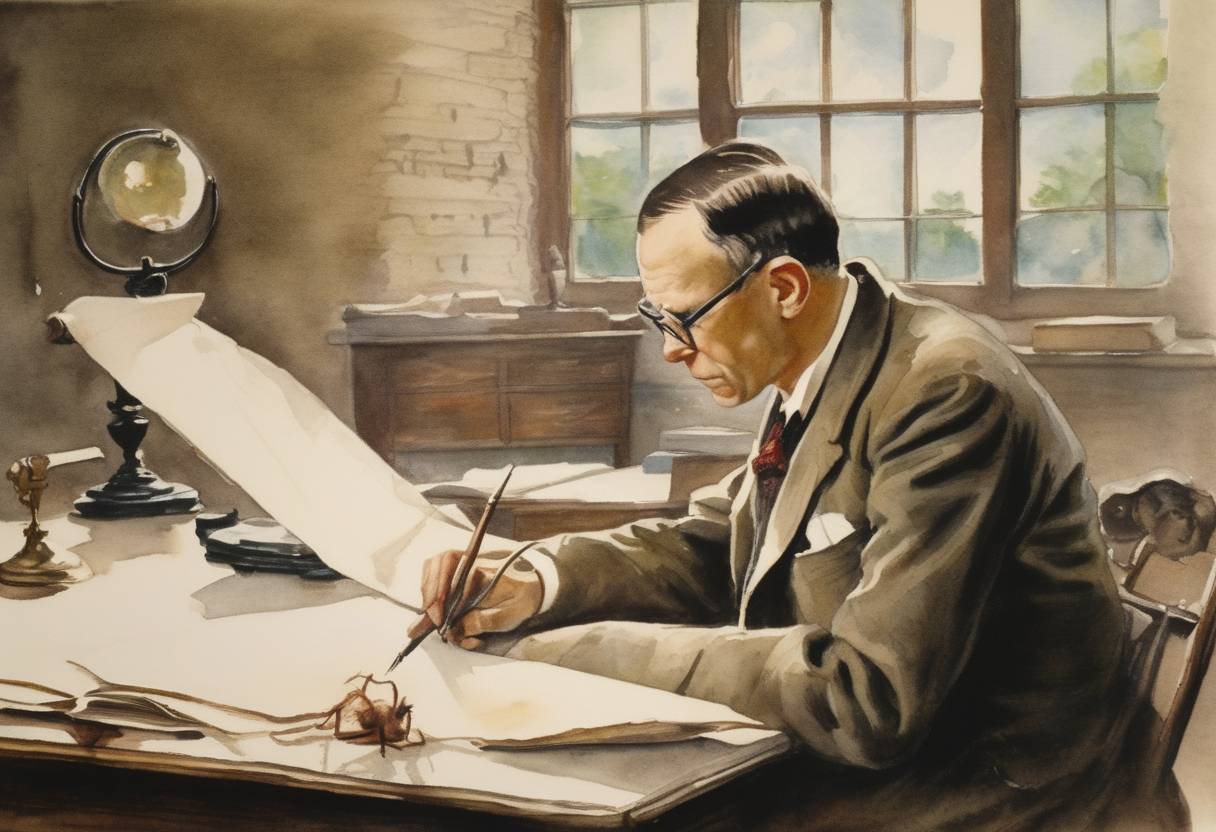
John T. Scopes and the Scopes Monkey Trial
Background
John T. Scopes, a high school teacher in Dayton, Tennessee, became a central figure in one of the most famous legal battles concerning the teaching of evolution in American schools, known as the “Scopes Monkey Trial.” The indictment of Scopes was not on June 28, 1895, as requested; instead, the events leading to the trial began in 1925.
The Butler Act
The legal context for this trial was established by the Butler Act, passed by the Tennessee General Assembly in March 1925. This law prohibited public school teachers from denying the Biblical account of man’s origin and teaching evolution in its place.
Scopes’ Indictment
John T. Scopes was indicted on May 5, 1925, after being accused of violating the Butler Act by teaching Charles Darwin’s theory of evolution in a public school. The selected date of June 28, 1895, does not align with this historical timeline, as Scopes’ indictment and the resulting trial occurred in the spring and summer of 1925.
The Trial
The ensuing trial took place in July 1925 and is often referred to as the Scopes Monkey Trial. It became a national spectacle, drawing famous figures such as William Jennings Bryan for the prosecution and Clarence Darrow for the defense. This trial was critical for its public debate on evolution versus Creationism and symbolized the tension between modern and traditional values in America.
Aftermath and Significance
John T. Scopes was found guilty and fined $100, though the verdict was later overturned on a technicality. The trial sparked a national conversation about academic freedom and the separation of church and state, issues that continue to resonate in American educational and legal systems.
Conclusion
John T. Scopes’ role in this landmark case highlighted the ongoing conflict between scientific thought and religious belief, making the Scopes Monkey Trial a pivotal moment in the history of American education and law. Despite the incorrect date provided, the implications of this 1925 trial were far-reaching and it remains a cornerstone case highlighting issues of educational freedoms and legal precedent.