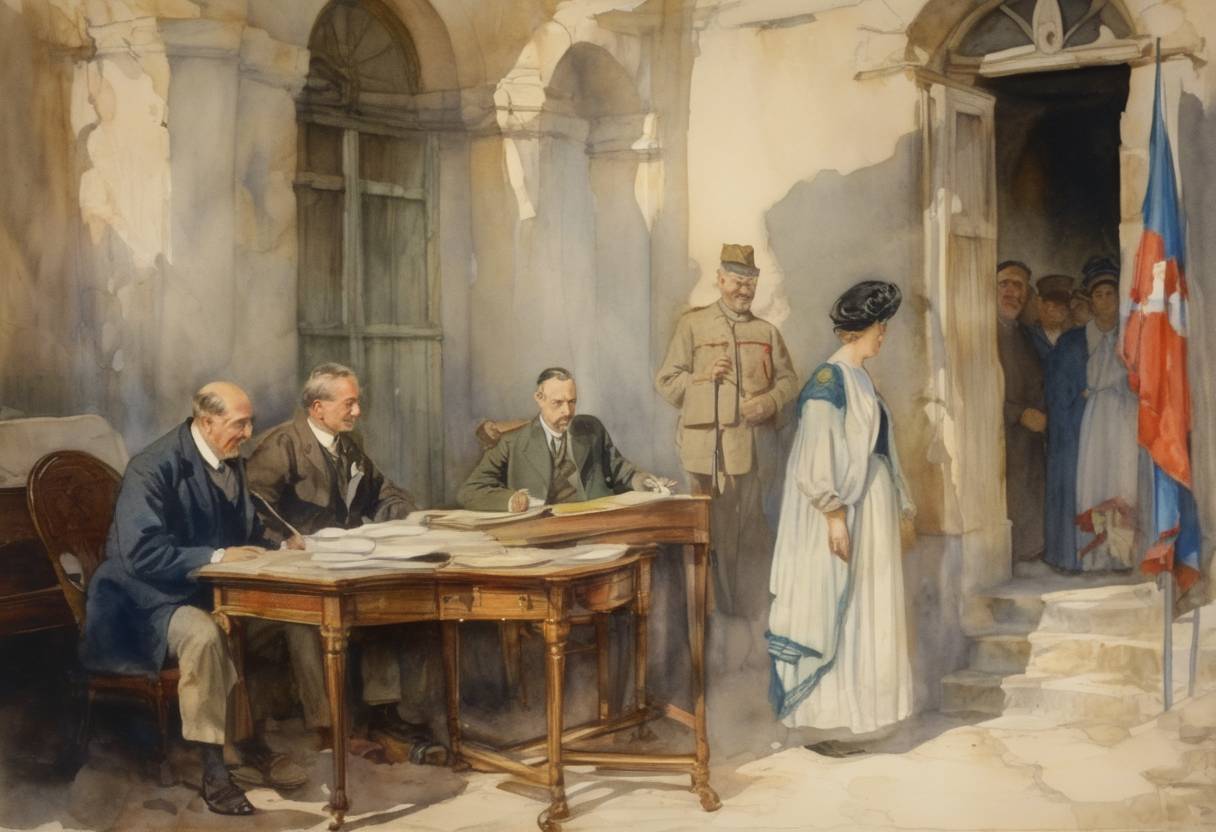
The Corfu Declaration - July 20, 1917
The Corfu Declaration was a pivotal document signed on July 20, 1917, during World War I, which laid the groundwork for the establishment of the Kingdom of Yugoslavia. This declaration was a significant political agreement between the representatives of the South Slavic regions of the Austro-Hungarian Empire and the Kingdom of Serbia.
Background
Prior to the declaration, the South Slavs were divided under the rule of Austro-Hungary and the Ottoman Empire. The pressures of World War I, combined with the rise of nationalism among the Slavic peoples, fueled desires for unification and independence from their foreign rulers. The Serbian government, in exile during this period due to the Central Powers’ occupation of Serbia, played a central role in advocating for the union of South Slavic peoples.
Key Provisions
Unification Vision: The declaration called for the unification of Serbs, Croats, and Slovenes into a single state, emphasizing the idea of brotherhood among the South Slavic peoples.
Monarchical Structure: It proposed establishing a constitutional monarchy under the Karadjordjević dynasty, which was the royal family of Serbia.
Equality of Rights: It underscored the principles of equality and freedom, advocating for equal rights and religious freedom for all communities within the proposed new state.
Signing and Participants
The declaration was signed on the Greek island of Corfu by representatives of the Yugoslav Committee, led by Ante Trumbić, and the Serbian government-in-exile, headed by Prime Minister Nikola Pašić. This agreement was instrumental in securing international support, particularly from the Allied Powers, for the South Slavic cause.
Aftermath and Significance
The Corfu Declaration was crucial in unifying various South Slavic groups in their quest for independence from Austro-Hungarian rule. It laid the ideological foundation for the State of Slovenes, Croats, and Serbs, which was proclaimed in 1918, and subsequently led to the formation of the Kingdom of Serbs, Croats, and Slovenes on December 1, 1918, later renamed the Kingdom of Yugoslavia in 1929.
The declaration is viewed as a significant step towards South Slavic unity, and despite the ethnic and political tensions that would arise in Yugoslavia’s history, it represented a moment of hopeful collaboration among the diverse Slavic groups striving for a common national identity.